Electoral Commission's 'You Can't' by DLKW Lowe dramatised voter exclusion through a social experiment film to drive registration ahead of the May 2015 UK

How the Electoral Commission Used Loss Aversion to Drive Voter Registration
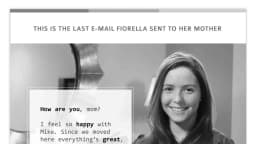
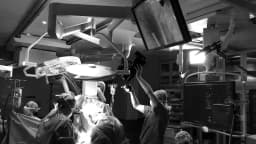
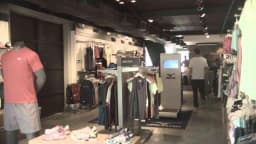
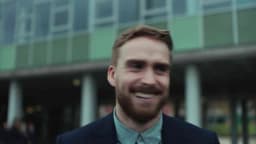
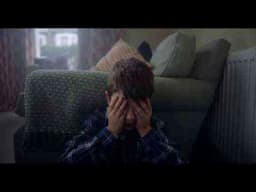
The Electoral Commission's 'You Can't' is a 2015 public interest film created by DLKW Lowe in the United Kingdom, designed to drive voter registration ahead of the 7 May 2015 general election by dramatising the feeling of exclusion through a social experiment format. The campaign launched in March 2015, with a registration deadline of 20 April 2015 as the fixed endpoint shaping its urgency, according to the Electoral Commission. Directed by Paul Gay of RSA Films, the single-film campaign used hidden cameras to show real people being prevented from carrying out ordinary, everyday activities — a visual metaphor for the disenfranchisement awaiting anyone not correctly registered to vote.
The campaign sits within the Electoral Commission's broader voter participation platform developed with DLKW Lowe from 2011 onward, as reported by The Drum. In the United Kingdom, the scale of the problem the campaign addressed was substantial. According to the Electoral Commission, an estimated seven and a half million eligible people were not correctly registered to vote before the 2015 general election. That figure gave the campaign a clear and urgent population to reach — citizens who were eligible but absent from the electoral roll, and who risked being turned away on polling day through administrative rather than political reasons. The campaign's single film asset carries a Clapboard Score of 63 out of 100, reflecting competent craft in service of a structurally sound behavioural strategy.
 ARCHIVE
The Electoral Commission grounded 'You Can't' in a specific behavioural economics principle. The campaign's creative strategy was built on loss aversion — the well-documented cognitive tendency for people to respond more strongly to the prospect of losing something than to the equivalent prospect of gaining it, as reported by The Drum. Rather than framing registration as an opportunity to participate, DLKW Lowe framed non-registration as a deprivation: a future in which ordinary entitlements are simply denied without explanation.
The audience need driving this strategy was acute. According to the Electoral Commission, fewer than half of 18 to 24-year-olds voted in the previous general election, identifying younger eligible citizens as the demographic most at risk of continued disengagement. In the United Kingdom, the 2015 election cycle also marked a significant shift in how political communication was funded and delivered. Campaigners spent approximately 23.9 percent of total advertising expenditure on digital advertising at the 2015 general election, according to the Electoral Commission, a figure that would rise to 42.8 percent by 2017. The main UK political parties spent approximately one point six million pounds on digital advertising in 2015, representing around 23 percent of their total advertising expenditure, according to research published by Cambridge University Press. Within this increasingly fragmented media environment, a single emotionally resonant film designed for broadcast and digital circulation represented a coherent choice for a public body seeking reach without partisan alignment. The Electoral Commission's approach contrasted with party-political advertising by organisations including Conservative and Labour campaigns, which leaned more heavily into targeted digital spend rather than behavioural storytelling.
Paul Gay directed 'You Can't' for RSA Films. The film's central creative device — hidden cameras capturing real people being stopped from performing routine actions — required a production approach that prioritised authenticity over constructed performance. The technique is consistent with the documentary and social experiment tradition in UK public information advertising, where unscripted reaction functions as evidence rather than illustration.
Art director Grace Bailey shaped the visual language of the campaign, ensuring the moments of denial read as mundane rather than theatrical. The film's power depends on that ordinariness: when a person is told they cannot do something unremarkable — an action they would otherwise complete without thought — the interruption carries disproportionate weight. That is loss aversion made visible. Editor Bill Smedley at Work cut the film, controlling the rhythm of revelation and the accumulation of small denials that builds toward the campaign's registration message. Post-production was handled by Framestore, with audio post-production completed by Wave. The combination of a documentary shooting style with high-end post-production support allowed the film to function credibly as a piece of observational film-making while remaining polished enough for broadcast placement in the United Kingdom. Production credits for 'You Can't' are documented in the Clapboard archive, making this one of the more completely credited public service films from the 2015 UK election cycle. The Clapboard archive describes the film as using visual metaphor to dramatise exclusion and voting barriers.
No verified performance data for 'You Can't' is publicly available in terms of view counts, recall scores, or directly attributable registration uplifts from the campaign film itself. The Electoral Commission publishes aggregate registration statistics rather than campaign-level attribution data, and no independent post-campaign effectiveness study for this specific film has been identified in available sources.
Structural analysis, however, supports a reading of the campaign as well-designed for its objective. The loss aversion mechanism is empirically grounded: the behavioural economics literature consistently finds that negatively framed messages produce stronger behavioural intent than equivalent positive frames, particularly for low-salience civic actions. The hidden camera social experiment format generates credibility precisely because it removes the audience's ability to discount the reaction as acted. In the United Kingdom, where public trust in political communication was already under pressure during the 2015 general election cycle, an approach that foregrounded genuine human response over scripted persuasion was strategically appropriate. The campaign's MullenLowe creative contract with the Electoral Commission ran from 2011 to 2017, as reported by Campaign Live, suggesting institutional confidence in the creative relationship that produced it. The Clapboard Score of 63 out of 100 reflects a campaign that executes a sound strategic idea with accomplished craft, without reaching the threshold of transformative creative innovation. It is a film that does what it sets out to do — make the abstract consequence of non-registration feel immediate and personal.
'You Can't' is a public interest film created by DLKW Lowe for the Electoral Commission in the United Kingdom, published in March 2015. It used hidden cameras and a social experiment format to show people being denied ordinary activities, dramatising the exclusion facing unregistered voters ahead of the 7 May 2015 general election.
Paul Gay of RSA Films directed 'You Can't' for the Electoral Commission. The film also credited art director Grace Bailey, editor Bill Smedley at Work, post-production house Framestore, and audio post-production by Wave, making it one of the more completely documented public service films from the 2015 UK election cycle.
DLKW Lowe built 'You Can't' around loss aversion, a principle from behavioural economics. Rather than presenting registration as an opportunity, the campaign framed non-registration as deprivation. This approach targets the proven human tendency to respond more strongly to losing something than to gaining an equivalent benefit.
According to the Electoral Commission, an estimated seven and a half million eligible people were not correctly registered to vote before the 2015 general election in the United Kingdom. This figure defined the campaign's target audience and gave the March 2015 registration deadline its urgency.
'You Can't' holds a Clapboard Score of 63 out of 100. This reflects a campaign that executes a behaviourally grounded creative strategy with accomplished production craft — directed by Paul Gay at RSA Films — without reaching the level of transformative creative innovation that characterises higher-scoring public service work.
MullenLowe held the Electoral Commission's creative account from 2011 to 2017, according to Campaign Live. The 'You Can't' film from March 2015 sat within this sustained relationship, which also included a parallel media-planning contract held by MEC across the same period.
.webp)
Creative Collaboration Platform: The Backbone of Modern Creative WorkWhat is a creative collaboration platform?Clapboard defines a creative collaboration platform as the operational core for today’s distributed creative teams. This is not a collection of digital collaboration tools stitched together; Clapboard’s system


Understanding the Creative Production MarketplaceWhat is a Creative Production Marketplace?Clapboard defines a creative production marketplace as a structured ecosystem where brands, agencies, and production talent converge to execute video, advertising, and branded content at scale. Unlike the legacy agency or freelanREAD FULL ARTICLE

The Urgent Need for a Creative Production Operating SystemWhy Traditional Creative Production Models Break DownClapboard sees the creative production landscape shifting under pressure. Content velocity is no longer a buzzword—it’s a mandate. Modern advertising demands relentless output across dozens of channels, each wREAD FULL ARTICLE