 ARCHIVE
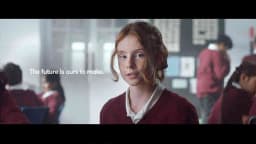
BT Beyond Limits Brings A Tale of Two Cities to British Screens
How BT's Beyond Limits Became the UK's Most Ambitious Telecoms Brand Film in a Generation BT's...
Cox Grandstories Finds Emotional Range in Broadband Advertising
Cox Communications launched Grandstories in September 2019, a short-film campaign created by agency 180LA that documented real grandparent and grandchild couples navigating social media together, positioning broadband internet as a vehicle for intergenerational connection rather than technical utility.
The campaign arrived in the United States during the week of Grandparents Day, with the anchor film — titled Larry's Story, also released under the subtitle Seize the Day — publishing on September 6, 2019, as reported by The Drum. The broader campaign launched on September 5, 2019, two days before the holiday fell on September 8. That timing was deliberate. By anchoring the release to a cultural moment already defined by family bonds, Cox and 180LA gave the campaign's emotional premise a ready-made context in which audiences were predisposed to reflect on cross-generational relationships.
The single media asset at the centre of Grandstories is a short documentary film following Larry, an elderly man, as he is assisted by a Cox employee in setting up a social media account so he can share stories with his granddaughter Jessica. The film incorporates letters written by Larry's late wife, Pat, adding a layer of grief, legacy, and urgency that elevates the spot well beyond product demonstration. The campaign structure extended across short videos documenting three separate grandparent and grandchild couples, as reported by The Drum, with Larry's Story functioning as the flagship narrative. In the United States, where telecommunications advertising has historically leaned on price, speed, and coverage maps, the Grandstories campaign represented a deliberate departure toward human storytelling. The campaign sits within Cox's broader brand platform, Bringing Us Closer, which Cox Communications launched in November 2018, according to The Drum, framing its broadband infrastructure not as commodity but as the connective tissue of family life.
Cox Communications competes in a crowded United States cable broadband and telecommunications market. Its principal rivals in residential broadband include Comcast Xfinity and Charter Spectrum, both of which have historically centred their advertising around speed tiers, pricing promotions, and network reliability claims. Against that competitive backdrop, Cox and 180LA chose an entirely different axis of differentiation for Grandstories: demonstrable human benefit.
The Americas telecommunications and pay-TV services market was approximately $630 billion in 2019, according to Blog Geoactivegroup, a market of sufficient scale that incremental brand preference, rather than pure acquisition, becomes a meaningful strategic goal. In a category where services are largely interchangeable to the average consumer, emotional resonance with a specific audience segment — in this case, older adults and the families who influence household purchasing decisions — offers a durable competitive advantage that price matching cannot replicate. The Grandstories campaign focused specifically on teaching grandparents to use social media to connect with family, as reported by The Drum, addressing a real and widely documented friction point in technology adoption among older adults in the United States. Cox's Bringing Us Closer platform, established in November 2018 per The Drum, provided the strategic architecture that made Grandstories coherent rather than episodic. The campaign did not attempt to sell a feature; it attempted to sell a feeling — the reassurance that connectivity closes distance between people who matter to each other. That framing sidesteps the commodity trap and positions Cox as a brand with a point of view on what technology is for, a posture more commonly associated with consumer electronics brands like Apple than with regional cable operators.
Mike Bokman directed Grandstories for 180LA. The choice of a documentary approach rather than scripted drama is the campaign's most consequential creative decision. By following real people — Larry, an elderly man navigating grief and technology simultaneously, and his granddaughter Jessica — the film earns emotional credibility that casting and performance alone could not manufacture.
Daniel Hollis served as Director of Photography, with editorial handled by Ken Mowe. Post-production and audio mixing were completed at Therapy Studios, according to production credits documented on Shots.net and in the portfolio of producer Michael Quinones at mikeq.tv. The production was executive produced by Cedric Troadec, with Michael Quinones producing and Carlin Cwik serving as Story Producer. The Story Producer credit is notable: it signals that the production process involved active development of narrative structure around real participants rather than simply filming documentary footage and cutting it in post. The inclusion of letters written by Larry's late wife, Pat, transforms what might have been a technology tutorial narrative into a meditation on legacy, presence, and the specific loneliness of widowhood in later life. That creative detail — sourced from real life rather than invented by a copywriter — gives Larry's Story a texture that audiences in the United States accustomed to telecommunications advertising would not have anticipated. Chief Creative Officer Al Moseley oversaw the campaign at 180LA, per credits published on Shots.net. The campaign contains a single media asset, as noted by Clapboard, which concentrates the entire creative argument into one film rather than diffusing it across a broader content ecosystem, a formally disciplined choice that reflects confidence in the core story.
No verified performance data for the Grandstories campaign is publicly available. Cox Communications has not published figures relating to view counts, earned media reach, brand lift, or business outcomes attributable to the campaign, and no third-party measurement organisation has reported independently verified results for this work. Clapboard assigns Grandstories a score of 64 out of 100.
Structurally, the campaign demonstrates several elements associated with effective emotional advertising in the United States telecommunications category. The anchoring of the launch to Grandparents Day, September 8, 2019, as reported by The Drum, gave the campaign a natural window of cultural relevance that would have amplified organic sharing among audiences predisposed to reflect on family. The documentary format, real subjects, and the specific narrative detail of Larry's late wife's letters all serve to generate the kind of authentic emotional response that drives unprompted social distribution — the most cost-efficient form of reach available to a campaign with a single media asset. The Bringing Us Closer platform context, per The Drum, means Grandstories did not need to do all strategic work alone; it operated as a campaign within a larger brand argument, which reduces the burden on any individual execution. The principal structural limitation is concentration risk: one film, one story, and one emotional register. A campaign built around three grandparent and grandchild couples, as The Drum reported, may have offered more surface area for audience identification across different family structures and demographics in the United States market.
Cox Grandstories is a 2019 short-film advertising campaign created by agency 180LA for Cox Communications in the United States. Timed to Grandparents Day on September 8, 2019, it documented real grandparent and grandchild couples using social media to connect, reinforcing Cox's Bringing Us Closer brand platform.
Mike Bokman directed Larry's Story for Cox Communications and 180LA. Daniel Hollis served as Director of Photography, Carlin Cwik as Story Producer, and Ken Mowe as Editor. Post-production and audio were completed at Therapy Studios, with Cedric Troadec executive producing and Michael Quinones producing.
Larry's Story follows an elderly man named Larry who is helped by a Cox employee to set up a social media account to share stories with his granddaughter Jessica. The film incorporates letters from Larry's late wife, Pat, grounding the technology narrative in themes of legacy, grief, and family connection.
Grandstories supports Cox Communications' Bringing Us Closer brand platform, which launched in November 2018, according to The Drum. The platform positions Cox broadband as a means of creating meaningful human connection rather than a technical commodity, with Grandstories serving as one campaign within that larger strategic framework.
Cox and 180LA launched Grandstories on September 5, 2019, to align with Grandparents Day on September 8. Timing the campaign to a cultural moment already defined by intergenerational relationships gave the film's emotional premise a natural context, increasing the likelihood of organic audience engagement and social sharing in the United States.
Clapboard assigns the Cox Grandstories campaign a score of 64 out of 100. The score reflects strong creative craft in its documentary approach and emotionally resonant storytelling, while noting that the campaign's concentration on a single media asset limits the breadth of audience identification across different family contexts.
.webp)
Creative Collaboration Platform: The Backbone of Modern Creative WorkWhat is a creative collaboration platform?Clapboard defines a creative collaboration platform as the operational core for today’s distributed creative teams. This is not a collection of digital collaboration tools stitched together; Clapboard’s system


Understanding the Creative Production MarketplaceWhat is a Creative Production Marketplace?Clapboard defines a creative production marketplace as a structured ecosystem where brands, agencies, and production talent converge to execute video, advertising, and branded content at scale. Unlike the legacy agency or freelanREAD FULL ARTICLE

The Urgent Need for a Creative Production Operating SystemWhy Traditional Creative Production Models Break DownClapboard sees the creative production landscape shifting under pressure. Content velocity is no longer a buzzword—it’s a mandate. Modern advertising demands relentless output across dozens of channels, each wREAD FULL ARTICLE