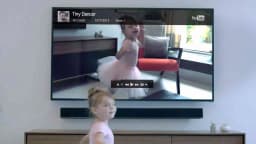
The campaign for Sprint, titled "The Text," leverages the authority and credibility of NASCAR driver Dale Earnhardt Jr. to address the persistent issue of distracted driving, specifically the dangers of texting while behind the wheel. The brand proposition centers on promoting safety through technological intervention—the Sprint Drive First app—which automatically blocks incoming texts and sends auto-replies to help drivers focus solely on driving. By framing the problem as the risky combination of "texting and driving," rather than either activity independently, the campaign positions Sprint as an enabler of safer driving habits without condemning mobile communication itself.
The market strategy hinges on an insightful linkage between a high-profile figure known for navigating risk at high speeds and the everyday challenge of distracted driving, particularly relevant during April's distracted driving awareness month. The creative approach uses humor and a relatable narrative to capture attention, with Earnhardt Jr. demonstrating real-world application of the app in a 30-second TV spot. This angle effectively connects with drivers who may rationalize multitasking behind the wheel by highlighting a simple, tech-driven solution. By focusing on the “and”—the conjunction that pairs texting and driving as the real danger—the campaign reframes the discourse on driver distraction, encouraging behavior change through convenience rather than restriction. This targeted message resonates within the electronics and technology market by emphasizing how mobile technology can mitigate risks associated with its own use, aligning product utility with public safety without moralizing the consumer's behavior.
FORMAT#8 ONGOING CHARACTERS OR CELEBRITIES — Uses a recurring personality or celebrity for brand recall.
This campaign clearly centers around Dale Earnhardt Jr., a highly recognizable NASCAR celebrity, explicitly leveraging his presence and expertise to add authority and relatability to Sprint’s message about distracted driving. While the spot contains elements of humor and a demonstration of the Sprint Drive First app, the core creative device is the use of Earnhardt as a celebrity to engage viewers and deepen brand recall. The narrative is built around his status as someone who knows driving risk intimately, making his endorsement credible and memorable. This aligns with the “Ongoing Characters or Celebrities” format, as the campaign hinges on his influential presence rather than solely telling a story, demonstrating usage, or symbolizing the problem or benefit.
1. Verizon – Market Positioning
Verizon positions itself as the leader in network reliability and coverage, emphasizing superior service quality and technological innovation. It targets consumers and businesses seeking dependable connections, supported by extensive 4G/5G networks and premium customer service.
2. AT&T – Market Positioning
AT&T focuses on offering an integrated ecosystem of wireless, broadband, and entertainment services. It differentiates through bundled packages, expansive network coverage, and investment in media content, targeting value-conscious consumers looking for seamless connectivity and diversified digital experiences.
3. T-Mobile – Market Positioning
T-Mobile brands itself as the "Un-carrier," disrupting traditional wireless norms with customer-friendly policies, affordable pricing, and innovative plans. It appeals to younger, tech-savvy audiences by emphasizing simplicity, no contracts, and rapid 5G deployment.
4. US Cellular – Market Positioning
US Cellular concentrates on delivering personalized customer service with a focus on underserved rural and suburban markets. It differentiates by leveraging local relationships, reliable network performance in niche regions, and community-centric marketing.
5. Google Fi – Market Positioning
Google Fi offers a flexible, tech-driven wireless service that integrates multiple carrier networks for optimized coverage and seamless international roaming. It targets digital natives who prioritize transparency, smart technology, and simple, pay-for-what-you-use pricing.
Q: What is The text about?
A: The text is a 2013 campaign for Sprint, created by Leo Burnett and Team Sprint, targeting the U.S. electronics and technology market. The campaign centers on a 30-second TV spot featuring NASCAR Sprint Cup Series star Dale Earnhardt Jr., who uses his authority as a professional driver to address the dangers of distracted driving, particularly texting while driving. Through humor and a relatable narrative, the spot introduces the Sprint Drive First app, which blocks incoming texts and sends automatic replies to help drivers stay focused. The campaign was directed by Scott Vincent and produced by Hungry Man, with creative leadership from Susan Credle and Michael Boychuk.
Q: What creative device does The text use?
A: The text employs the ongoing characters or celebrities format, as classified by Clapboard’s 12-format taxonomy (FORMAT#8). This approach leverages the recognizability and credibility of Dale Earnhardt Jr. to anchor the campaign’s message, using his status as a NASCAR driver to enhance brand recall and authority. Rather than relying solely on narrative or product demonstration, the campaign’s creative device is rooted in celebrity endorsement, making Earnhardt Jr. the focal point for engaging viewers and reinforcing Sprint’s commitment to driver safety.
Q: What is the campaign proposition for The text?
A: The campaign proposition for The text positions Sprint as a brand committed to public safety through technological innovation. By highlighting the Sprint Drive First app, which automatically blocks texts and sends auto-replies while driving, the campaign reframes the issue: driving and texting are not problematic in isolation, but their combination is the real risk. Targeting everyday drivers, especially during Distracted Driving Month, Sprint uses Dale Earnhardt Jr.’s authority to promote safer habits without condemning mobile use. This strategy aligns Sprint’s product utility with social responsibility in the electronics and technology market.
Q: How does The text rank in Clapboard's archive?
A: The text holds a Clapboard Campaign Score of 63/100. This score reflects the campaign’s creative ambition, execution quality, and cultural relevance as evaluated by Clapboard’s global ad archive.
Q: Who are the competitors in Sprint's category?
A: In Sprint’s competitive landscape, Verizon is positioned as the leader in network reliability and technological innovation, appealing to consumers seeking dependable service. AT&T differentiates itself with integrated wireless, broadband, and entertainment offerings, targeting value-conscious users seeking seamless connectivity. T-Mobile disrupts the market with customer-friendly policies and affordable plans, resonating with younger, tech-savvy audiences. US Cellular focuses on personalized service and strong performance in rural and suburban regions, while Google Fi targets digital natives with flexible, tech-driven wireless solutions that emphasize transparency and smart technology.


 ARCHIVE
.webp)