 ARCHIVE
Sapporo Returns the Favour With a Cultural Exchange Story
How Sapporo and The&Partnership Made Cultural Exchange the Heart of a Beer Campaign Sapporo's...
Malibu Sends Brian Cox to the Beach in Bold 2025 Campaign
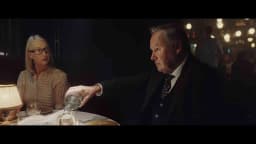
Malibu's 'Brian Cox Clocks Off' is a 2025 film campaign created by Wieden+Kennedy London that casts actor Brian Cox as a workaholic finally surrendering to leisure, running across the United Kingdom and United States as the second iteration of the brand's 'Do Whatever Tastes Good' platform.
The campaign launched globally on 8 April 2025, positioning Malibu — the white rum-based coconut liqueur owned by Pernod Ricard — not merely as a drink but as a cultural permission slip. The central comic tension is straightforward and deliberately on-the-nose: Brian Cox, internationally recognised for playing the ferociously driven media patriarch Logan Roy in Succession, is reimagined as a sun-drenched, roller-skating embodiment of switching off. The contrast between his established screen persona and the breezy beach setting generates the campaign's primary comic engine.
Strategically, 'Brian Cox Clocks Off' responds to a documented cultural pressure point. An OnePoll survey of 13,000 adults conducted between 21 and 31 March 2025, commissioned for the campaign and spanning the United Kingdom, United States, France, Germany, Greece, Italy, and Spain, found that 79% of workers regularly work overtime, according to reporting by Marketing Beat. That same survey, as reported by Marketing Beat, found the average overtime load across those seven countries runs to approximately 16 hours per week — the equivalent of two additional working days. Malibu deploys these findings not as sober social commentary but as comedic ammunition, with Cox embodying the extreme end of workaholism before the brand offers its characteristically sun-lit alternative. Distribution spans social media, online video, and broadcast channels across the United States and United Kingdom, ensuring the campaign reaches both markets simultaneously.
Malibu frames 'Brian Cox Clocks Off' as a direct response to a measurable and growing tension between professional obligation and personal enjoyment. The strategic foundation rests on a simple but commercially astute observation: if consumers feel guilty or culturally pressured to keep working, a brand that openly celebrates leisure occupies a genuinely differentiated position in the alcoholic drinks category.
The OnePoll survey data, as reported by Marketing Beat, provides the campaign with an unusually concrete consumer insight. Finding that 79% of adults across the United Kingdom, United States, and five other markets regularly work overtime transforms what could have been a generic 'relax and have a drink' message into a campaign with documented cultural relevance. Malibu is not inventing a problem — it is naming one its target consumers already experience and then positioning the act of clocking off as an aspirational, even defiant, choice.
This strategy places Malibu in clear competition with other premium flavoured spirits vying for the same leisure-oriented consumer. Diageo, whose portfolio includes competing flavoured rum and coconut spirits offerings, and William Grant & Sons, with its own growing premium spirits stable, both contest the same warm-weather, occasion-led drinking occasions that Malibu has historically owned. Pernod Ricard describes Malibu as the world's number-one brand in the white-rum-based coconut liqueur subcategory, according to pernod-ricard.com, which makes defending that positioning against encroaching competitors a strategic priority. By anchoring the 2025 campaign to a documented social phenomenon rather than a purely aspirational lifestyle image, Wieden+Kennedy London gives Malibu a more substantive reason to exist in consumer culture — particularly in the United Kingdom and United States, where work-life balance anxiety has become an increasingly prominent conversation.
Tim Heidecker directed 'Brian Cox Clocks Off' for production company Prettybird, bringing a sensibility well-suited to the campaign's deadpan comic register, as documented by thedrum.com and Little Black Book. The film's central visual joke — Brian Cox, roller-skating on a sun-drenched beach, visibly liberated from the boardroom — works because it is played with total commitment. Heidecker's direction leans into the absurdity without undercutting it with winking irony, allowing the audience to enjoy Cox's performance on its own terms.
The creative direction came from Freddy Taylor and Philippa Beaumont, Creative Directors at Wieden+Kennedy London, with Ana Balarin and Hermeti Balarin serving as Global Chief Creative Officers at the agency, according to lbbonline.com. Senior Creatives Brendan Madden and Spencer Llewellyn developed the campaign's concept, which The Drum's Amy Houston, writing on 8 April 2025, praised specifically for its reversal of Cox's Succession persona and its sunny beach setting as a tonal counterpoint to his established screen authority.
Tom Townend served as Director of Photography, lending the film a warmth and clarity that reinforces the escapist premise, per lbbonline.com. Edit house Stitch shaped the final cut, while 750mph handled sound design. Music supervisor Hollie Hutton selected Len's 1999 track 'Steal My Sunshine' as the campaign's soundtrack, a choice that The Drum noted as a deliberate tonal signal — the song's breezy, carefree energy mirrors the campaign's argument that leisure is not a reward for completing work but a legitimate end in itself. The combination of a recognisable character actor, a culturally resonant music choice, and a director comfortable with understated comedy gives 'Brian Cox Clocks Off' a production craft that elevates the central strategic idea rather than merely illustrating it.
The Drum named 'Brian Cox Clocks Off' its Ad of the Day on 8 April 2025, as reported by thedrum.com, representing an immediate signal of industry recognition on the day of the campaign's global launch. Trade press coverage across the United Kingdom and United States was broadly positive, with Marketing Beat, MediaPost, and LBBonline all covering the campaign's release and its supporting consumer research.
No independently audited campaign performance metrics — such as reach figures, view counts, or brand-lift measurements — are publicly available for 'Brian Cox Clocks Off' at the time of writing. What the public record does confirm is the scale of media ambition: distribution across social media, online video, and broadcast in both the United Kingdom and United States markets positions this as a substantial spend for Pernod Ricard's Malibu brand. The broader commercial context is worth noting. The global flavoured rum market is estimated at approximately 7.33 billion US dollars in 2025 and forecast to reach approximately 9.92 billion US dollars by 2031, implying a compound annual growth rate of around 5.17%, according to a market-report summary cited by musebyclios.com. Against that backdrop, Malibu is reported to have experienced a 10% sales decline in 2025, according to the same market-report summary, making the 'Brian Cox Clocks Off' campaign a commercially urgent creative intervention, not merely a brand-building exercise.
Clapboard rates 'Brian Cox Clocks Off' 67 out of 100. The score reflects a campaign with a strong cultural insight, well-chosen talent, and disciplined creative execution, tempered by the absence of publicly verified performance data and the inherent challenge of sustaining a platform-level idea across its second iteration without direct measurement to confirm its commercial effect.
Malibu's 'Brian Cox Clocks Off' is a 2025 film campaign created by Wieden+Kennedy London. It stars Brian Cox as a workaholic who finally embraces leisure, running across the United Kingdom and United States as the second iteration of Malibu's 'Do Whatever Tastes Good' platform, launched globally on 8 April 2025.
Brian Cox was cast specifically to subvert his Succession persona as a driven, ruthless executive. Placing Cox on a sun-drenched beach on roller skates generates immediate comic contrast. Wieden+Kennedy London built the campaign's humour around that reversal, making the act of clocking off feel genuinely defiant rather than simply aspirational.
Tim Heidecker directed the campaign for Malibu. Prettybird served as the production company, with Tom Townend as Director of Photography. Creative direction came from Freddy Taylor and Philippa Beaumont at Wieden+Kennedy London, with Global Chief Creative Officers Ana Balarin and Hermeti Balarin overseeing the work, according to lbbonline.com.
An OnePoll survey of 13,000 adults conducted between 21 and 31 March 2025 underpins the campaign. As reported by Marketing Beat, it found 79% of workers regularly work overtime, averaging approximately 16 extra hours weekly across the United Kingdom, United States, and five other markets, providing Malibu's strategic rationale.
Len's 1999 track 'Steal My Sunshine' soundtracks the campaign. Music supervisor Hollie Hutton selected the song, as documented by lbbonline.com. The Drum specifically praised the choice, noting its breezy energy reinforces Malibu's argument that leisure is a legitimate priority rather than a reward for finished work.
Clapboard rates 'Brian Cox Clocks Off' 67 out of 100. The score reflects strong cultural insight, well-chosen talent, and disciplined creative craft from Wieden+Kennedy London, while accounting for the absence of publicly verified campaign performance data and the challenge of sustaining a platform across its second iteration.
.webp)
Creative Collaboration Platform: The Backbone of Modern Creative WorkWhat is a creative collaboration platform?Clapboard defines a creative collaboration platform as the operational core for today’s distributed creative teams. This is not a collection of digital collaboration tools stitched together; Clapboard’s system


Understanding the Creative Production MarketplaceWhat is a Creative Production Marketplace?Clapboard defines a creative production marketplace as a structured ecosystem where brands, agencies, and production talent converge to execute video, advertising, and branded content at scale. Unlike the legacy agency or freelanREAD FULL ARTICLE

The Urgent Need for a Creative Production Operating SystemWhy Traditional Creative Production Models Break DownClapboard sees the creative production landscape shifting under pressure. Content velocity is no longer a buzzword—it’s a mandate. Modern advertising demands relentless output across dozens of channels, each wREAD FULL ARTICLE