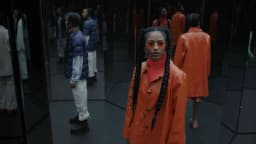
Time Warner Cable's 'Giant Screen, Frozen, Bobby Flay' campaign, created by PureGrowth in September 2014, used Food Network talent and a Disney film to

How Time Warner Cable Used Bobby Flay and Frozen to Sell Giant Screen TV
Time Warner Cable's 'Giant Screen, Frozen, Bobby Flay' campaign is a September 2014 United States film campaign created by New York agency PureGrowth, using Food Network talent Bobby Flay and the animated Disney feature Frozen to demonstrate the experiential value of large-screen home entertainment delivered through Time Warner Cable's cable television service, according to Eventmarketer.
The campaign comprises three media assets, each produced as a film execution. Its strategic premise is straightforward: the size and quality of a subscriber's screen transforms the act of watching into something categorically different from ordinary television viewing. By pairing a culturally dominant animated film — Frozen had become a global phenomenon by 2014 — with the recognisable on-screen authority of celebrity chef Bobby Flay, PureGrowth constructed a dual-register argument. One register appeals to families drawn to Frozen's broad entertainment appeal. The other appeals to taste-conscious adults who associate Bobby Flay with quality and discernment. Together, the two figures bracket what Time Warner Cable wanted consumers to understand as the full spectrum of giant-screen value.
In the United States, the campaign arrived at a moment of genuine competitive pressure for cable operators. Time Warner Cable was defending its subscriber base against satellite and emerging IPTV alternatives while simultaneously positioning its premium tier as worthy of household investment. The giant screen concept gave the brand a tangible, emotionally legible way to frame that argument — not through technical specification, but through the pleasure of the viewing experience itself, according to Giantscreencinema. Food Network, the network partner on the production, brought an existing audience relationship and a credible lifestyle context to the execution, grounding what could have been an abstract technology claim in recognisable, aspirational domestic life, according to Mediapost.

Time Warner Cable operated in a United States pay-television market that, according to ABI Research, totalled more than 582 million cable subscribers globally at year-end 2014, with cable growth slowing to approximately three percent year-over-year as IPTV expanded at roughly fourteen percent, per the same ABI Research data, according to Globalmarketmonitor. That deceleration created real urgency for incumbent cable operators seeking to retain and upgrade existing subscribers rather than simply acquire new ones.
PureGrowth's strategic response was to sidestep the technology conversation almost entirely. Where a competitor such as Comcast — which, according to publicly available regulatory filings, was the largest US cable operator by subscriber count at the time — might lean into infrastructure or speed claims, the Giant Screen campaign chose experiential desire as its primary lever. The logic is defensible. Consumers do not upgrade their viewing environment because they understand bandwidth; they upgrade because they can imagine a better version of an evening at home. Bobby Flay and Frozen are both vivid, emotionally accessible stand-ins for that better evening.
Food Network's involvement, through marketing leadership including Susie Fogelson as SVP of marketing, creative services and PR, and Jamie Lesser as director of marketing partnerships, reflects a co-branded strategy that distributed the campaign's credibility across two established media properties. Time Warner Cable carried Food Network; Food Network's talent appeared in Time Warner Cable advertising. The arrangement is mutually reinforcing in a way that pure product demonstration rarely achieves. The campaign also sits within a broader lineage of Time Warner Cable brand-building work, including the 2011 SignatureHome campaign by agency Rapp and the Spanish-language Mi Vida, A Mi Manera integrated campaign, also from 2011, both documented in trade coverage by NextTV and Chief Marketer respectively, which together suggest a brand historically willing to invest in audience-specific, lifestyle-inflected creative strategy rather than commodity price messaging.
Director Chris Smith led production on the Giant Screen, Frozen, Bobby Flay campaign for Time Warner Cable, working through production company Sugar Film Production. Smith's direction shaped three film assets, each tasked with translating the abstract promise of large-screen home entertainment into something visually self-evident — a task that requires the camera itself to demonstrate scale, immersion, and presence rather than merely describe them.
The creative leadership at PureGrowth was provided by Chris Clarke, serving as CEO and creative director, and Dani Simpson, serving as president. That pairing places both strategic and executional authority close to the top of the agency, which is consistent with a campaign built around a relatively precise brand positioning argument rather than a broad-reach awareness play. When creative direction and agency leadership are unified at that level, campaigns tend to reflect a tighter conceptual discipline — the Giant Screen work's dual-talent structure, anchoring each asset around either Bobby Flay's culinary authority or Frozen's family appeal, reads as a deliberate architectural choice rather than an opportunistic casting decision.
On the client and network side, Food Network's marketing partnerships manager Megan Wilson joined Lesser and Fogelson in shepherding the brand collaboration, ensuring that the deployment of Bobby Flay as a campaign figure remained coherent with Food Network's own brand standards and audience expectations. Sugar Film Production's involvement as the production company of record brought dedicated commercial production infrastructure to a campaign that needed to look and feel premium — giant-screen content, after all, should not be made on a small-screen aesthetic. The three assets together form a campaign system rather than a single hero film, giving Time Warner Cable flexibility across placements while maintaining a unified creative argument across all executions.
No verified performance data for the Giant Screen, Frozen, Bobby Flay campaign is publicly available. No published effectiveness data, sales lift, market-share change, or media spend figures have been documented across public sources, and no award recognition has been recorded across Cannes Lions, the Effies, the One Show, D&AD, the Clios, the Webby Awards, or WARC Awards, per Clapboard's archive research. The campaign carries a Clapboard Score of 54 out of 100, reflecting a structurally coherent but modestly differentiated execution within the broader media and entertainment advertising category.
Analysed on structural grounds, the campaign's most durable asset is its use of two culturally specific talent choices to carry a single, unified message. Bobby Flay and Frozen do not compete for the same audience; they expand the campaign's total addressable household. A family watching Frozen on a giant screen and a food enthusiast watching Bobby Flay on the same screen are both experiencing the same product benefit — immersive viewing — framed through content they already value. That is an efficient creative economy for a three-asset film campaign.
The campaign's structural limitation, also visible in the Clapboard Score, is that the giant-screen proposition itself was not exclusive to Time Warner Cable in the United States market. In 2014, Comcast and satellite providers offered comparable display technology arguments. Without a proprietary differentiator beneath the experiential claim, the campaign's persuasive power depended heavily on the talent associations holding their cultural weight — which, given Frozen's extraordinary cultural saturation at that moment, was a reasonable but time-limited bet. As an archive document, the campaign stands as a competent example of lifestyle-anchored cable television marketing from a period of genuine transition in the US pay-TV industry.
Time Warner Cable's Giant Screen campaign promoted the experiential value of large-screen home viewing. Created by PureGrowth in September 2014, it used Bobby Flay and the animated film Frozen to demonstrate how cable television content is transformed by screen size, targeting family and lifestyle audiences in the United States simultaneously.
PureGrowth, a New York agency, created the Giant Screen, Frozen, Bobby Flay campaign for Time Warner Cable. The agency was led by CEO and creative director Chris Clarke and president Dani Simpson, who jointly oversaw creative and strategic development for the September 2014 United States film campaign.
Director Chris Smith directed the Giant Screen, Frozen, Bobby Flay campaign for Time Warner Cable. Smith worked through production company Sugar Film Production to create three film assets, each built around the central proposition that large-screen home entertainment transforms the experience of watching cable television content.
Time Warner Cable used Bobby Flay to connect its giant-screen proposition to a taste-conscious adult audience through Food Network, the campaign's network partner. Flay's association with culinary quality gave the campaign a lifestyle credibility that a purely technical argument about screen size and cable delivery would not have achieved on its own.
The Giant Screen, Frozen, Bobby Flay campaign holds a Clapboard Score of 54 out of 100. The score reflects a structurally coherent creative execution with a clear dual-audience strategy, offset by a product proposition — large-screen home viewing — that was not exclusive to Time Warner Cable in the competitive 2014 US cable market.
The Giant Screen, Frozen, Bobby Flay campaign did not win awards. No recognition has been recorded across Cannes Lions, the Effies, the One Show, D&AD, the Clios, the Webby Awards, or WARC Awards, according to Clapboard's archive research. No published performance or effectiveness data for the campaign is publicly available from any named source.
.webp)
Creative Collaboration Platform: The Backbone of Modern Creative WorkWhat is a creative collaboration platform?Clapboard defines a creative collaboration platform as the operational core for today’s distributed creative teams. This is not a collection of digital collaboration tools stitched together; Clapboard’s system


Understanding the Creative Production MarketplaceWhat is a Creative Production Marketplace?Clapboard defines a creative production marketplace as a structured ecosystem where brands, agencies, and production talent converge to execute video, advertising, and branded content at scale. Unlike the legacy agency or freelanREAD FULL ARTICLE

The Urgent Need for a Creative Production Operating SystemWhy Traditional Creative Production Models Break DownClapboard sees the creative production landscape shifting under pressure. Content velocity is no longer a buzzword—it’s a mandate. Modern advertising demands relentless output across dozens of channels, each wREAD FULL ARTICLE