Alliance Française de Singapour's 2017 Ogilvy campaign staged real pitch meetings where Hollywood producers rejected acclaimed French films they didn't know

Alliance Française de Singapour Pitches French Masterpieces to Hollywood
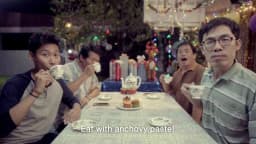
Alliance Française de Singapour's 2017 campaign, created by Ogilvy, stages real pitch meetings in which an actor playing a French filmmaker presents the stories of celebrated French films to Hollywood producers, who reject them as uncommercial — unaware that each story already exists as a critically acclaimed, award-winning release.
Published in Singapore in April 2017, the campaign centres on a single film asset in which the unnamed filmmaker pitches the narratives of three Palme d'Or-winning or critically lauded works: La Vie d'Adèle (known internationally as Blue Is the Warmest Colour), Amour, and Entre les murs (released as The Class). The Cannes Palme d'Or is the highest prize awarded at the Cannes Film Festival, and each of these French films had already earned significant international recognition before Hollywood dismissed their premises as unfit for mass audiences. The campaign carries the dual title "Hollywood rejects acclaimed French cinema masterpieces" and "Pitching French Films to Hollywood," and was submitted to the industry press approximately eight years ago.
The objective is both cultural and commercial. Alliance Française de Singapour, the French cultural institution serving Singapore audiences, uses the campaign to draw attention to the gap between Hollywood blockbusters and the kind of storytelling that French cinema consistently produces — and to drive ticket bookings for French cinema screenings among non-French residents. In Singapore, where English-language Hollywood product dominates multiplexes, the cultural case for French films requires an argument built not on subtitles or prestige but on demonstrable proof that these French masterpieces outperform Hollywood's own standards of ambition. The campaign, classified under the public interest category, was produced by Joinery, based in Los Angeles, with creative direction by Ogilvy's Singapore office.
Alliance Française de Singapour occupies a specific position in Singapore's cultural landscape: it promotes French language, culture, and cinema to a predominantly English-speaking, multiracial audience that has no inherent obligation to seek out French films. The strategic challenge Ogilvy identified was not simply awareness — it was relevance. French cinema carried critical cachet but limited popular urgency in a market where Hollywood blockbusters set the default for mainstream entertainment.
The campaign's insight is precise and counterintuitive. Rather than positioning French masterpieces as superior alternatives to Hollywood product, it reframes them through Hollywood's own commercial logic. By showing that the actual stories of Palme d'Or-winning films — Amour, Entre les murs, and La Vie d'Adèle — are rejected by industry gatekeepers as uncommercial, the campaign reveals a genuine and ironic gap: the films Hollywood would never greenlight are the very films that have earned cinema's highest honours. As one unnamed Hollywood producer in the film states, according to adsoftheworld.com, "Nobody wants to see somebody die for an hour and a half."
Comparable cultural institutions operating in Singapore and the broader region — including the Goethe-Institut and the British Council — pursue audience development through programming, festivals, and educational partnerships. Ogilvy's approach for Alliance Française de Singapour diverges from this model by adopting the language and format of entertainment itself: a hidden-camera-style pitch meeting that generates its argument from the reaction of real industry participants rather than institutional assertion. The National Arts Council of Singapore, per Nac Gov Sg, supports arts development across the city-state, and cultural organisations in this environment must compete for audience attention in an advertising-literate, media-saturated market. The 2017 campaign answers that competitive reality with a creative format designed to travel beyond paid media entirely.
The campaign's creative execution depends entirely on a single, carefully constructed deception. A performer playing an aspiring French filmmaker meets with real Hollywood producers in staged pitch meetings, presenting the story premises of three celebrated French films — without revealing that the films already exist. The producers' unscripted dismissals become the campaign's argument, delivering the case for French cinema through Hollywood's own scepticism.
Executive Creative Director Nicolas Courant and Creative Director Axel Grimald, working at Ogilvy's Singapore office, built the campaign's rhetorical structure around this reversal: the audience's knowledge that these are real, acclaimed films transforms every producer rejection into evidence of Hollywood's creative limitations. Art Director David Stevanov and Copywriter Aritra Dutta shaped the film's visual and verbal economy, keeping the format plain and observational so that the irony lands without editorialising. The production company Joinery, based in Los Angeles, handled filming, a logistical choice that placed the shoot in the same city as the producers being approached and lent the pitch meetings an unambiguous authenticity, as documented by adsoftheworld.com.
The films selected for the pitch — La Vie d'Adèle, Amour, and Entre les murs — were chosen because their premises, stripped of context and presented cold, sound uncommercial or niche by Hollywood standards. A film about elderly love and death. A film set almost entirely in a Paris classroom. A film about a young woman's sexual and emotional awakening. Each rejection by a real industry participant reinforces the campaign's central thesis, expressed in a title card that, per adsoftheworld.com, reads: "There are masterpieces Hollywood will never produce." The campaign comprises a single film asset, a constraint that concentrates creative risk and reward into one execution. Production credits are documented across adsoftheworld.com and The One Club.
The campaign earned a Gold Pencil from The One Show in 2018, according to oneclub.org — one of advertising's most respected creative honours. D&AD also holds an archive entry for the campaign, as documented on dandad.org, though the specific pencil level and category could not be verified from available sources. No verified results were found for Cannes Lions, Effies, Clios, Webbys, or WARC, per adsoftheworld.com and clapboard.com.
On the audience development objective — the commercial reason Alliance Française de Singapour commissioned the campaign — the results are material. The campaign generated a 43% increase in the number of non-French people booking tickets for French cinema screenings, according to adsoftheworld.com and oneclub.org. In Singapore, where the target audience has no linguistic or cultural default toward French films, a near-half increase in bookings among non-native audiences represents a meaningful shift in behaviour, not merely in sentiment. No media budget, production budget, or paid-media spend data was disclosed by Alliance Française de Singapour, Ogilvy, or any third-party source, per ogilvy.com and adsoftheworld.com.
Structurally, the campaign's effectiveness rests on its format's inherent shareability: a hidden-camera reveal in which the audience holds knowledge that the participants on screen do not. This information asymmetry is a reliable engine for attention and organic distribution, particularly in a market as digitally connected as Singapore. The Clapboard Score for this campaign is 76 out of 100, reflecting strong creative originality and verified award recognition weighed against the limited scale of a single-asset, single-market execution with no disclosed media investment.
Alliance Française de Singapour's campaign stages real pitch meetings where Hollywood producers reject acclaimed French films without knowing they exist. Created by Ogilvy in Singapore in April 2017, it features the stories of three Palme d'Or-winning or celebrated films — Amour, Entre les murs, and La Vie d'Adèle — presented as original pitches.
Three celebrated French films are featured in the campaign. They are La Vie d'Adèle (known as Blue Is the Warmest Colour), Amour, and Entre les murs (known as The Class). All three are critically acclaimed works, and their premises were pitched to Hollywood producers without revealing they were real films, according to adsoftheworld.com.
The campaign won a Gold Pencil at The One Show in 2018, according to oneclub.org. D&AD also holds an archive entry for the campaign, per dandad.org, though the specific pencil level could not be verified. No verified results were found for Cannes Lions, Effies, or Clios, per adsoftheworld.com and clapboard.com.
The campaign generated a 43% increase in non-French people booking tickets for French cinema screenings in Singapore, according to adsoftheworld.com and oneclub.org. No media or production budget figures were publicly disclosed by Alliance Française de Singapour or Ogilvy, per ogilvy.com and adsoftheworld.com.
Ogilvy's Singapore office created the campaign. Executive Creative Director Nicolas Courant and Creative Director Axel Grimald led the creative team, supported by Art Director David Stevanov and Copywriter Aritra Dutta. Production was handled by Joinery, based in Los Angeles, as documented by adsoftheworld.com and oneclub.org.
Ogilvy used the producers' unscripted rejections to prove that Hollywood would never greenlight films that French cinema has already made and celebrated. In Singapore, where Hollywood blockbusters dominate, this format reframed French masterpieces through a commercial lens that local audiences could immediately recognise, making the cultural argument concrete rather than institutional.
.webp)
Creative Collaboration Platform: The Backbone of Modern Creative WorkWhat is a creative collaboration platform?Clapboard defines a creative collaboration platform as the operational core for today’s distributed creative teams. This is not a collection of digital collaboration tools stitched together; Clapboard’s system


Understanding the Creative Production MarketplaceWhat is a Creative Production Marketplace?Clapboard defines a creative production marketplace as a structured ecosystem where brands, agencies, and production talent converge to execute video, advertising, and branded content at scale. Unlike the legacy agency or freelanREAD FULL ARTICLE

The Urgent Need for a Creative Production Operating SystemWhy Traditional Creative Production Models Break DownClapboard sees the creative production landscape shifting under pressure. Content velocity is no longer a buzzword—it’s a mandate. Modern advertising demands relentless output across dozens of channels, each wREAD FULL ARTICLE