French Film Festival's 2014 campaign by Publicis Lisboa turned a reputation for slow, dull cinema into a creative strength across the Portuguese market.

French Film Festival Rewrites Its Reputation With One Digital Pause
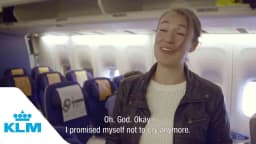
"The Last Great Master of Pauses" is a 2014 digital campaign created by Publicis Lisboa for the Frenchfilmfestival Org Uk.clapboard.com/archive/festival-140-caracteres-things-travel">French Film Festival in Portugal, designed to dismantle the perception that French cinema is overly intellectual, slow, and dull by recasting deliberate pacing as a form of artistic mastery.
Institut Français commissioned the campaign to mark the 15th edition of the French Film Festival, published in September 2014. The strategic challenge was direct: French cinema carried a cultural reputation in Portugal that positioned it as inaccessible and ponderous. Rather than argue against that reputation, the campaign chose to reinterpret it. The pause — long regarded as evidence of tedium — became the central creative device, repositioned as the signature of a great filmmaker's craft, according to Academia Edu. The campaign operates as a single digital asset, a focused execution that concentrates its entire argument within one controlled narrative moment.
In Portugal, the French Film Festival sits within the broader recreation and leisure industry, competing for audience attention alongside mainstream Hollywood programming and domestic Portuguese cinema. The festival's institutional partners include the French Embassy, the Portuguese Cinematheque, SIC, and Unifrance, giving the event genuine cultural infrastructure. The campaign's role was not simply to sell tickets but to shift a deeply embedded cultural attitude — to make Portuguese audiences curious rather than cautious about French films. The Clapboard Score for this campaign is 63 out of 100, reflecting a creatively coherent concept that is structurally sound but constrained by a single-asset digital footprint.
Institut Français identified a specific perceptual barrier among Portuguese audiences in 2014. French cinema's association with intellectual difficulty and narrative slowness is not unique to Portugal — it is a broadly documented tension in European film culture — but it carried particular commercial weight in a leisure market where audiences make active, competitive choices about how to spend discretionary time.
Portugal's recreation and leisure industry in 2014 was shaped by a recovering economy and a cultural environment in which cinema attendance was a meaningful but price-sensitive activity. According to the Film Collaborative, international co-production markets at the time were increasingly competitive, with festivals and national film organisations working harder to justify cultural relevance to general audiences rather than specialist cinephiles, according to Clip Cafe. In this context, the French Film Festival faced a positioning problem shared by many cultural institutions: its perceived audience was narrow, and its programming was assumed to demand more effort than entertainment.
The strategic insight underpinning "The Last Great Master of Pauses" is precisely calibrated. By naming the criticism — that French films are slow — and then elevating the quality being criticised into a marker of mastery, Publicis Lisboa executed a classic reframing manoeuvre. Competitors for leisure time in Portugal in 2014 included not only Hollywood blockbusters distributed by major studios but also the growing availability of on-demand streaming content, which made the case for leaving home to attend a festival screening harder to make, according to Quodb. Against that backdrop, the campaign needed to offer a reason to care that was cultural and emotional rather than functional. The decision to work in the digital medium reflected both budget realities and audience behaviour in the Portuguese market at the time.
"The Last Great Master of Pauses" was produced by Love Magna and directed by Salomão Figueiredo. The campaign's creative direction was led by Pedro Ribeiro, with copywriting by Maria Lisbon and Mauricio Bina, and art direction by Ana Costa, Pedro Oliveira, and Lincoln Guimarães.
The creative execution rests on a single, disciplined narrative idea: that the pause in French cinema is not a flaw but a form of authorship. The campaign contains one media asset, and that constraint is itself a reflection of the creative philosophy — concentration over sprawl, deliberateness over volume. In structural terms, this mirrors the very quality the campaign celebrates. The decision to execute the concept digitally allowed the pacing and timing of the asset to be precisely controlled, which is essential when the central argument is about the expressive power of a moment held longer than expected.
The copywriting by Maria Lisbon and Mauricio Bina carries significant weight in this execution, because the entire reframing depends on language and tone landing with precision. Calling the subject "The Last Great Master of Pauses" is a move that grants cinematic authority — the word "master" does considerable cultural work, connecting to the vocabulary of auteur criticism without requiring the audience to already hold that vocabulary. Art directors Ana Costa, Pedro Oliveira, and Lincoln Guimarães provided the visual context that anchors the narrative claim in something concrete and watchable rather than merely rhetorical. The campaign's strength lies in the coherence between its concept and its form: a campaign about the artistry of restraint is itself restrained.
No verified performance data for "The Last Great Master of Pauses" is publicly available. No verifiable trade press reviews have been identified in Campaign, Ad Age, Adweek, The Drum, or Contagious, and no award records have been confirmed across major industry bodies for this campaign.
Structural analysis, however, supports a measured reading of the campaign's effectiveness. The reframing strategy is conceptually robust: it identifies a real audience objection, acknowledges it rather than deflecting it, and converts it into a proof point for quality. This is a more sophisticated move than simply asserting that French cinema is exciting or accessible. For the recreation and leisure sector in Portugal, where cultural events compete against lower-effort entertainment alternatives, campaigns that shift attitude rather than simply announce programming carry greater long-term value.
The single-asset digital format limits reach and frequency, which likely constrained how broadly the perception shift could travel within the Portuguese market. Unifrance, which supports the international promotion of French cinema according to its published mandate on En Unifrance, provides the festival with an institutional promotional framework, but campaign-level amplification appears to have been narrow. The Clapboard Score of 63 out of 100 reflects a campaign that earns its marks on conceptual clarity and creative coherence but loses ground on scale, documented impact, and executional breadth. For a 15th-edition festival working to reposition a cultural category in a specific national market, the strategy was well-chosen even where the execution was compact.
Institut Français created the campaign to change how Portuguese audiences perceived French cinema. The brief specifically targeted the view that French films are overly intellectual, slow, and dull, repositioning deliberate narrative pacing as a marker of artistic mastery rather than a creative weakness.
Publicis Lisboa created the campaign. The team included creative director Pedro Ribeiro, copywriters Maria Lisbon and Mauricio Bina, and art directors Ana Costa, Pedro Oliveira, and Lincoln Guimarães. The campaign was produced by Love Magna and directed by Salomão Figueiredo.
The campaign was published in September 2014 in Portugal. It marked the 15th edition of the French Film Festival and was classified as a digital campaign containing a single media asset.
The French Film Festival's institutional partners included the French Embassy, the Portuguese Cinematheque, SIC, and Unifrance. These partners provided the festival with cultural infrastructure and distribution reach within the Portuguese recreation and leisure market.
No verified award records for "The Last Great Master of Pauses" have been confirmed across major industry bodies. No trade press coverage has been identified in Campaign, Ad Age, Adweek, The Drum, or Contagious, making independent performance assessment reliant on structural creative analysis.
The campaign holds a Clapboard Score of 63 out of 100. The score reflects strong conceptual clarity and creative coherence in reframing French cinema's perceived slowness as artistry, offset by a limited single-asset digital footprint and the absence of publicly verified performance metrics.
.webp)
Creative Collaboration Platform: The Backbone of Modern Creative WorkWhat is a creative collaboration platform?Clapboard defines a creative collaboration platform as the operational core for today’s distributed creative teams. This is not a collection of digital collaboration tools stitched together; Clapboard’s system


Understanding the Creative Production MarketplaceWhat is a Creative Production Marketplace?Clapboard defines a creative production marketplace as a structured ecosystem where brands, agencies, and production talent converge to execute video, advertising, and branded content at scale. Unlike the legacy agency or freelanREAD FULL ARTICLE

The Urgent Need for a Creative Production Operating SystemWhy Traditional Creative Production Models Break DownClapboard sees the creative production landscape shifting under pressure. Content velocity is no longer a buzzword—it’s a mandate. Modern advertising demands relentless output across dozens of channels, each wREAD FULL ARTICLE