



Varun Katyal | Founder, Clapboard
Varun Katyal is the Founder & CEO of Clapboard and a former Creative Director at Ogilvy, with 15+ years of experience across advertising, branded content, and film production. He built Clapboard after seeing firsthand that the industry’s traditional ways of sourcing talent, structuring teams, and delivering creative work were no longer built for the volume, velocity, and complexity of modern content. Clapboard is his answer — a video-first creative operating system that brings together a curated talent marketplace, managed production services, and an AI- and automation-powered layer into a single ecosystem for advertising, branded content, and film. It is designed for a market where brands need content at a scale, speed, and level of specialization that legacy agencies and generic freelance platforms were never built to deliver. The thinking, frameworks, and editorial perspective behind this blog are shaped by Varun’s experience across both the agency world and the emerging platform-led future of creative production. LinkedIn: https://www.linkedin.com/in/varun-katyal-clapboard/
So What’s Above the Line and What’s Below the Line?
First, one must recognize the distinction between "below the line" and "above the line." These words relate to the movie's budget, which includes a list of every crew member and the ultimate cost of production. Usually, they are split up into those who conceptualise the creative vision and those who carry it out.
“Above the Line” refers to the people involved in the artistic development of the production; staff including producers, directors, cinematographers/photographers, screenwriters, and talent.
The individuals in pre-production, production, and post-production who are in charge of the regular filming are known as "Below the Line." The camera, electrical, grip, production design, costume, and makeup departments are a few examples of such divisions.
Above the Line
- Executive producer- the person in control of both the film's production and, consequently, its financing.
- Producer- the person in charge of overseeing the making of movies. The Producer manages all the moving elements of the production process and provides financial reports to the Executive Producer.
- Line Producer- the person in charge of the day-to-day operations of the feature film. They back up the schedule, hiring, locations, and financial plan. During production, they take care of the everyday logistics. In the editing phase, they manage the budget and deadlines.
- The Director- Oversees the artistic vision and directs the cast and crew to realise it.
- Director of Photography- The person in charge of the film's visual aesthetic. This individual, sometimes known as the director of photography (DP) or cinematographer, controls the camera and lighting teams to execute the director's cinematic vision.
- Screenwriter- The author of the screenplay
- Talent- The actors who play the movie's characters. both the lead and auxiliary cast.
Below the Line
Production Management
- Unit Production Manager- The general management, finances, and scheduling of the set fall under the purview of the unit production manager.
- Production Coordinator- Equipment, materials, and personnel are organised by the production coordinator, who also sets up the production office.
- Production Secretary- Assists the Production Manager and Coordinator with administrative tasks. Answering phones, creating mailings, planning meetings and travel arrangements, managing supplies, and relaying messages are all tasks associated with this role
- Production Accountant- The production accountant is in charge of managing the budget and keeping track of financial transactions while a movie is being made. They collaborate closely with the producer and the production office.
- Office Production Assistant- Office production assistants manage paperwork, take calls, and pick up and deliver supplies while supporting the administrative aspects of film production.
Assistant Directors
- 1st AD (Assistant Director)- To guarantee a successful shoot, this individual sets the shooting schedule in collaboration with the director, the director of photography, and other department leaders. Together with the producers and crew chiefs, the first AD establishes the shooting schedule, manages the call sheet, and ensures that everyone is there when needed. They "call the roll," which refers to instructing the various department heads to get ready for the day's filming, and they serve as a general intermediary between the Director and the rest of the crew.
- 2nd Assistant Director- Together with the production coordinator, create the daily call sheets based on the production schedule. The "second" also acts as the "backstage manager," coordinating with performers and overseeing cast preparation for dress and makeup.
- 2nd 2nd Assistant Director- The second assistant director aids the first assistant director and second assistant director by assisting them and keeping the production on schedule. In charge of assembling and leading the extras, organising the on-set vehicles, controlling the PAs, and making sure everything runs properly.
- Set Production Assistant- A set production assistant does errands, distributes scripts, organises craft services, and helps with lighting and sound for studio and on-location filming, among other technical and administrative chores. basically anything that must be completed to support the process.
Continuity Department
- Script Supervisor- Oversees the consistency of each production element, including clothing, props, set dressing, hair, makeup, and the actions of the performers during a scene, from shot to shot and scene to scene, throughout principal photography.
Camera Department
- Camera Operator- Under the supervision of the director of photography, frames shots, uses and maintains equipment, and proactively changes any procedures to advance production.
- 1st Assistant Camera- Also known as "the focus puller," the primary responsibility of the first assistant camera is to use the focusing ring on the lens while sitting close to the camera while recording. Maintaining the proper topic in focus throughout each scene is the responsibility of the focus puller.
- 2nd Assistant Camera- Also known as "the clapper loader," , this person's primary responsibilities as a member of a film crew, include loading raw film stock into camera magazines, operating the clapperboard (slate) at the start of each take, marking actors as required, and keeping track of all documentation and records for the camera.
- DIT (Digital Imaging Technician)- This professional provides assistance to the director of photography with the camera's digital know-how. Given that these limitations are different from shooting with film, they provide advice to the DoP on contrast, brightness, and the impacts of under or overexposure. A DIT handles data management from the set to the editorial room and serves as a bridge between the production and post production departments.
(source: www.filminquiry.com)
Electrical Department
- Gaffer: The gaffer is in charge of the electrical department and serves as the set's chief lighting technician. The gaffer's responsibility is to oversee a group of lighting specialists as they carry out a production's lighting design.
- Best Boy Electric: Acts as the gaffer's principal assistant.
- Generator Operator: Installs electrical generators on location or on a set when electricity is otherwise unavailable to supply extra power or where existing circuits are insufficient.
- Lighting specialists: Assist the gaffer by carrying out the lighting scheme.\
Grip Department
- Key Grip- The grip chief for the division. The key grip and their grip team are in charge of managing all of the rigging and other production-related equipment. Putting down sandbags, setting up overheads and silks, mounting lights on moving vehicles for running shots, and moving and fixing heavy equipment are a few key responsibilities.
- Best boy grip- Serves as the Key Grip's main supporter.
- Dolly grip- A specialist with special training in operating camera dollies is known as a "dolly grip." A camera operator and a camera assistant ride on the dolly as this technician positions, levels, and moves the dolly track.
- Grip- Manages all rigging chores for a movie production, assisting the Key Grip and Best Boy Grip.
Art Department
- Production designer- Focuses on creating the film's overall "look." Working collaboratively with the director and producer, they choose a design aesthetic for the sets, locations, graphics, props, lighting, camera angles, and costumes.
- Art Director- The production designer's direct assistant, the art director, is in charge of setting up and decorating the stage.
- Set designer- In charge of planning and building the backdrops for the movie.
- Concept Illustrator- In charge of planning and building the backdrops for the movie.
- Storyboard Artist- The storyboard artist collaborates with the director to visually interpret the screenplay and creates a series of hand-drawn or computer-generated drawings, known as storyboards, to depict the plot. when making a live-action movie, more frequently collaborates with the director, DoP and creative team than when making an animated movie.
Construction Department
- Construction Coordinator: Oversee the work of a group of artisans, such as carpenters, painters, riggers, and plasterers, to guarantee that all sets are finished on time, under budget, and in accordance with production specifications.
Casting Department
- Casting director- Actors are cast for all of the roles in a movie by the casting director, who coordinates and facilitates the process.
- Local Casting director- A local casting director is employed to enable local hires if the project is shot in many locations.
- Extras Casting director- Find extras for a big-budget movie.
Cast
- Stand in- An individual who fills in for an actor prior to production for technical requirements like lighting and camera setup while collaborating closely with the camera crew.
- Background- Actors who don't have dialogues
Hair and Make-up Department
- Key Hair Stylist- The head of the hair department collaborates with the director, production designer, and key makeup artist to develop distinctive looks that complement the movie's overall aesthetic.
- Key make-up artist- Apply makeup to actors playing lead roles and maintain consistency in application throughout the production. They would also execute any exceptionally intricate designs when required.
Costume Department
- Costume Designer- The person in charge of creating the outfits worn by performers in a movie is a costume designer.
- Wardrobe Supervisor- The wardrobe supervisor oversees the arrangement, upkeep, and consistency of the costumes during the movie shoot.
Location Department
- Location Manager- Involved with locating and securing the production's locations, collecting all necessary fire, police, and other governmental permits, and organising the logistics necessary to carry out the production's tasks.
- Location Scout- Looks for indoor or outdoor locations to use as the backdrop for situations that are described in a script.
- Location Security- Provides a safe and secure environment for production thanks to location security.
Sets Department
- Set decorator- Set decorators are in charge of filling sets with elements that are distinctive to characters and their settings, from daily routines and other minute details to the adornment of artwork and furniture.
- On set dresser- Before filming, they arrange items on a set like placing furniture, hanging photos, and arranging decorative things. They are supervised by the set decorator and the production designer.
- Greensman- Works closely with the special effects crew, set decorators, and production designers to bring the director's vision for the setting of the film to life.
Prop Department
- Property master- The props are prepared for each day's shoot by the property master, who also makes, stores, and transports the props. While creating props, they hire carpenters, artists, and prop manufacturers and in lieu with the production schedule.
- Assistant Prop Master- Helps the prop master out with anything the actors lay hands on on the set. They make sure the appropriate props are prepared, available for use during filming, and archived once a scene is finished.
Stunts Department
- Stunt Coordinator- A skilled stunt performer typically serves as the stunt coordinator. Their responsibility is to coordinate the stunt performers and doubles needed for the movie's stunts as well as their casting.
- Stunt Double- A highly skilled individual hired to carry out perilous parts in the movie, frequently filling in for actors so they don't get hurt.
Sound Department
- Sound Mixer- The head of the team in charge of mixing all the audio used in filming. The main component of this is dialogue, though there may also be sound effects and ambience.
- Boom Operator- Operates the recording paraphrenalia. The primary duty of the boom operator is to record sound during each take. They do this using a boom mic that is suspended above the shot with a boom arm/boom pole.
Special Effects Department
- Special Effects Supervisor- The person in charge of overseeing special effects is in charge of planning everything from on-set car chases to creating explosions.
Transportation Department
- Transportation Coordinator- The transportation coordinator, who serves as the department's head, is in charge of securing and overseeing the use of all vehicles necessary for a production, including big trucks, trailers for the wardrobe, makeup, hair, lighting, camera, and hair departments, dressing room trailers, honey waggons, private trailers for the director, talent, and others, picture cars, and all cast and crew rentals. Additionally, the coordinator employs and oversees the drivers and captain of the transports.
- Transport Captain- Makes sure that private automobiles, minibuses, or coaches are used to pick up passengers from the appropriate location and get them to the set on time.
- Drivers- Physically operate all production vehicles that are given and drive them to and from the filming locations. This involves the safe transportation of all actors, staff, and equipment to and from the film set, keeping to the schedule
Craft Service Department
- Craft Service- Craft Service is another name for "Crafties." The drinks, snacks, and sweets that are always available to the crew and talent while they are working are the responsibility of this person or team.
Catering Department
- Chef- The catering staff is in charge of providing the production talent and crew with hot, sit-down meals, as opposed to craft service, which is available continuously during the shooting day and night. Catering typically begins serving its first lunch six hours after filming begins and its second meal six hours later. Meals last between 30 and 60 minutes.
Post Production Department
- Post Production Supervisor- Post-Production Supervisors are in charge of the post-production phase of the production process. During this time, they ensure that the producer, editor, supervising sound editor, the facilities companies (such as film labs, CGI studios, and negative cutters), and the production accountant have clear information and open lines of communication.
- Post Production Coordinator- A post production coordinator oversees various aspects of the post production process, such as the editorial department's efficient operation, the production and delivery of final delivery elements, the scheduling and management of ADR sessions, and the department's administrative functions.
Post Production Sound Department
- Sound Designer- Working closely with the director, the sound designer is in charge of the mood, tone, and overall soundscape, which includes dialogue, music, effects, mixing, and Foley.
- Sound Editor- In order to create the final sound mix or master, the sound editor is in charge of choosing and compiling sound recordings.
- Foley Artist- Creates and records the commonplace sounds heard in the movie, such as footfall or clothing rustling, using a variety of items and effects.
- ADR Engineer- Automated dialogue replacement (ADR) is the practise of having the original actor (or a substitute actor) record conversation again after the filmmaking process in order to enhance audio quality or alter the initially scripted dialogue.
Music Department
- Music Supervisor- The music supervisor chooses and obtains the rights to use pre-existing songs or recordings in the movie. typically serve as a point of contact between the business and creative sides of the process.
- Composer- The score, which is made up of all the original music used in a movie, is written by the composer. The recording of the movie score is another duty of film composers.
- Musicians- A group of musicians perform the composer's score.
Visual Effects Department
- Visual EffectsSupervisor- The visual effects supervisor is in charge of using visual effects to further the director's or producers' creative intentions.
- Visual Effects Artist- A visual effects artist creates or manipulates any on-screen imagery that doesn't actually exist in real life in order to create the visual effects that are used in the movie.
- Motion Graphics Artist- Motion graphics artists design the moving text, logos, numbers, and phrases that appear on screen during a movie.
Editorial Department
- Supervising Editor- collaborates closely with the director to carry out his or her vision. oversees the editorial team during the feature film's production.
- Editor- collaborating closely with the supervising editor and the director they are in charge of transforming raw film footage from a shoot into a polished, well-rounded completed product.
- Assistant editor- Helps the director and editor gather and arrange all the materials needed to edit the movie. They supervise the different lists and directions required to give the movie its final shape when editing is complete. Editors of high-budget feature films typically employ a group of assistants.
- Colorist- The color palette of the movie is decided upon by the colorist in close collaboration with the director in order to convey a particular mood or visual aesthetic.
Publicity Department
- Unit publicist- Intermediary between the outside world and the set is the unit publicist. They respond to inquiries from the media, viewers, neighbourhood associations, film commissions, and any other organisation with an interest in the movie.
- Still Photographer- Film stills and other still photographs are specifically created by still photographers for use in production marketing.
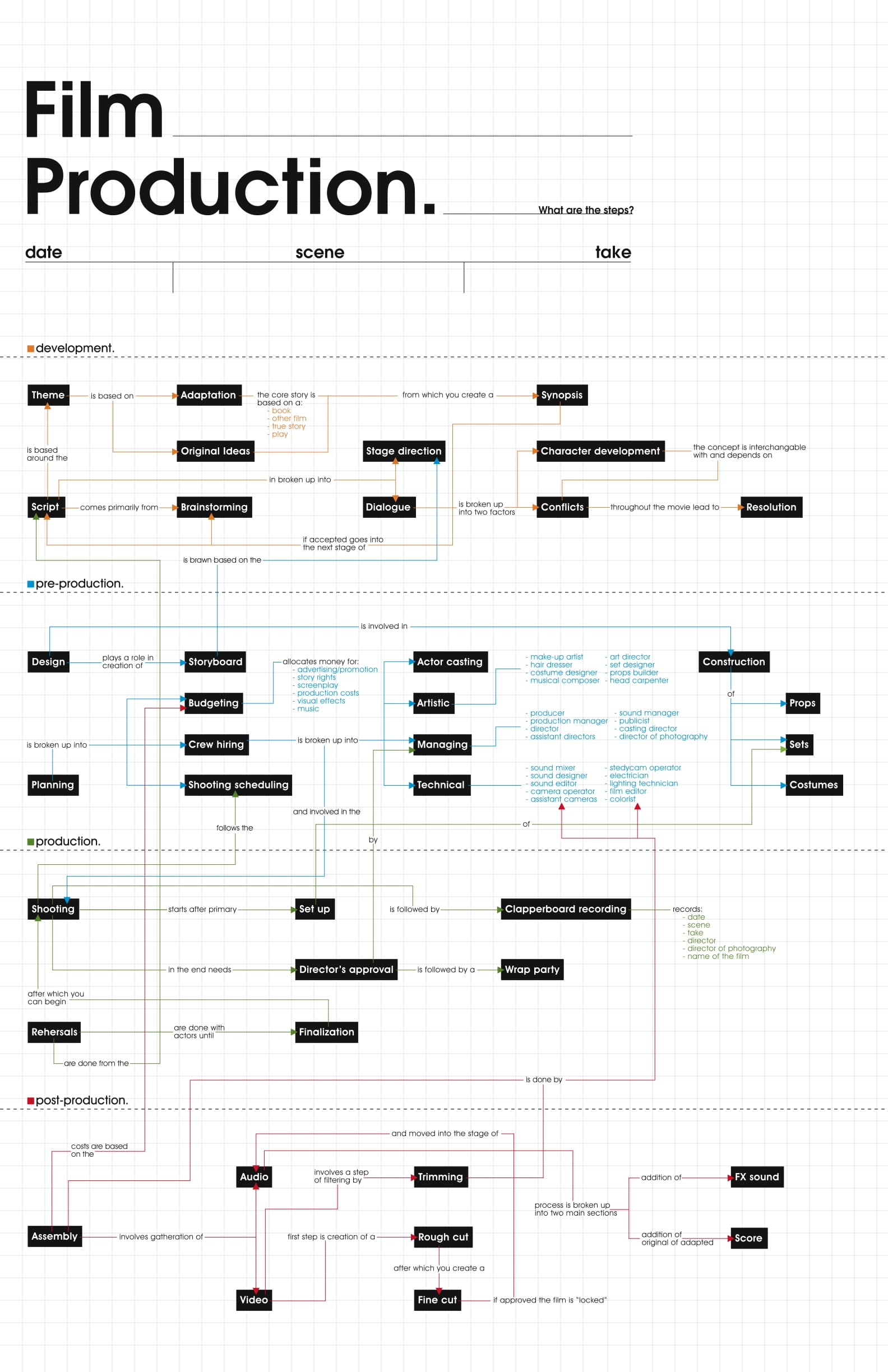
Feeling relieved, now that you don't have to pretend you know things in and around a film unit? I guess now you would know who to run to or hold accountable for if the focus isnt right, or if the light is too harsh and the colour is not bright enough. A film production brings together a battalion of technical crew who work unanimously to bring an idea to life, to transform a written script to a visual treat.
.webp)
Creative Collaboration Platform: The Backbone of Modern Creative WorkWhat is a creative collaboration platform?Clapboard defines a creative collaboration platform as the operational core for today’s distributed creative teams. This is not a collection of digital collaboration tools stitched together; Clapboard’s system

Understanding the Creative Production MarketplaceWhat is a Creative Production Marketplace?Clapboard defines a creative production marketplace as a structured ecosystem where brands, agencies, and production talent converge to execute video, advertising, and branded content at scale. Unlike the legacy agency or freelanREAD FULL ARTICLE

The Urgent Need for a Creative Production Operating SystemWhy Traditional Creative Production Models Break DownClapboard sees the creative production landscape shifting under pressure. Content velocity is no longer a buzzword—it’s a mandate. Modern advertising demands relentless output across dozens of channels, each wREAD FULL ARTICLE
JOIN THE NEWSLETTER.
Content Production insights, videos, books, and freebies, delivered to your inbox weekly


LEAVE A COMMENT
Your email address will not be published.