Ads featuring presenters demonstrating benefits, explaining usage, and building direct consumer trust.
Presenter Testimonial







Unveil the Secret of E Class

Presenter Testimonial
Unveil the Secret of E Class
Unveil the Secret of E Class is a compelling campaign launched in India in October 2017 for Mercedes-Benz by the ad agency Creativeland Asia, showcasing the brand's premium automotive excellence through an engaging film medium. Centered around the aspirational Mercedes-Benz E-Class, this campaign strategically leverages the credibility and authority of Mr. Roland Folger, MD & CEO of Mercedes-Benz India, who personally reveals the unique elements contributing to the model’s success. By inviting the audience to discover the #EClassSecret, the campaign creates an exclusive insider experience that deepens consumer connection to the brand while highlighting the craftsmanship, innovation, and luxury embedded in the E-Class. With a single powerful media asset, the communication drives curiosity and engagement, utilizing storytelling that blends leadership perspective with product excellence, ultimately reinforcing Mercedes-Benz’s position as a leader in the premium automotive segment. This campaign’s timely release taps into the growing luxury car market in India, appealing to discerning customers seeking both status and substance in their vehicle choice. It marries brand heritage with contemporary consumer aspirations, serving not only as a product highlight but also as a narrative of inspiration and technological mastery. By sharing insights from the CEO, the campaign fosters trust and authentic brand engagement, capitalizing on digital and social platforms for broader reach and interaction. The seamless blend of executive communication and cinematic presentation ensures the message resonates well beyond traditional advertising, positioning the E-Class not just as a vehicle but as a symbol of success and sophistication awaiting discovery.
Words That Hurt - OVEO | Clapboard Ad Archive
OVEO’s Words That Hurt, created by Publicis and launched in France in the Public Service market category in 2017, is an unabashedly direct campaign confronting the hidden but corrosive legacy of verbal abuse by parents—a subject too often sidestepped in discussions around child welfare and development. Eschewing dramatization or didactic narrative, the work embraces what Clapboard’s taxonomy would classify as FORMAT#7—Presenter Testimonial, allowing five adults to deliver unvarnished, first-person accounts of the phrases that indelibly scarred their self-worth as children: harsh comparisons between siblings, backhanded assessments of appearance, and the casual cruelty that frequently passes for discipline. Delivered straight to camera and shorn of embellishment, these testimonies humanize the abstract concept of ordinary educational violence, challenging the audience—particularly parents—to reflect on the generational persistence of psychological harm perpetuated through words. The campaign does not present a solution in the traditional product-demonstration sense; rather, its strength lies in fostering self-recognition and reflection, leveraging recognition and empathy to seed behavioral change rather than offer prescriptive advice. Publicis crafts a multiplatform strategy: broadcasting the film on television, deploying it across social networks, and supporting its reach with educational content and resources through the OVEO and Stop VEO websites, all strategically aligned with initiatives culminating in the International Day of the Rights of the Child. By collaborating with key associations—Observatory of Ordinary Educational Violence and Stop VEO, Child Without Violence—and foregrounding the lived experience of adults shaped by these small but searing moments, the campaign positions non-violent, respectful approaches to parenting as the antidote to a practice normalized by societal tolerance. The effect is to reposition parenting language not as an incidental detail of daily life but as a primary lever in child development, with repercussions that echo years and even decades later. The campaign earns 68/100 in Clapboard’s global creative archive. Words That Hurt signals that testimonial-driven formats in public interest advertising still possess unique authority and lasting emotional resonance when confronting the silent crises that shape the next generation.
Backseat Drivers - Volvo | Clapboard Ad Archive
Volvo’s Backseat Drivers campaign, delivered to the United States market in 2013 through agency Cake, takes a departure from conventional automotive advertising by reframing the product review through the honest, unfiltered perspectives of real children riding in the back seats of the XC60 and XC90 models. Embracing the Presenter Testimonial approach as defined by Clapboard’s FORMAT#7—Presenter Testimonial, the campaign features unscripted, genuine kids acting as the unexpected product experts, offering their own assessments of Volvo’s interiors, comfort, safety features, and entertainment options from the vantage point of family passengers rather than drivers. Eschewing the grandiosity of mountain road hero shots and the typical dominance of adult authority, Cake and Volvo shift the narrative focus squarely onto the user group most likely to spend journeys in the back seat but rarely represented in automotive marketing: children. By casting kids as primary reviewers—a demographic unlikely to filter their opinions or default to brand-speak—the campaign cuts through advertising formula, enabling an approachable human truth to emerge and reinforcing Volvo’s brand promise as the family-first auto manufacturer. This creative strategy, distributed on YouTube and the brand’s own social platforms, leverages relatable, emotion-driven testimony to draw in digital-native parents and families contemplating their next vehicle, while wordlessly reinforcing Volvo’s deep investment in passenger experience, safety, and comfort. In subverting category conventions and inviting unpolished voices into the marketing process, Backseat Drivers lands as a calculated play for authenticity at a moment when consumer trust in traditional automotive claims was in question. The campaign earns 69/100 in Clapboard’s global creative archive. Backseat Drivers matters because it demonstrates that even in a category steeped in legacy tropes, audience trust and genuine relevance can be won through the simplest acts of putting the right voices at the center of the storytelling.
How to play ultimate millions - Arizona Lottery | Clapboard Ad Archive
Arizona Lottery’s How to Play Ultimate Millions campaign, launched in Year by OH Partners, leverages the approachable charisma of Windfall Willie to drive home the accessibility and excitement of its headline Ultimate Millions Scratchers ticket in a direct appeal to Arizonans eager for both entertainment and a shot at life-changing money. Set firmly in the gambling category, the work trades grandiose spectacle for affable simplicity — inviting viewers to sit back and follow along as Willie, the brand’s folksy everyman, walks them step-by-step through the scratcher’s gameplay, prize structures, and winning potential. The creative concept taps into Clapboard’s FORMAT#7 Presenter Testimonial classification, where the power of the message comes from the credibility and warmth of a presenter breaking down the product in approachable terms, sidestepping the tropes of problem-solution narratives or narrative symbolism to foreground the joy, camaraderie, and plain fun at the heart of the lottery experience. Willie’s narration doesn’t just inform; it positions the Arizona Lottery as a host among friends, with over 160,000 prizes and a $3.5 million top payout serving as the tangible proof points in his tale. This singular film asset is tailored to cut through the typical anxiety around gambling by emphasizing the game’s simplicity and the shared excitement of participating — a brand posture reinforced by the campaign’s relaxed pace and inclusive message. For a category often criticized for opacity or melodrama, Ultimate Millions finds its edge in clarity and warmth, using every production cue — from tone to structure — to demystify the process while making a compelling case for getting involved. While views and engagement metrics are modest, the campaign’s core strength is its translation of the lottery proposition into a narrative a viewer can see themselves stepping into, all guided by Willie’s trademark blend of folksiness and twinkle-eyed encouragement. Arizona Lottery and OH Partners’ decision to deploy the testimonial approach underscores a wider trend in lottery marketing: products once shrouded in mystery or complexity are now a canvas for character-driven, user-friendly communications that promise both aspirational rewards and a sense of genuine community. Clapboard rates this 58/100. With this campaign, Arizona Lottery signals a shift in U.S. gambling communications toward presenter-led clarity and celebratory inclusivity, charting a future in which even life-changing jackpots are rendered accessible and inviting through personality-driven storytelling.
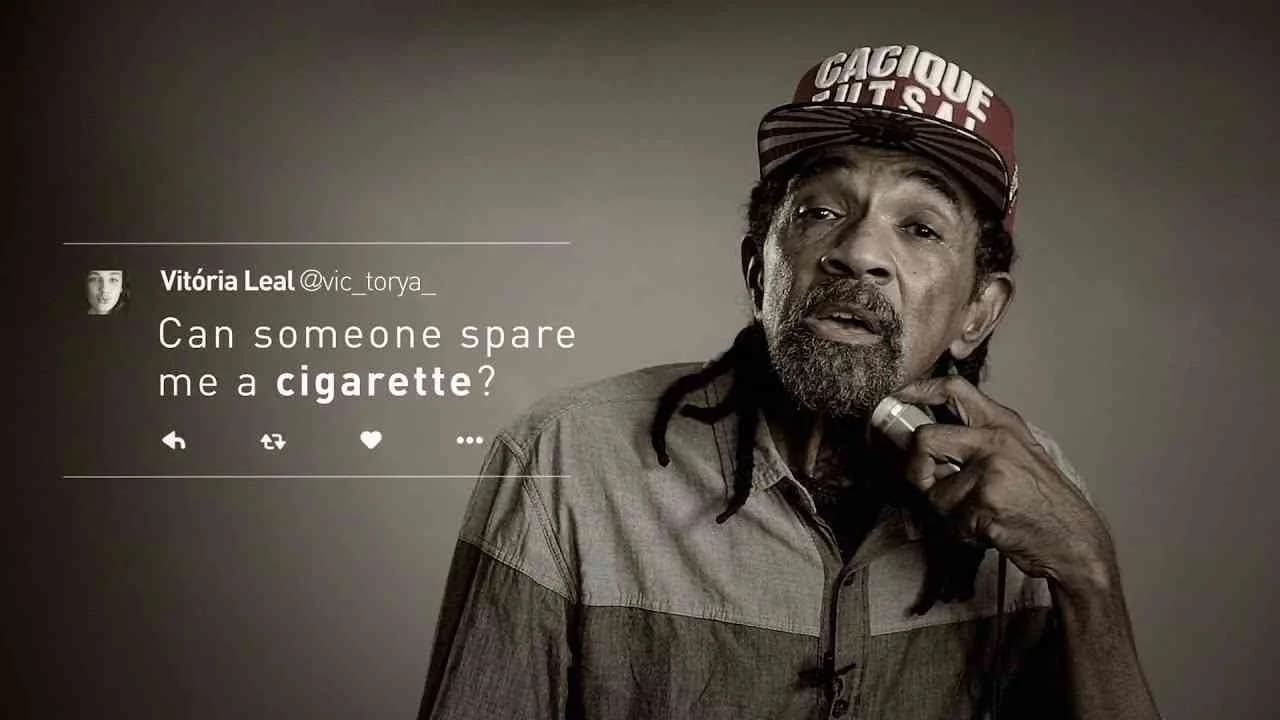
The voice of cigarette - ADESF | Clapboard Ad Archive
The Voice of Cigarette for ADESF, created by Neogama and launched in Brazil in 2015, exemplifies a radical approach to public service communication by transforming the voices of tobacco victims into a digital intervention specifically aimed at young smokers entrenched in social media culture. Confronted with staggering statistics — including smoking elevating the risk of laryngeal cancer by 40% — the campaign eschewed familiar health warning tropes in favor of a chillingly personal Presenter Testimonial, which Clapboard's 12-format taxonomy classifies as FORMAT#7, featuring real voices over abstract warnings. Targeting Twitter posts where users boasted of their smoking habits, ADESF and Neogama enlisted volunteers who had lost their larynxes to cancer, inviting them to read these tweets aloud; these haunting responses, marked by the unmistakable speech of those who have undergone laryngectomy, were then delivered directly back to the original authors through Twitter replies. This tactic pierced the otherwise surface-level bravado common to social platforms, grounding digital conversations in the reality of irreversible health consequences and disrupting any glamorization of smoking with raw, lived testimony. The emotionally charged call to action — channeled through AVOZDOCIGARRO.ORG and the hashtag #AVOZDOCIGARRO — extended the campaign’s influence, offering a tangible resource for further exploration and dialogue. Neogama’s decision to focus on unembellished authenticity over dramatization resulted in a campaign that stuck to its singular message with unwavering clarity: the voice that boasts today could be permanently altered tomorrow, and there is no filter that can soften that reality. In an industry where public service campaigns often fall flat with oversaturated tropes and abstracted imagery, The Voice of Cigarette distinguishes itself by leveraging the credibility and affective power of real-world consequence. Clapboard rates this 77/100. For health bodies and brands seeking to cut through the noise with public interest messaging, this campaign proves that direct testimony anchored in social dialogue delivers a confrontation audiences cannot ignore, especially when the medium and message are inseparable.
Are Men Ready For Women Drivers In Saudi Arabia? - Shell | Clapboard Ad Archive
Shell’s 2018 campaign Are Men Ready For Women Drivers In Saudi Arabia?, created by M&C Saatchi in the United Arab Emirates, stands as an incisive response to the extraordinary legislative and social change that came with Saudi Arabia’s ground-breaking move to legalize women driving, an event with massive implications for the automotive sector and for the region’s evolving social contract. The film, executed entirely in Arabic and distributed to a regional audience, abandons traditional dramatization in favor of what Clapboard’s taxonomy classifies as FORMAT#7—Presenter Testimonial, placing five men from diverse occupational backgrounds in front of the camera to share their genuine, unscripted perspectives on female drivers in the wake of the new law. Rather than rehearsed monologues or brand-centric endorsements, the campaign engineers an environment for candid dialogue, zeroing in on real reactions and sometimes uncomfortable truths as these men confront and question their own biases about women’s evolving role on the road and, by extension, in society. The campaign deliberately foregrounds the antagonism and resistance women encountered on social media platforms post-legalization, contextualizing its testimonial premise as a space for tension, revelation, and potential attitudinal shift rather than simple affirmation. This approach not only captured extraordinary attention, with over 6.1 million views and thousands of comments fueling robust across-the-board engagement, but it also succeeded in positioning Shell as a brand in the Middle East with both commercial stature and authentic social involvement—demonstrating a willingness to engage directly with polarizing issues rather than watering them down for broad acceptability. The absence of scripted messaging, product demos, or celebrity advocacy ensures that the persuasive weight is carried by ordinary voices that regional viewers recognize as their own, granting the film a hard-to-fake authenticity during a sensitive societal inflection point. By occupying this intersection of community relevance and brand leadership within the industrial industry, Shell and M&C Saatchi signal not just market awareness but an ambition to shape conversations that extend well beyond fuel or mobility, aligning themselves with a broader narrative about progress, gender, and regional identity. Clapboard rates this 79/100. This campaign matters because it demonstrates that a global brand embedded in the automotive market can catalyze meaningful cultural conversation simply by setting the stage for honest, local voices when social fault lines are most visible.
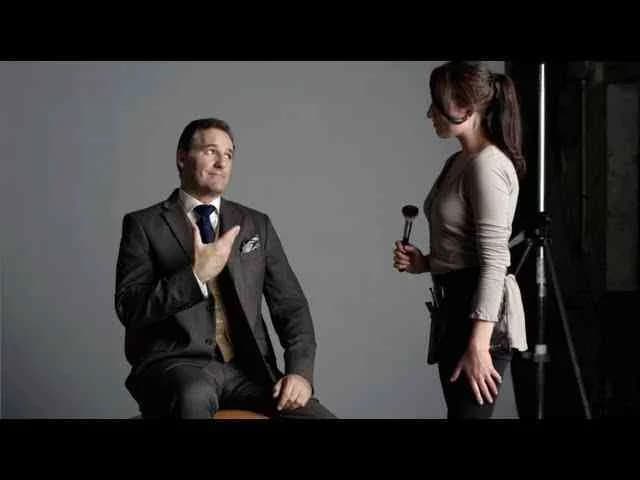
The Expert - L'Oreal, Men Expert | Clapboard Ad Archive
L’Oreal Men Expert’s The Expert, conceived by VCCP and launched in the United States in the Beauty category in 2011, marked a decisive pivot toward engaging male consumers at the intersection of grooming and digital identity, foregrounding the importance of self-presentation in the age of social media. The campaign’s centerpiece is a film asset that dramatizes the everyday aspiration of men to look not merely good but exceptional in their online profile pictures, leveraging a central character — The Expert — whose exuberant, tongue-in-cheek authority transforms personal care advice into both entertainment and actionable guidance. Anchored in what Clapboard’s taxonomy defines as FORMAT#7 Presenter Testimonial, the approach is classic yet revitalized: The Expert communicates expertise directly to camera, breaking down grooming rituals with the familiarity and confidence of a trusted advisor, but with a wry comedic exaggeration that makes the mundane both aspirational and highly shareable. The storytelling device — the man who can bend the will of the wind for the perfect profile snap — provides not only humor but a tangible manifestation of the Men Expert promise: control, polish, and visible results that play out in a digitally mediated social sphere where every facial detail counts. Smartly using the rise of Facebook as cultural context, the campaign’s Facebook page extended the concept, positioning The Expert as a real-time resource for grooming queries in the public space of social media, inviting direct interaction and thereby flattening the brand-to-consumer distance. The organic dialogue cultivated hundreds of user-generated questions and fostered a participatory dynamic that went beyond static ad exposure, strengthening brand equity by creating a responsive ecosystem around the product’s use cases. By capturing over half a million views, the work demonstrated both relevance and traction in a crowded, often undifferentiated segment, validating the hybrid mix of humor, advice, and interactive utility designed for a digitally native male audience open to brand-led content that feels consultative, not preachy. Clapboard rates this 63/100. For an industry seeking relevance among men less persuaded by conventional beauty advertising, The Expert signaled the value of combining performative expertise with digital-native interactivity to reposition personal care as an everyday currency of confidence in the social domain.
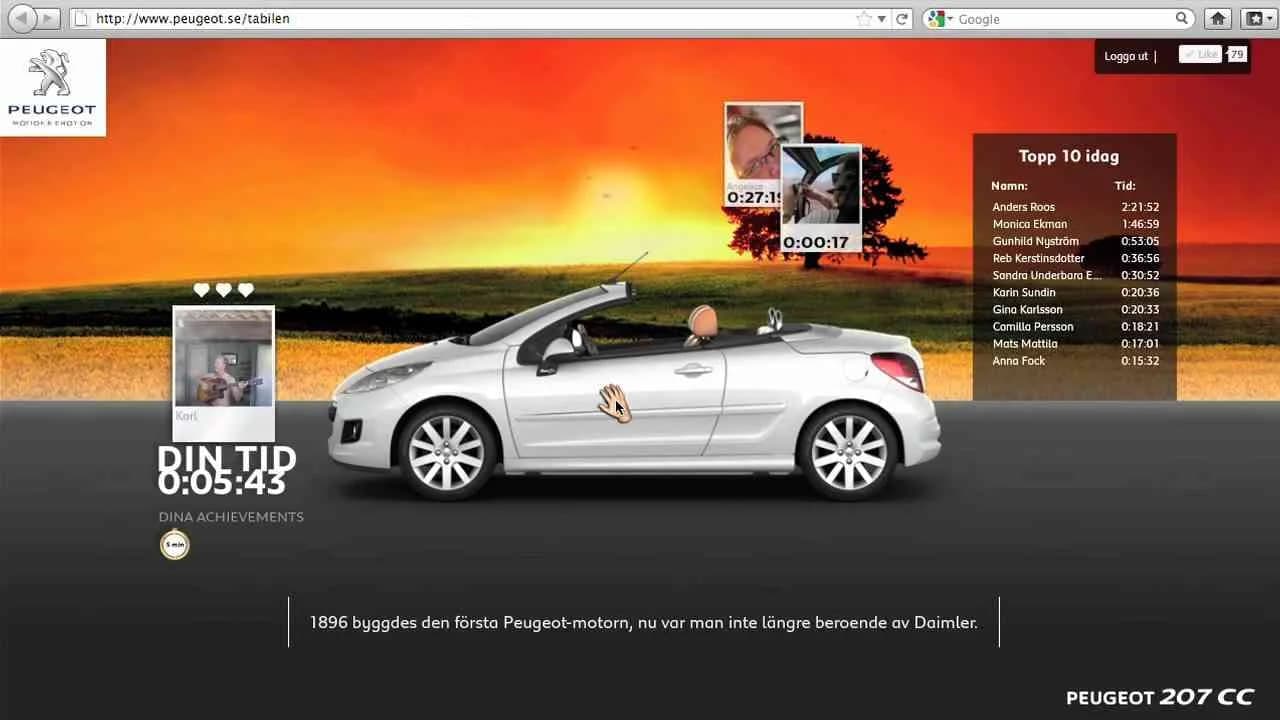
Take the Car! - Peugeot | Clapboard Ad Archive
Peugeot’s Take the Car! campaign, conceived by Volt and launched in Sweden in 2011, exemplifies a strategic recalibration of automotive marketing by elevating the core value proposition of its cabriolet range—the 207 CC and 308 CC—alongside the performance-driven RCZ, through the precise execution of what Clapboard’s taxonomy identifies as FORMAT#7—Presenter Testimonial. Against a backdrop of entrenched car category conventions, the campaign chose to eschew elaborate narratives and high-concept storytelling in favor of a single, tightly-crafted digital asset that reimagined the enduring car salesman trope. By placing a confident presenter center stage, Volt leveraged direct address to provide an instantly accessible walkthrough of the vehicles, encouraging consumers to reappraise the role of convertibles and coupes as objects of emotional and lifestyle aspiration rather than mere transport. The creative decision to strip away theatricality and foreground product substance allowed the stylish lines and tangible features of Peugeot’s models to become irresistibly prominent, while a consistently energetic tone made the campaign’s call to action—take the car—feel inevitable rather than optional. English-language delivery underscored a cosmopolitan ambition, broadening market relevance and ensuring frictionless comprehension, while digital distribution tapped into the era’s evolving consideration journey and reinforced Peugeot’s intent to break away from predictable, showroom-bound formality. The campaign’s visual and tonal crispness worked in tandem to frame Peugeot as a brand unafraid to revisit category archetypes with a fresh lens, targeting an audience drawn to both the allure of convertible driving and the credibility of straightforward communication. Volt’s approach maintained the persuasive cadence of classic motoring pitches but fused it with a distinctly modern sensibility, embodying Peugeot’s innovation ethos and amplifying its competitive edge within the Swedish automotive landscape. The campaign earns 54/100 in Clapboard’s global creative archive. This effort remains significant to the industry because it demonstrates how trusted advertising formats, when rethought with discipline and finesse, can still convert product demonstration into genuine lifestyle desire.
Happiness Begins Here - Sailee Pawar, Happiness Begins He... - Vasan Eye Care | Clapboard Ad Archive
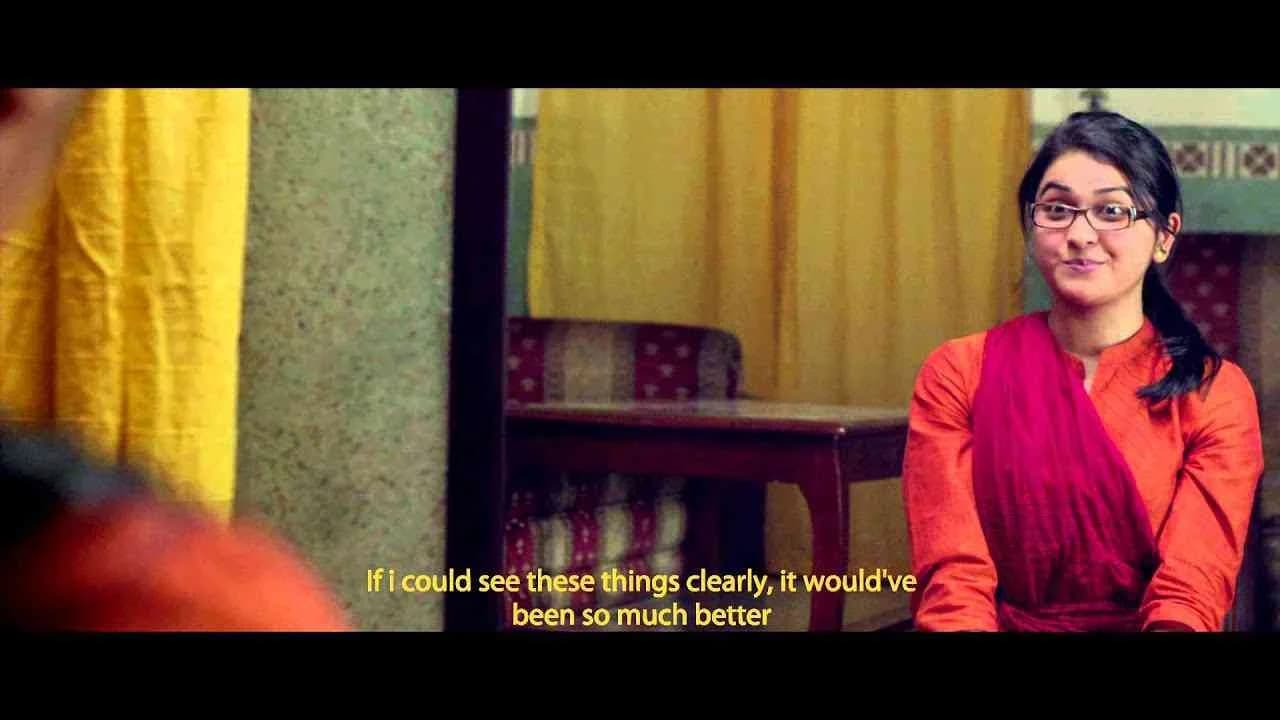
Vasan Eye Care’s Happiness Begins Here – Sailee Pawar film campaign, launched in India in 2014 by agency Maitri, is a pointed example of how the healthcare sector can harness the persuasive impact of authentic patient perspective to drive emotional engagement and brand trust. In a market where credibility is paramount and consumer choice is often dictated by word of mouth, this campaign leans decisively into a narrative device that Clapboard’s taxonomy identifies as FORMAT#7—Presenter Testimonial, with Sailee Pawar’s direct-to-camera delivery offering a bridge between personal experience and universal insight. Rather than opting for dramatization or celebrity-fronted reassurance, Maitri and Vasan Eye Care place the patient’s clarity-of-vision journey at the heart, foregrounding the emotional transformation enabled by accessible professional eye care. Through carefully composed visuals that capture the everyday moments enhanced by restored eyesight, and a measured use of voiceover and sound design, the work positions clear vision as a gateway to joy—anchoring the brand promise in lived reality rather than abstract aspiration. By rooting the messaging in first-person testimony and visual cues familiar to Indian audiences, the brand reinforces its role as a partner in individual fulfillment, not merely a transaction-based service provider in the professional services or wider healthcare landscape. The campaign’s filmic execution creates an immersive, credible environment for the audience to both empathize with and aspire to the depicted outcome, effectively turning the patient narrative into a reflection of broader consumer hopes around wellness and happiness. Elsewhere in the category, testimonial-led campaigns often risk sliding into formula or sentimentality, but Vasan Eye Care’s restraint and specificity lend the piece a degree of authority and relatability that aligns with the broader industry’s evolution towards trust-based communications. The campaign earns 58/100 in Clapboard’s global creative archive. For India’s professional services and healthcare marketing, this work signals an ongoing shift towards patient-driven storytelling, where lived experience anchors brand credibility and frames the path to emotional resonance.
Morning After - Think! | Clapboard Ad Archive
Think! delivered a sharp intervention in the United Kingdom’s public interest communications landscape in 2013 with Morning After, a campaign devised by BBDO to challenge prevailing assumptions about drink driving risk. The brand zeroed in on a crucial yet underestimated truth: the morning after a night of drinking, many drivers mistakenly believe they are fit to drive while their bodies remain over the legal alcohol limit. Built around what Clapboard’s taxonomy classifies as FORMAT#7—Presenter Testimonial, the film features a sober-looking man speaking directly to camera, embodying the personal unease and confusion that countless viewers can relate to after a night out. Rather than resorting to dramatized wreckage or moralizing narratives, the campaign’s creative approach centers on a clear, candid address; its lead dissects the misconception in plain language, demonstrating through personal testimony that subjective sobriety does not equate to legal or physical fitness to drive. This choice of testimonial format strips away abstraction, foregrounding the everyday reality experienced by millions, and cuts directly to the campaign’s behavioral objective: recalibrating the audience’s understanding of risk. BBDO’s execution aligns precisely with the Think! brand’s longstanding mission to provide evidence-based warnings that are memorable and function as behavioral cues. By tackling a common post-socialising scenario and punctuating it with concise, actionable insight, the campaign operates with strategic clarity—a necessity within the public service market category, where message recall can be a matter of life and death. Social media amplification through the @THINKgovuk account extended the reach and relevance of the campaign, building on its testimonial clarity to sustain conversation and prompt lasting reflection. This synthesis of relatable creative execution and precise behavioral call-to-action demonstrates disciplined craft in public interest messaging. The campaign earns 69/100 in Clapboard’s global creative archive. Think! Morning After underscores the value of testimonial-driven communications, as campaigns that mirror the public’s own lived ambiguities around safety can recalibrate norms and set new standards for responsible behavior.
Venus - California Lottery | Clapboard Ad Archive
With Venus, the California Lottery and Mediabrands Society delivered a campaign that repositions the Lottery's public-facing narrative for 2017 by shifting focus from mere entertainment to essential civic contribution, foregrounding the significant—if divided—annual influx of more than $1 billion into California’s sprawling public school system. Tasked to elevate and humanize the brand’s commitment to education within the highly competitive Media / Entertainment market category, the campaign mines the enduring impact of California Lottery funding through documentary-style, presenter-led videos that champion the dedication of public school educators across all 1,100 school districts. Venus executes what Clapboard’s 12-format taxonomy describes as FORMAT#7—Presenter Testimonial, leveraging a diverse roster of influential figures as credible, visible advocates who deliver direct, authentic accounts of investment in classrooms, thereby amplifying the Lottery’s stature as a committed educational partner rather than just a gaming operator. The creative structure is intentionally testimonial-driven, relying on these presenters' authority and familiarity to reinforce emotional connectivity, while giving voice and visibility to teachers and the beneficiaries of supplemental resources made possible by Lottery proceeds. By focusing on real educators and their stories, the campaign collapses the gap between brand and audience, using the testimonial format not only to inform but to create resonance and trust—key when combating cynicism about the scale and significance of such funding in a complex ecosystem. Mediabrands Society’s approach avoids the trap of abstract messaging or dramatized fiction, instead rooting Venus in lived experience and the unadorned urgency of California’s educational needs, with the social-first distribution strategy ensuring accessibility and relevance to digital audiences. The campaign underscores the California Lottery’s relevance within its community by making its funding mission tangible and personal rather than simply statistical, bridging entertainment and responsibility in a category that too often fails to make its broader mission felt. Venus earned a score of 63/100 in Clapboard’s global creative archive. In a field striving to link purpose and platform, Venus demonstrates the lasting value of presenter-led authenticity in building social capital for legacy brands seeking deeper engagement beyond transactional play.
Vets Fight Hate - Southern Poverty Law | Clapboard Ad Archive
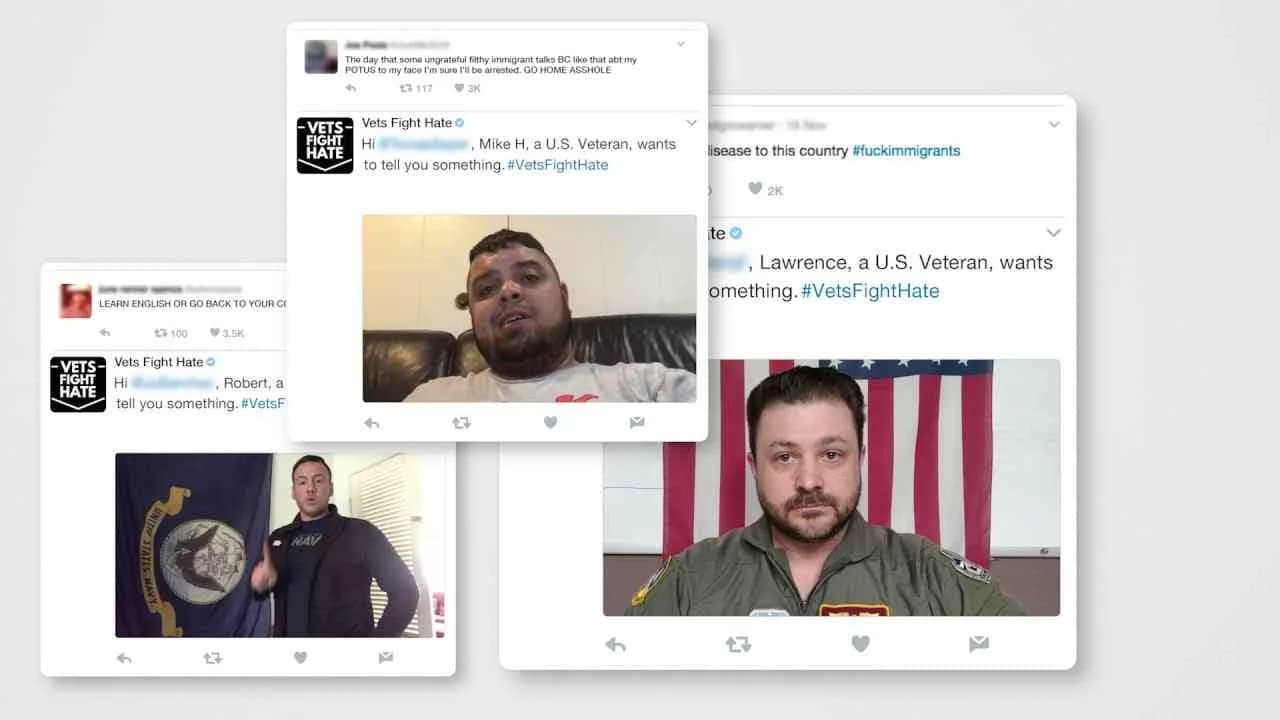
Vets Fight Hate, launched in 2017 by the Southern Poverty Law Center in partnership with agency Wing, tackles the challenge of rising anti-immigrant sentiment in the United States by spotlighting a critical and often overlooked truth: immigrants comprise approximately 11% of all American veterans, individuals who have demonstrably served and sacrificed for the country. Positioned within the public service market and squarely aligned with Clapboard's FORMAT#7—Presenter Testimonial, the campaign abandons dramatization in favor of direct engagement, featuring real immigrant veterans who address the camera as themselves and respond to actual hateful tweets with messages of peace, inclusion, and unity. The creative premise leverages the honored status of veterans in American culture to challenge viewers’ assumptions about immigrants, transforming veterans from symbols of patriotism into messengers of empathy, urging the public to reconsider their preconceptions while foregrounding personal narratives that resist simplistic categorization. Rather than circulating messages through traditional advertising alone, Vets Fight Hate builds a participatory model by inviting audiences to join the conversation on social media — specifically via Twitter — and directs them to learn more at the campaign’s site, facilitating ongoing dialogue at the intersection of lived experience and digital activism. The approach recognizes that social media is a primary territory where hate speech proliferates, and deploys testimonial storytelling as both a shield and a counteroffensive, shifting discourse from anonymous vitriol to face-to-face accountability, and from collective suspicion to personal connection. By enlisting the Southern Poverty Law Center’s credibility and Wing's creative sensibility, the campaign navigates both the emotive and rational dimensions of advocacy, bringing home the consequences of intolerance while mobilizing the voices least likely to be dismissed: those who have served. The campaign earns 63/100 in Clapboard's global creative archive. In an era when nationalist rhetoric seeks to divide, Vets Fight Hate demonstrates that credible personal testimony remains one of the industry’s most potent answers to polarization.
.webp)
Creative Collaboration Platform: The Backbone of Modern Creative WorkWhat is a creative collaboration platform?Clapboard defines a creative collaboration platform as the operational core for today’s distributed creative teams. This is not a collection of digital collaboration tools stitched together; Clapboard’s system

Understanding the Creative Production MarketplaceWhat is a Creative Production Marketplace?Clapboard defines a creative production marketplace as a structured ecosystem where brands, agencies, and production talent converge to execute video, advertising, and branded content at scale. Unlike the legacy agency or freelanREAD FULL ARTICLE

The Urgent Need for a Creative Production Operating SystemWhy Traditional Creative Production Models Break DownClapboard sees the creative production landscape shifting under pressure. Content velocity is no longer a buzzword—it’s a mandate. Modern advertising demands relentless output across dozens of channels, each wREAD FULL ARTICLE