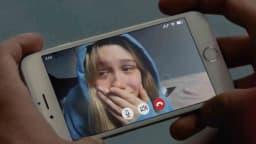
HSE's 'I Will Survive' campaign by BBDO Dublin celebrated Ireland reaching more ex-smokers than current smokers through real quitters lip-syncing Gloria Gaynor.

How HSE and BBDO Turned Ireland's Quit Milestone Into a Celebration
HSE's 'I Will Survive' is a 2017 Irish public service film campaign, created by BBDO Dublin and launched on April 6, 2017, in which real former smokers lip-sync to Gloria Gaynor's anthem to celebrate Ireland reaching the milestone of having more ex-smokers than current smokers.
The campaign marks a decisive turning point in how Ireland's public health authority communicates about smoking. Rather than deploying graphic imagery or fear-based warnings — the dominant language of smoking-cessation advertising for decades — BBDO Dublin built the entire creative premise on a moment of national pride. Ireland had achieved something quantifiably significant: for the first time, more people in the country had quit smoking than were actively smoking. That statistical milestone becomes the campaign's emotional engine, framing quitting not as a struggle but as a collective survival story worth celebrating.
Produced by 2AM Films in the United Kingdom in January 2017, the campaign was developed for the HSE QUIT programme and released into the Irish market in April of that year. The single film asset features ordinary Irish people — real quitters, not actors — performing an enthusiastic lip-sync to the full emotional arc of Gloria Gaynor's 'I Will Survive'. The song choice is deliberate and precise: Gaynor's anthem carries a universally understood narrative of hardship overcome, making it instantly legible as a metaphor for breaking free from nicotine addiction without requiring a single frame of clinical imagery or cautionary language.
In Ireland, where the Health Service Executive operates the national QUIT platform and coordinates cessation services at scale, the campaign represented a budget-conscious but strategically ambitious piece of public interest communication. According to Gov Ie, HSE allocated approximately €1.67 million to the QUIT campaign in 2017, with €350,000 of that funding new television and radio creative, including 'I Will Survive'. The campaign sits at the intersection of documentary authenticity and emotional storytelling, earning a Clapboard Score of 69 out of 100.
 ARCHIVE
HSE's strategic shift with 'I Will Survive' rests on a single, powerful consumer insight: people respond differently to being celebrated than to being warned. As reported by LBBOnline in December 2018, BBDO Dublin deliberately broke from conventional fear-based anti-smoking advertising by deploying what the agency characterised as a pro-quitting empowerment strategy — one that positions ex-smokers as victors rather than victims.
The strategic rationale is grounded in the specific conditions of the Irish market in 2017. According to Drugsandalcohol Ie, 22 percent of people aged 15 and over in Ireland were current smokers that year, comprising 18 percent daily smokers and 4 percent occasional smokers. Ireland's national Tobacco Free Ireland policy had set an ambition to reduce smoking prevalence below 5 percent, meaning the QUIT programme needed messaging that could sustain motivation among a broad population of both active smokers considering quitting and recent ex-smokers at risk of relapse. Fear-based messaging, while proven effective at initial awareness, has a well-documented limitation: it can paralyse rather than activate audiences already aware of the risks.
The competitive landscape for attention in Irish public health communication includes campaigns from Cancer Research UK, which operates across the island of Ireland in partnership with the Irish Cancer Society, and from government-funded cessation programmes in Northern Ireland. Both have historically leaned on clinical imagery and health consequence narratives. According to canvas8.com, 'I Will Survive' was interpreted by analysts as a conscious repositioning that understood Irish audiences had already internalised the health risks and needed a different motivational trigger — social belonging and collective identity rather than personal fear. The economic burden of smoking to the Irish state was estimated at approximately €1.653 billion annually, according to drugsandalcohol.ie, giving the HSE significant financial justification to invest in messaging strategies with demonstrable behavioural reach.
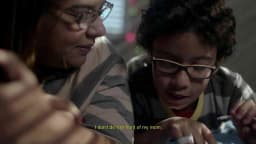
BBDO Dublin built 'I Will Survive' around a documentary casting principle: every person who appears on screen is a genuine former smoker, not a performer hired to simulate authenticity.
That decision shapes every aspect of the film's production texture. Shot by 2AM Films in the United Kingdom in January 2017 and released into the Irish market in April of the same year, the work captures the slightly imperfect, warmly human quality that professional casting tends to smooth away. The lip-sync format is structurally clever: it gives non-actors a clear, performative task to execute, which releases inhibition and produces the kind of unguarded expressiveness that scripted performance rarely achieves. Participants are seen across a range of ages, settings and social contexts, reinforcing the campaign's implicit argument that quitting smoking belongs to no single demographic — it is a broadly Irish achievement.
The song selection does considerable creative work on its own. Gloria Gaynor's 'I Will Survive' operates simultaneously as a disco-era cultural touchstone, an immediately recognisable hook and a lyrical narrative about perseverance that maps cleanly onto the experience of overcoming addiction. It requires no adaptation: the original lyrics carry the meaning the campaign needs. Using the full, recognisable recording rather than a cover or an instrumental variant preserves the emotional association the song has accumulated over decades, effectively borrowing cultural equity that no 30-second advertising jingle could build from scratch.
As reported by LBBOnline, the creative strategy was conceived as a deliberate departure from the agency's own earlier work for the HSE, which had operated in a darker, consequence-led register. Production credits for the directing role on 'I Will Survive' are not fully detailed in publicly available records, though the production was handled by 2AM Films. According to About Hse Ie, the campaign represented a formal strategic evolution in HSE's approach to smoking-cessation communication, sanctioned at the level of programme strategy rather than as a one-off creative experiment.
The 'I Will Survive' campaign produced a quantifiable shift in engagement with Ireland's national QUIT platform. According to drugsandalcohol.ie, the October to November 2017 media burst associated with the campaign generated an 89 percent increase in sessions on QUIT.ie, the HSE's dedicated smoking-cessation website. That figure is a direct behavioural signal: the campaign moved people from passive exposure to active information-seeking, which is the intermediate step between awareness and cessation attempt.
The campaign's reach extended beyond Ireland. As reported by Adweek on January 5, 2018, in a piece by David Griner, the ad was considered sufficiently effective that New York imported it for statewide use — an unusual instance of American public health infrastructure adopting European creative work wholesale rather than commissioning domestic equivalents. That cross-market adoption functions as an independent peer validation of the campaign's structural effectiveness, separate from any Irish metrics.
According to gov.ie, total Irish public expenditure on smoking-cessation measures in 2017 exceeded €11.8 million, encompassing medication, cessation services, the national Quitline and mass-media campaigns. The QUIT programme's television and radio creative, including 'I Will Survive', received €350,000 of a €1.67 million total QUIT allocation, meaning the campaign's 89 percent traffic uplift was achieved with a comparatively modest media investment relative to the overall cessation budget. The work demonstrates that creative strategy — specifically the decision to celebrate rather than warn — can generate disproportionate behavioural response when the underlying social insight is accurate and timely. The Clapboard Score for 'I Will Survive' is 69 out of 100, reflecting strong strategic clarity and cultural resonance set against a relatively contained production scope.
HSE's 'I Will Survive' is a 2017 Irish public service film in which real former smokers lip-sync to Gloria Gaynor's anthem. Created by BBDO Dublin for the HSE QUIT programme, it celebrates Ireland reaching the milestone of having more ex-smokers than current smokers, repositioning quitting as a collective national achievement rather than a health warning.
BBDO Dublin created the 'I Will Survive' campaign for Ireland's Health Service Executive. The film was produced by 2AM Films in the United Kingdom in January 2017 and released in the Irish market on April 6, 2017, as part of the HSE QUIT programme's smoking-cessation communications strategy, according to about.hse.ie.
The campaign's October to November 2017 media burst generated an 89 percent increase in sessions on QUIT.ie, according to drugsandalcohol.ie. That uplift in website traffic signals a direct behavioural response — people moved from seeing the ad to actively seeking cessation support — making it one of the most measurable outcomes in Irish public health advertising that year.
BBDO Dublin selected the song because its lyrical narrative of perseverance maps directly onto overcoming addiction without requiring adaptation. As reported by LBBOnline, the agency was pursuing an empowerment strategy rather than fear-based messaging. The song's cultural familiarity also provided instant emotional recognition, borrowing decades of accumulated meaning that original advertising music cannot replicate.
New York adopted the campaign for statewide use after its Irish launch. As reported by Adweek on January 5, 2018, the ad was considered effective enough that American public health authorities imported the Irish creative work rather than commissioning a domestic equivalent — an uncommon instance of European public service advertising crossing directly into the United States market.
According to gov.ie, HSE allocated approximately €1.67 million to the QUIT programme in 2017, with €350,000 specifically funding new television and radio creative including 'I Will Survive'. Total Irish public expenditure on smoking-cessation measures that year exceeded €11.8 million, according to drugsandalcohol.ie, encompassing medication, cessation services and the national Quitline.
.webp)
Creative Collaboration Platform: The Backbone of Modern Creative WorkWhat is a creative collaboration platform?Clapboard defines a creative collaboration platform as the operational core for today’s distributed creative teams. This is not a collection of digital collaboration tools stitched together; Clapboard’s system


Understanding the Creative Production MarketplaceWhat is a Creative Production Marketplace?Clapboard defines a creative production marketplace as a structured ecosystem where brands, agencies, and production talent converge to execute video, advertising, and branded content at scale. Unlike the legacy agency or freelanREAD FULL ARTICLE

The Urgent Need for a Creative Production Operating SystemWhy Traditional Creative Production Models Break DownClapboard sees the creative production landscape shifting under pressure. Content velocity is no longer a buzzword—it’s a mandate. Modern advertising demands relentless output across dozens of channels, each wREAD FULL ARTICLE