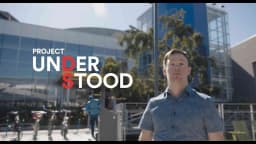
Uber and MADD Canada's 'Driving For An Angel: Shelly's Story,' created by Zulu Alpha Kilo in Toronto, used one driver's real testimony to reframe impaired

How Uber and MADD Canada Made Impaired Driving Personal in 2018
"Driving For An Angel: Shelly's Story" is a 2018 Canadian public service film campaign created by Zulu Alpha Kilo for Uber and MADD Canada, featuring a real Toronto Uber driver named Shelly who shares her firsthand experience with the consequences of impaired driving to position ridesharing as a responsible alternative.
Launched in Canada in January 2018, the campaign belongs to the public interest category and centres on a single media asset: a documentary-style film. The strategic premise is disarmingly direct. Rather than relying on statistics or dramatised scenarios, the campaign places an authentic human voice at its centre. Shelly, an Uber driver based in Toronto, recounts the personal toll that impaired driving has taken on her life, transforming what might otherwise be a conventional road-safety message into an intimate and emotionally resonant testimony. In doing so, the campaign positions Uber not merely as a convenience but as a meaningful participant in the broader effort to reduce impaired driving across Canada.
The partnership between Uber Canada and MADD Canada — Mothers Against Drunk Driving — brings together a technology platform with one of the country's most recognised road-safety advocacy organisations. According to Madd Ca, MADD Canada has been a consistent voice on impaired driving for decades, and the organisation's involvement lends the campaign moral authority that neither brand could command independently. The collaboration reflects a wider industry trend in which ride-hailing platforms align with public safety causes to build social credibility alongside commercial relevance. In Canada specifically, where impaired driving remains a significant road-safety concern, this alignment carries particular weight. The campaign does not ask viewers to download an app or enter a promo code. It asks them to listen to Shelly — and in that restraint lies much of its power.
Uber Canada formalised its national partnership with MADD Canada by 2017, according to uber.com, establishing a public commitment to impaired driving prevention that preceded this campaign and gave it institutional credibility.
The strategic rationale for "Driving For An Angel: Shelly's Story" operates on two levels simultaneously. At the category level, ride-hailing services in Canada — including competitors such as Lyft, which had begun expanding into Canadian markets, and established taxi networks operating in major urban centres like Toronto — were engaged in an ongoing contest for public trust as much as market share. Uber's decision to anchor its public service work in an authentic personal documentary, rather than a glossy brand film, signals an understanding that credibility in the impaired driving conversation cannot be purchased with production values alone.
At the cultural level, the campaign responds to a genuine and persistent public health challenge in Canada. Impaired driving has long been identified as a leading cause of criminal death in the country, a point underscored by MADD Canada's own published research available via madd.ca. The choice to feature a real Toronto Uber driver — not an actor, not a spokesperson — reflects Zulu Alpha Kilo's strategic commitment to earned authenticity over constructed narrative. Strategic Planner Heather Segal's involvement points to a research-grounded brief that recognised the limits of fear-based messaging and sought instead to build empathy through lived experience.
The social experiment and documentary format adopted by the campaign also aligns with a broader shift in public interest communications during this period. Audiences in Canada, as elsewhere, had grown increasingly resistant to traditional public service announcements. By 2018, digital film content designed for social sharing had become the dominant vehicle for cause-driven campaigns, and Zulu Alpha Kilo's approach reflects a sharp reading of that environment.
Director Jessica Edwards helms "Driving For An Angel: Shelly's Story," bringing a documentary sensibility to material that could easily have been over-produced into sentimentality.
Edwards's direction keeps the camera close to Shelly, allowing the subject's own cadence and emotional texture to carry the film rather than imposing a cinematic grammar that would signal artifice. Director of Photography Devon Burns frames Shelly with the kind of observational intimacy associated with long-form documentary work, lending the single-asset film a visual honesty that reinforces its central argument: this is a real person, speaking a real truth. Editor Jay Baker shapes the material into a contained, purposeful arc — a structure that respects the audience's intelligence without sacrificing emotional clarity.
Production and post-production were handled by Zulubot, Zulu Alpha Kilo's internal content studio based in Toronto, a choice that kept the creative vision tightly integrated from brief through final cut. Agency Producers Revital Grunberg and Cherie O'Connor oversaw the production process, while the creative team was led by Chief Creative Officer Zak Mroueh. Art Directors Charline Fauche-Simon and Andrea Romanelli shaped the visual identity of the campaign, and Writers Angeline Parsons and Jon Taylor developed the narrative framework within which Shelly's testimony could breathe. Client-side stewardship came from Erica Edwards and Melanie Boudreau, whose oversight ensured the campaign remained aligned with both Uber Canada's brand positioning and MADD Canada's advocacy mission.
The decision to shoot Shelly in what appears to be her natural environment — rather than a studio or staged setting — reinforces the social experiment dimension of the campaign. The film does not announce itself as advertising. It presents as testimony, and that formal choice is itself a creative argument: that the most effective public service communication in Canada in 2018 was not a campaign at all, but a conversation.
No verified performance data for "Driving For An Angel: Shelly's Story" is publicly available in terms of view counts, earned media reach, or measurable shifts in impaired driving behaviour attributable to the campaign.
That absence does not diminish a structural analysis of the work's effectiveness. The campaign's decision to deploy a single film asset — rather than a multi-channel media buy — concentrates creative and emotional investment in one point of contact. In public interest communications, this approach carries a particular logic: a single, well-crafted testimony shared organically reaches audiences in a qualitatively different state of receptivity than a campaign dispersed across placements. The film's documentary format and its refusal of conventional advertising mechanics — no call to action, no product demonstration, no brand-forward opening — are themselves indicators of a campaign built for depth of impression rather than breadth of exposure.
The Clapboard Score for "Driving For An Angel: Shelly's Story" is 62 out of 100, reflecting a campaign that executes its creative premise with discipline and genuine human sensitivity, while remaining a relatively contained single-asset effort within the broader landscape of Canadian public service advertising. The partnership structure between Uber Canada and MADD Canada adds institutional weight that extends the campaign's credibility beyond what either organisation could achieve independently, and the involvement of Zulu Alpha Kilo — one of Toronto's most awarded independent agencies — ensures that the craft is commensurate with the cause. The campaign stands as a considered, human-first contribution to impaired driving prevention in Canada.
"Driving For An Angel: Shelly's Story" is a 2018 Canadian public service film created by Zulu Alpha Kilo for Uber and MADD Canada. It features a real Toronto Uber driver named Shelly, who shares her personal experience with the consequences of impaired driving to promote responsible transportation choices across Canada.
Zulu Alpha Kilo, a Toronto-based agency, created the campaign. Chief Creative Officer Zak Mroueh led the team, which included Art Directors Charline Fauche-Simon and Andrea Romanelli, Writers Angeline Parsons and Jon Taylor, and Strategic Planner Heather Segal. The film was directed by Jessica Edwards and produced through Zulubot.
Uber Canada and MADD Canada formalised a national partnership by 2017, according to uber.com. The collaboration positioned Uber as a responsible alternative to impaired driving while lending MADD Canada's established advocacy credibility to Uber's brand. The campaign gave both organisations a shared platform within the Canadian public interest space.
The campaign used a single documentary-style film. Director Jessica Edwards and Director of Photography Devon Burns kept the approach observational and intimate, allowing Shelly's testimony to carry the message without conventional advertising mechanics. This format was chosen to build genuine empathy rather than rely on fear-based public service messaging.
The campaign receives a Clapboard Score of 62 out of 100. The score reflects disciplined creative execution and genuine human sensitivity in addressing impaired driving in Canada. The campaign's relatively contained single-asset structure limits its score within the broader landscape of Canadian public service advertising from this period.
.webp)
Creative Collaboration Platform: The Backbone of Modern Creative WorkWhat is a creative collaboration platform?Clapboard defines a creative collaboration platform as the operational core for today’s distributed creative teams. This is not a collection of digital collaboration tools stitched together; Clapboard’s system


Understanding the Creative Production MarketplaceWhat is a Creative Production Marketplace?Clapboard defines a creative production marketplace as a structured ecosystem where brands, agencies, and production talent converge to execute video, advertising, and branded content at scale. Unlike the legacy agency or freelanREAD FULL ARTICLE

The Urgent Need for a Creative Production Operating SystemWhy Traditional Creative Production Models Break DownClapboard sees the creative production landscape shifting under pressure. Content velocity is no longer a buzzword—it’s a mandate. Modern advertising demands relentless output across dozens of channels, each wREAD FULL ARTICLE