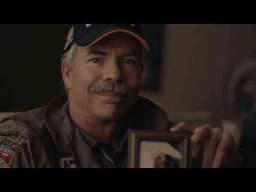
Southern Poverty Law Center's Vets Fight Hate campaign, created by Wing in April 2017, mobilised immigrant veterans to respond directly to hateful tweets with

Southern Poverty Law Center Turns Veterans Into Anti-Hate Messengers
Vets Fight Hate is a 2017 United States public-interest campaign created by advertising agency Wing for the Southern Poverty Law Center, in which immigrant veterans responded directly to hateful tweets with personal messages of peace and unity, confronting anti-immigrant sentiment with the lived authority of military service.
The campaign launched in April 2017, a period of intensified public debate around immigration policy in the United States. Its strategic premise rested on a single, verifiable fact: approximately eleven percent of all United States military veterans come from an immigrant background, according to the Southern Poverty Law Center's own campaign documentation. That statistic carried significant moral weight in a cultural moment when anti-immigrant rhetoric had become a regular feature of political discourse. Wing's creative solution did not produce a conventional public-service announcement. Instead, it constructed a mechanism by which real immigrant veterans — people who had already made tangible sacrifices on behalf of the United States — could directly confront individuals spreading hatred on social media.
The campaign's mechanics were deliberate and personal. Immigrant veterans, or veterans who had served alongside immigrants, were identified and filmed responding to specific hateful tweets, addressing the authors by name and recounting their own military service. The result was a film medium campaign containing one primary media asset, designed for distribution across digital and social platforms in the United States. Clapboard's editorial assessment places the campaign at a score of 63 out of 100, recognising its strategic clarity and human resonance while noting the structural limitations inherent in a single-asset social execution. The Southern Poverty Law Center's objective was both immediate — to disrupt individual acts of online hate — and systemic, urging all Americans to reconsider judgements made about people whose histories they do not fully know or understand.
 ARCHIVE
Wing identified a gap between the public perception of veterans and the public perception of immigrants in the United States. Veterans consistently rank among the most respected and trusted groups in American civic life, while immigrants — particularly in the political climate of 2017 — were frequently subject to suspicion and hostility. Wing's strategic insight was to collapse that gap entirely, presenting immigrant veterans as a living rebuttal to the ideology driving hateful speech online.
The campaign emerged at a precise cultural inflection point. Lawrence Villarroel, a United States Air Force veteran who participated in the campaign, described the environment directly: "We've had a change in the presidency, and I feel like based on [Trump's] rhetoric and policies, a lot of people are feeling emboldened to spout hate toward immigrants, or any minority for that matter," as reported by the Southern Poverty Law Center's own campaign materials. That testimony grounded the campaign in lived experience rather than abstract advocacy. Villarroel also stated, "This is saying, 'I, as a veteran, don't believe that what you're saying is right,'" reinforcing the campaign's positioning of veterans not as passive symbols but as active moral voices.
In the United States public-interest advertising landscape, Wing's approach stood apart from competitors such as the Ad Council, whose campaigns typically rely on broad emotional appeals and mass-media distribution, and from organisations like Amnesty International USA, which more commonly deploy petition mechanics and donor activation. Vets Fight Hate instead used a co-creation model, drawing its content and credibility directly from the participants themselves. No globally standardised market-size figure exists for public-service advertising as a standalone category, but the scale of digital media consumption in the United States in 2017 provided a receptive environment for socially activated film content, and the campaign was constructed explicitly to function within that ecosystem.
The creative execution of Vets Fight Hate centred on directness and authenticity. Wing chose a format that placed individual veterans on camera, speaking plainly and personally in response to specific tweets, without the mediation of voiceover narration or dramatic visual effects. The resulting film asset carried the weight of personal testimony rather than the polish of conventional advertising production.
Named creative contributors to the campaign documented in publicly available industry records include Pepe Aguilar, Facundo Paglia, Marc Duran, Isabella Escalon, Luis Guerra, Julieth Monsalve, and Tomas Salazar, all associated with Wing's production of the work. Their collective approach prioritised restraint. The veterans filmed for the campaign — including a United States Marine Corps veteran who opened his response by stating simply, "Hello June, I'm a veteran of the Marine Corps," as recorded in the Southern Poverty Law Center's campaign documentation — delivered their messages without theatrical framing. That tonal decision was itself strategic: the absence of cinematic embellishment reinforced the credibility of the speakers and prevented the campaign from being read as exploitative or performative.
The co-creation dimension of the work was structurally significant. By placing real social media content — actual hateful tweets, with identifiable authors — at the centre of the creative, Wing generated a tension that no scripted scenario could replicate. The campaign's single primary media asset was designed for social sharing, built to travel organically through the same digital channels where the hate speech it addressed had originated. In the United States, where social media platforms had become primary arenas for political and cultural conflict by 2017, that distribution logic was both pragmatic and thematically coherent. The Cannes Lions jury shortlisted the campaign across three categories in 2017, including Cyber F02 Social Purpose, Cyber F04 Co-Creation and User-Generated Content, and Cyber F08 Social Purpose, according to records cited by adsspot.me and circulocreativo.org, acknowledging both its creative mechanics and its social intent.
No independently verified performance metrics for the Vets Fight Hate campaign — such as view counts, social engagement figures, or measurable shifts in sentiment — are publicly available in named third-party sources at the time of this writing. The campaign's documented industry recognition, however, provides a meaningful proxy for its resonance within the creative and public-interest advertising communities.
The Cannes Lions shortlisting across three categories in 2017 — Cyber F02 Social Purpose, Cyber F04 Co-Creation and User-Generated Content, and Cyber F08 Social Purpose — represents a substantive peer validation, according to records cited by adsspot.me and circulocreativo.org. A shortlist position at Cannes Lions, particularly across multiple subcategories within a single year, indicates that the campaign was assessed as structurally sound and strategically purposeful by a professional jury operating at the highest level of the global industry.
Structurally, the campaign's effectiveness rested on the irreducible credibility of its participants. In the United States, where military service commands broad bipartisan respect, the decision to centre the work on veterans rather than activists or celebrities was a form of built-in effectiveness. The mechanism — a real veteran responding to a real tweet, by name — created a confrontational intimacy that passive public-service messaging cannot achieve. The Clapboard Score of 63 out of 100 reflects the campaign's clear strategic logic and the strength of its human content, balanced against the inherent constraints of a single-asset execution without a documented amplification strategy or measurable long-term outcome data. Wing demonstrated, within those constraints, that public-interest advertising can be most powerful when it places its most credible voices in direct conversation with the sources of harm it seeks to address.
Vets Fight Hate is a 2017 United States public-interest campaign created by Wing for the Southern Poverty Law Center. Immigrant veterans responded directly to hateful tweets, confronting anti-immigrant sentiment with personal testimonies of military service. The campaign launched in April 2017 and was shortlisted at the 2017 Cannes Lions, according to adsspot.me.
Wing created Vets Fight Hate for the Southern Poverty Law Center. Wing, also credited as Wing/Grey Group, developed the campaign's strategy, creative mechanics, and film production. Named creatives include Pepe Aguilar, Facundo Paglia, Marc Duran, Isabella Escalon, Luis Guerra, Julieth Monsalve, and Tomas Salazar, all associated with Wing's work on the campaign.
Vets Fight Hate had immigrant veterans respond on camera to specific hateful tweets, addressing the authors directly by name. The creative mechanism used real social media content as its raw material, producing a film asset designed for organic social sharing across United States digital platforms in 2017.
Vets Fight Hate received three Cannes Lions shortlist positions in 2017: Cyber F02 Social Purpose, Cyber F04 Co-Creation and User-Generated Content, and Cyber F08 Social Purpose, according to records cited by adsspot.me and circulocreativo.org. These shortlistings recognised both the campaign's social purpose and its co-creation mechanics.
Wing's core insight was that immigrant veterans uniquely bridged two culturally opposed perceptions in the United States. Veterans command broad public respect, while immigrants faced intensified hostility in 2017. Placing immigrant veterans as direct respondents to hate speech collapsed that opposition, giving the Southern Poverty Law Center's message irreducible personal authority.
Vets Fight Hate holds a Clapboard Score of 63 out of 100. The score reflects the campaign's strong strategic clarity and human credibility as a United States public-interest film, balanced against limitations as a single-asset execution without documented amplification strategy or independently verified performance outcome data.
.webp)
Creative Collaboration Platform: The Backbone of Modern Creative WorkWhat is a creative collaboration platform?Clapboard defines a creative collaboration platform as the operational core for today’s distributed creative teams. This is not a collection of digital collaboration tools stitched together; Clapboard’s system


Understanding the Creative Production MarketplaceWhat is a Creative Production Marketplace?Clapboard defines a creative production marketplace as a structured ecosystem where brands, agencies, and production talent converge to execute video, advertising, and branded content at scale. Unlike the legacy agency or freelanREAD FULL ARTICLE

The Urgent Need for a Creative Production Operating SystemWhy Traditional Creative Production Models Break DownClapboard sees the creative production landscape shifting under pressure. Content velocity is no longer a buzzword—it’s a mandate. Modern advertising demands relentless output across dozens of channels, each wREAD FULL ARTICLE