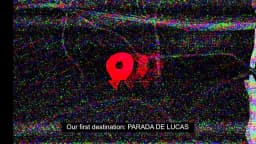
ADESF and Neogama's 'The Voice of Cigarette' campaign used real laryngectomy patients to reply to pro-smoking tweets in Brazil, December 2015.

How Neogama Turned Laryngectomy Voices Into Anti-Smoking Replies on Twitter
ADESF's 'The Voice of Cigarette' is a digital public-interest campaign launched in Brazil in December 2015, created by Neogama, in which people who had undergone laryngectomy recorded video replies to pro-smoking tweets and sent them directly to the users who had posted them, confronting smokers with the human cost of tobacco addiction in their own social media feeds, according to Adsoftheworld.
ADESF — the Associação de Defesa da Saúde do Fumante, Brazil's association for the defence of smokers' health — commissioned Neogama to address a behaviour specific to digital culture: the casual, sometimes performative way smokers and young people share smoking-related content on Twitter as a social signal. Rather than broadcasting a conventional awareness message, the campaign intervened at the exact moment a user expressed a positive or neutral sentiment about smoking, transforming Twitter's reply function into a medium for direct, personal testimony.
The campaign operated under the hashtag #AVOZDOCIGARRO and directed audiences to the dedicated website A Voz do Cigarro. Its single media asset, as documented by Clapboard.com, was a digital execution built entirely around real-time social listening and human response. Among the campaign's participants was a Brazilian singer identified in reporting by Ads of the World as the 'silent voice of samba' — someone whose professional identity was inseparable from their voice, and who had lost it to tobacco, according to Publicisgroupe. The campaign ran in Brazil and addressed Brazilian Portuguese-language Twitter content, making its geographic and linguistic targeting precise rather than broadly regional.
The Clapboard Score for 'The Voice of Cigarette' stands at 77 out of 100, reflecting strong conceptual originality and strategic targeting, with room noted in areas of documented scale and measurable public health reach.
Teenage and young adult audiences in Brazil increasingly use social media platforms to construct and project social identity, according to Senat-Perm Livejournal. According to research published via the Fundação Getulio Vargas repository, digital behaviour among Brazilian youth reflects high platform engagement and identity-driven content sharing, making Twitter a credible arena in which smoking could be performed as a lifestyle statement rather than a health risk. This was the precise gap the campaign was designed to fill.
Neogama's strategic insight was that broadcast anti-smoking advertising, however emotionally powerful, reaches audiences who are not in a pro-smoking frame of mind at the moment of exposure, according to Josepedrobortolini. By monitoring Twitter in real time and replying only to users who had already expressed a positive sentiment about cigarettes, the campaign achieved what conventional public-service announcements cannot: relevance at the exact moment of stated intention or endorsement. The reply mechanism meant that the message was not intrusive in the conventional advertising sense — it was responsive, which carries a different emotional weight.
Within the Brazilian market, ADESF has historically operated in a competitive landscape of public health messaging alongside the Brazilian federal government's own tobacco-control programmes, including those coordinated by the Ministry of Health under Brazil's National Tobacco Control Policy, as reported by Gov Br. Where government campaigns have tended toward mass-media formats — television warnings, packaging regulations, and print — ADESF and Neogama identified social media as an under-occupied channel for direct, testimonial-based intervention. Neogama's documented relationship with ADESF spans from at least 2007 through 2015, approximately eight years according to Ads of the World, giving the agency accumulated strategic understanding of the client's public health objectives and the audiences most resistant to conventional messaging.
The creative execution of 'The Voice of Cigarette' rests on a single, irreducible tension: the campaign uses the act of speaking to demonstrate the loss of speech. People who had undergone total or partial laryngectomy — surgical removal of the larynx, typically as a consequence of throat or laryngeal cancer — were recorded reading aloud the actual text of pro-smoking tweets posted by Brazilian Twitter users, as documented by Ads of the World. Some participants used electrolarynx devices; others spoke with the altered vocal quality that follows partial laryngectomy. The resulting videos were then sent as direct Twitter replies to the original posters.
The creative decision to use the smokers' own words, read back to them by someone whose voice had been destroyed by tobacco, is structurally precise. It removes the distance that conventional testimonial advertising maintains between the messenger and the audience. The person receiving the reply is not watching a stranger's story in a television commercial — they are receiving a direct, personalised response to something they said, in a medium where they expected engagement from peers, not consequence.
Among the participants identified in campaign documentation is a Brazilian samba singer described by Ads of the World as the 'silent voice of samba,' whose identity as a musician made the loss of vocal function a culturally resonant detail for a Brazilian audience. The campaign's digital format — video replies within Twitter's native interface — meant no production infrastructure beyond recording and real-time social monitoring was required, keeping the execution lean and the human presence central. Production credits for the specific directorial and creative roles on 'The Voice of Cigarette' — including the contributions of Márcio Ribas, Fabio Mozeli, José Pedro Bortolini, Sávio Hatherly, Gabriel Marcondes, Luis Paulo Gatti, Pedro Rosas, and other Neogama personnel — are not fully detailed in publicly available documentation beyond their association with the campaign.
No verified performance data for 'The Voice of Cigarette' is publicly available. No substantive campaign reviews or measurable results appear in Ad Age, Adweek, Campaign, The Drum, or Contagious, and no audience reach, engagement, or conversion figures have been attributed to a named source in the public record.
Structural analysis, however, supports a strong assessment of the campaign's design logic. The mechanism of real-time reply means every impression was earned rather than paid in the conventional sense — each video reached a user who had already self-identified as sympathetic to smoking, eliminating wasted reach. The personalisation created by reading the recipient's own words back to them is a technique with documented effectiveness in behavioural communication, because it closes the psychological distance that allows people to dismiss generalised health warnings as irrelevant to themselves.
The campaign's association with a participant identified as a celebrated Brazilian samba singer gave the execution a layer of cultural specificity that amplified its emotional stakes within the Brazilian market. The existence of a dedicated campaign website, A Voz do Cigarro, and the hashtag #AVOZDOCIGARRO indicates an intention to build a searchable, shareable identity beyond individual Twitter replies, suggesting the campaign was designed for earned media amplification as well as direct intervention. Neogama's eight-year documented relationship with ADESF, as noted by Ads of the World and Publicis Groupe records, provided the strategic continuity to support this level of executional precision within a public-interest brief.
'The Voice of Cigarette' was a digital anti-smoking campaign launched in Brazil in December 2015. Created by Neogama for ADESF, it used real-time Twitter monitoring to send video replies — featuring laryngectomy survivors reading smokers' own tweets aloud — directly to users who had posted pro-smoking content on the platform.
Neogama monitored Twitter for Brazilian users posting positively about smoking. Laryngectomy patients then recorded videos reading those tweets aloud, using altered or electrolarynx-assisted voices, and sent the videos as direct replies. The mechanic targeted smokers at the precise moment they expressed endorsement of cigarettes, as documented by Ads of the World.
Participants were people who had undergone total or partial laryngectomy, typically due to tobacco-related illness. One participant, identified by Ads of the World as a Brazilian singer known as the 'silent voice of samba,' brought particular cultural resonance to the campaign within the Brazilian market given their professional dependence on their voice.
The Clapboard Score for 'The Voice of Cigarette' is 77 out of 100, according to Clapboard.com. The score reflects strong conceptual originality and precise social media targeting, with the campaign's documented scale and measurable public health impact identified as areas where full evidence remains limited in the public record.
Neogama maintained a documented relationship with ADESF from at least 2007 through 2015, a period of approximately eight years according to Ads of the World and Publicis Groupe records. Earlier ADESF work, including the 'Smoking Awareness' campaign, had received recognition at Cannes Lions and was also credited to Neogama BBH in São Paulo.
The campaign is archived on Clapboard.com, which documents it as a single-asset digital campaign published in Brazil in December 2015 for ADESF by Neogama. It is also documented by Ads of the World. The campaign's own digital presence existed at the dedicated website A Voz do Cigarro and via the hashtag #AVOZDOCIGARRO.
.webp)
Creative Collaboration Platform: The Backbone of Modern Creative WorkWhat is a creative collaboration platform?Clapboard defines a creative collaboration platform as the operational core for today’s distributed creative teams. This is not a collection of digital collaboration tools stitched together; Clapboard’s system


Understanding the Creative Production MarketplaceWhat is a Creative Production Marketplace?Clapboard defines a creative production marketplace as a structured ecosystem where brands, agencies, and production talent converge to execute video, advertising, and branded content at scale. Unlike the legacy agency or freelanREAD FULL ARTICLE

The Urgent Need for a Creative Production Operating SystemWhy Traditional Creative Production Models Break DownClapboard sees the creative production landscape shifting under pressure. Content velocity is no longer a buzzword—it’s a mandate. Modern advertising demands relentless output across dozens of channels, each wREAD FULL ARTICLE