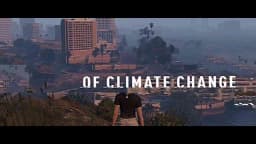
Green Nation's Deforested Desktop, created by Grey Brasil in June 2015, used a barren computer desktop as a digital metaphor to confront Brazilians with

How Green Nation and Grey Turned a Desktop Into a Deforestation Warning
Green Nation's "Deforested Desktop" is a 2015 digital public-interest campaign created by Grey Brasil that transforms the everyday computer desktop into a visual metaphor for deforestation, confronting Brazilian users with an environmental crisis rendered in the most familiar of digital spaces.
Launched in June 2015 in Brazil, the campaign presents a single, carefully constructed media asset: a computer desktop stripped of its verdant, icon-filled surface and replaced with a barren, depleted landscape. The concept is immediate and disarming. Users who encounter the image do not need to visit a rainforest, read a report, or absorb a statistic — the destruction arrives on the same screen where they check email, browse social feeds, and conduct daily life. That proximity is the entire argument.
Green Nation is a Brazilian environmental platform dedicated to mobilising public awareness around ecological issues, and "Deforested Desktop" sits squarely within that mission. By choosing the digital medium rather than traditional out-of-home or television formats, Grey Brasil placed the message inside the channel its audience already inhabits. In a country where deforestation of the Amazon and Atlantic Forest biomes remains a defining national and global concern, the campaign stakes a claim to relevance without resorting to the graphic imagery that frequently accompanies conservation advocacy.
The campaign's objective is persuasion through recognition rather than shock. The deforested desktop does not overwhelm — it mirrors. It asks the viewer to see their own environment, their own screen, as a site of consequence. That rhetorical move positions Green Nation not as a distant environmental authority but as a presence embedded in everyday Brazilian digital life. With a Clapboard Score of 63 out of 100, the campaign demonstrates conceptual clarity and medium-appropriate thinking, though its single-asset format limits the breadth of its documented reach.
Grey Brasil built "Deforested Desktop" on a consumer insight that is both simple and precise: the people most likely to care about deforestation in Brazil are also the people who spend the majority of their waking hours in front of a screen. Reaching them through that screen, rather than asking them to travel conceptually to a distant forest, collapses the psychological distance between audience and issue.
The strategic choice of a digital medium over television is worth examining in the context of Brazil's advertising landscape in 2015. According to data cited by researchers at Semantic Scholar drawing on Brazilian market sources, Brazil's overall advertising market stood at approximately R$39.97 billion at the time, with television commanding roughly 58.5% of spend and internet advertising accounting for approximately 7.6% of that total. That disparity reflects an ecosystem still dominated by broadcast, which makes Grey Brasil's decision to work in digital all the more deliberate — the campaign was not chasing volume but specificity, targeting a connected audience predisposed to digital engagement with environmental causes.
Grey Brasil had already demonstrated fluency with deforestation as a creative subject. In 2013, the agency produced WWF Brazil's "Deforested Field" campaign, which used the visual language of a football pitch to dramatise forest loss for a Brazilian audience, as documented by Clapboard. "Deforested Desktop" extends that lineage by migrating the metaphor from a shared public space — the football field — to an intimate private one: the personal computer. Where competitors in the Brazilian environmental communication space, including Greenpeace Brazil and WWF-Brazil's broader campaign portfolio, have frequently relied on aerial photography and documentary-style imagery to communicate scale, Grey Brasil here chooses interiority and immediacy as its primary strategic registers.
"Deforested Desktop" is the product of a defined creative team operating under clear conceptual constraints. According to Clapboard, the campaign's chief creative officer was Rodrigo Jatene, with Federico Russi serving as creative director. The creative execution was developed by Pedro Rocha and Fabio Barbato. Digital production was handled by Studio Manga, with Stage 25 serving as the production house and Filipe Godoy credited as executive producer.
The creative decision to confine the entire campaign to a single media asset is itself a formal argument. Rather than building a multi-touchpoint narrative, the team concentrated all expressive weight into one image — a computer desktop rendered desolate, its familiar landscape of folders and icons replaced by the visual vocabulary of stripped earth. The discipline required to trust that a single image can carry a campaign's full rhetorical burden is a creative risk, and it is one that works here because the metaphor requires no elaboration. The desktop is known; the deforestation is known; the juxtaposition produces meaning without explanation.
Sylvia Panico, Natacha Veiga, and Renata Ruas are associated with the Green Nation campaign as documented by Clapboard, reflecting the broader team involvement that shaped the project's public-interest framing and production pathway. The digital nature of the deliverable places particular weight on the visual composition and colour palette of the asset itself — a barren, desaturated landscape substituted for the typically rich, nature-derived imagery that desktop environments conventionally employ, making the metaphorical substitution legible at a glance. The craft choice is economical and exact, relying on the audience's recognition of the replaced visual convention to generate the emotional and intellectual response the campaign seeks.
No verified performance data for "Deforested Desktop" is publicly available. According to Clapboard's editorial research, no documented results exist for the campaign across measures including donations, petition signatures, website traffic, audience reach, social engagement, or behavioural change. Similarly, no award records for the campaign appear in the archives of Cannes Lions, the Effies, The One Show, D&AD, the Clios, the Webby Awards, or WARC, as confirmed by Clapboard.
What can be assessed is structural effectiveness — the degree to which the campaign's design is suited to achieving its stated purpose. On that basis, "Deforested Desktop" demonstrates several durable strengths. The metaphor is immediately legible to any screen-literate user, requiring no copy to decode and no prior knowledge of Green Nation to register. The choice of digital distribution aligns the medium with the message in a way that would be impossible to replicate in print or broadcast. The campaign's single-asset format, while limiting in terms of cumulative exposure, also ensures total creative consistency — there is no dilution across executions.
The campaign's primary structural vulnerability is its reliance on a single point of contact. Without a documented distribution strategy, a call to action embedded in the asset, or a network of supporting touchpoints, the image depends on organic sharing and media pickup to extend its reach beyond the initial placement. That dependency on virality, without evidence that it was achieved, is the central gap between the campaign's conceptual ambition and its measurable footprint. The Clapboard Score of 63 out of 100 reflects this balance: strong creative logic, constrained by format and an absence of verifiable impact data.
Green Nation's Deforested Desktop is a digital public-interest campaign created by Grey Brasil in June 2015. It uses a barren computer desktop as a visual metaphor for deforestation, confronting Brazilian screen users with environmental destruction in a space they encounter daily, without relying on graphic imagery or lengthy copy.
Grey Brasil created the campaign. According to Clapboard, Rodrigo Jatene served as chief creative officer, Federico Russi as creative director, and Pedro Rocha and Fabio Barbato as the creative team. Digital production was handled by Studio Manga, with Stage 25 as production house and Filipe Godoy as executive producer.
The concept replaces a computer desktop's familiar landscape with a depleted, barren environment. Grey Brasil's approach placed the deforestation metaphor inside the digital space its audience already occupies daily, making environmental destruction feel immediate and personal rather than geographically or emotionally distant for Brazilian users.
No award records for Deforested Desktop appear in the archives of Cannes Lions, the Effies, The One Show, D&AD, the Clios, the Webby Awards, or WARC, according to Clapboard's editorial research. The campaign received a Clapboard Score of 63 out of 100, reflecting strong concept and constrained documented reach.
Grey Brasil previously created WWF Brazil's Deforested Field campaign in 2013, which used a football pitch as a deforestation metaphor, as documented by Clapboard. Deforested Desktop extends that strategic lineage by moving the metaphor from a shared public space into the intimate, private environment of a personal computer screen.
The digital format aligned the medium directly with the message. By placing the deforestation image on a computer desktop, Grey Brasil reached a connected Brazilian audience within the environment they already inhabit. The approach prioritised conceptual precision over broadcast volume, targeting users predisposed to digital engagement with environmental issues.
.webp)
Creative Collaboration Platform: The Backbone of Modern Creative WorkWhat is a creative collaboration platform?Clapboard defines a creative collaboration platform as the operational core for today’s distributed creative teams. This is not a collection of digital collaboration tools stitched together; Clapboard’s system


Understanding the Creative Production MarketplaceWhat is a Creative Production Marketplace?Clapboard defines a creative production marketplace as a structured ecosystem where brands, agencies, and production talent converge to execute video, advertising, and branded content at scale. Unlike the legacy agency or freelanREAD FULL ARTICLE

The Urgent Need for a Creative Production Operating SystemWhy Traditional Creative Production Models Break DownClapboard sees the creative production landscape shifting under pressure. Content velocity is no longer a buzzword—it’s a mandate. Modern advertising demands relentless output across dozens of channels, each wREAD FULL ARTICLE