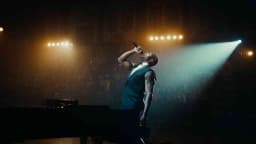
Zumba's 'Contagious' campaign by 180LA launched in September 2014 as the fitness brand's first 360-degree multimedia effort, spanning TV, digital, social, and

Zumba Bets on Contagious Joy to Launch Its First Brand Campaign
Zumba launched "Let It Move You" — archived under the creative title "Contagious" — as its first-ever 360-degree multimedia brand campaign, produced by agency 180LA and released in the United States in September 2014 across television, digital, social media, public relations, print, and branded apparel.
The campaign arrived at a defining moment for the Zumba brand. Having built a global following through word-of-mouth and grassroots instructor communities, the fitness lifestyle company turned for the first time to a fully integrated, above-the-line creative effort to codify what its community already felt instinctively: that Zumba's particular brand of dance-based movement is, in the most literal sense, catching. The central creative conceit — small, involuntary body movements escalating into full, uninhibited dancing — gave the campaign both its emotional engine and its popular shorthand. According to zumba.com, the official launch date was September 18, 2014, with L'ADN reporting the wider campaign rollout beginning September 17, 2014.
In the United States, where the campaign was anchored, Zumba faced the strategic challenge familiar to any lifestyle and recreation brand attempting to transition from cult phenomenon to mainstream cultural force. The "Contagious" film did not sell a product in any conventional sense. It sold permission — permission to move without self-consciousness, to join a community organised entirely around joy. The campaign's geographic focus on the US market reflected the density of Zumba's instructor and class networks there, making the United States the natural proving ground for a creative idea built on social spread and shared energy. The Clapboard Score for this campaign is 63 out of 100.
180LA identified a core consumer tension at the heart of the Zumba proposition. Chris Mendola, Chairman of 180LA, stated directly: "A lot of people have inhibitions about dancing in front of others. This is the tension we pushed off to create this campaign," as reported by The Drum. That single insight — that the barrier to Zumba participation is not physical but psychological — gave the entire "Contagious" creative platform its strategic clarity.
The recreational fitness category in the United States is intensely competitive. Brands including ClassPass and Barry's Bootcamp were expanding their footprints in 2014, each vying for the discretionary time and spending of health-conscious consumers. According to spabusiness.com, US health-club revenue reached US$24.2 billion in 2014, making it the largest national fitness market in the world. Against that backdrop, Zumba's decision to lead with community and emotional release rather than physical transformation metrics was a deliberate act of differentiation. Where competitors leaned into outcomes — body change, performance gains — Zumba leaned into the experience itself, positioning participation as its own reward.
The lifestyle and leisure framing of "Contagious" also addressed a structural challenge: Zumba classes happen in groups, taught by certified instructors, and the brand's growth depends on social recruitment. A campaign built around the idea that movement spreads from person to person mirrors the actual mechanics of how Zumba grows. The strategic logic, in other words, was not merely emotional — it was structural. According to zumba.com, the campaign spanned television, digital, social, public relations, print, and Zumba apparel, reflecting a commitment to reaching the US consumer across every touchpoint relevant to a lifestyle and recreation purchase decision.
The "Contagious" film was directed by twin brothers Jonathan and Josh Baker, known professionally as TWiN Thing, according to zumba.com. Their direction gave the creative concept its physical grammar: a world in which bodies respond involuntarily to the presence of movement, small twitches building into fully committed dancing across a wide cast of Zumba enthusiasts drawn from real communities.
Janet Champ served as creative director on the campaign, as documented by zumba.com, bringing to the project a sensitivity to human storytelling that the subject demanded. The film's power relies entirely on authenticity — the cast must appear genuinely overtaken by movement rather than performing a choreographed routine. That distinction is both a directorial and a casting challenge, and TWiN Thing's background in character-driven commercial filmmaking made them a purposeful choice for material that could easily tip into artificiality.
The production approach reflected the campaign's central argument. Chris Mendola noted, as reported by The Drum, that the films "bring to life a wide variety of Zumba enthusiasts" and that "it's powerful how the Zumba classes and community all genuinely share a positive energy and way of life." That variety was a deliberate creative decision: by showing Zumba participants across different ages, body types, and settings, the campaign dismantled the idea that dance fitness belongs to any particular demographic. In a United States market accustomed to aspirational fitness imagery featuring narrow physical ideals, the inclusive casting of "Contagious" was itself a creative statement. The campaign's multimedia architecture — television, online video, digital pre-roll, social media, and print — meant the film's emotional register had to hold across formats, from a full broadcast spot to compressed digital placements.
No verified performance data for the "Contagious" campaign is publicly available. Metrics such as reach, social engagement, class enrollment uplift, or brand-tracking shifts have not been disclosed by Zumba or 180LA in any publicly accessible source, and this analysis does not fabricate results in their absence.
What structural analysis can offer is an assessment of the campaign's conditions for effectiveness. The United States fitness market in 2014 was a high-stakes environment. According to spabusiness.com, US health-club revenue stood at US$24.2 billion that year, with global membership reaching 144.7 million, also per spabusiness.com. Within that context, Zumba's first integrated brand campaign entered the market with genuine creative differentiation: an emotionally coherent insight, an experienced directing duo in TWiN Thing, senior creative leadership from Janet Champ, and a media plan that spanned broadcast and digital simultaneously.
The campaign's structural strengths — insight-led strategy, inclusive casting, and a metaphor that mirrors Zumba's actual growth mechanism — position it as a well-constructed platform launch rather than a one-off execution. Whether the US consumer responded at scale remains undocumented. What is clear is that "Contagious" established a creative vocabulary for the Zumba brand in the United States that moved beyond product feature and into cultural identity, a transition that is among the hardest and most valuable any lifestyle and recreation brand can make. The Clapboard Score of 63 out of 100 reflects a campaign that demonstrates creative coherence and strategic clarity while leaving measurable impact unverified.
"Contagious" is the creative archive title for Zumba's "Let It Move You" campaign, launched in the United States in September 2014. Produced by 180LA, it was Zumba's first fully integrated, 360-degree multimedia brand campaign, spanning television, digital, social media, print, and branded apparel, according to zumba.com.
The "Contagious" film was directed by Jonathan and Josh Baker, known as TWiN Thing, according to zumba.com. The twin brothers brought a character-driven approach to the concept, depicting involuntary body movements spreading through society and escalating into full dancing across a diverse cast of Zumba participants in the United States.
Janet Champ served as creative director on the "Let It Move You" campaign, as documented by zumba.com. Working alongside 180LA Chairman Chris Mendola, Champ led a creative approach centred on the psychological barrier of dancing in front of others, using inclusive casting to broaden Zumba's appeal across the US market.
180LA identified social inhibition around dancing as the central tension. Chris Mendola, Chairman of 180LA, stated the campaign pushed off the insight that people fear dancing in front of others, as reported by The Drum. The creative resolved that tension by showing movement as irresistible and communal rather than performative or intimidating.
US health-club revenue reached US$24.2 billion in 2014, the largest national fitness market in the world, according to spabusiness.com. Zumba entered that competitive landscape — which included growing rivals such as ClassPass and Barry's Bootcamp — with its first brand campaign, choosing emotional experience over physical transformation as its primary differentiator.
Zumba's "Contagious" campaign holds a Clapboard Score of 63 out of 100. The score reflects the campaign's creative coherence, insight-led strategy, and strong production credentials, balanced against the absence of publicly verified performance data confirming measurable impact in the United States market following its September 2014 launch.
.webp)
Creative Collaboration Platform: The Backbone of Modern Creative WorkWhat is a creative collaboration platform?Clapboard defines a creative collaboration platform as the operational core for today’s distributed creative teams. This is not a collection of digital collaboration tools stitched together; Clapboard’s system


Understanding the Creative Production MarketplaceWhat is a Creative Production Marketplace?Clapboard defines a creative production marketplace as a structured ecosystem where brands, agencies, and production talent converge to execute video, advertising, and branded content at scale. Unlike the legacy agency or freelanREAD FULL ARTICLE

The Urgent Need for a Creative Production Operating SystemWhy Traditional Creative Production Models Break DownClapboard sees the creative production landscape shifting under pressure. Content velocity is no longer a buzzword—it’s a mandate. Modern advertising demands relentless output across dozens of channels, each wREAD FULL ARTICLE