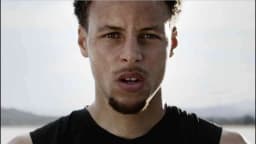
Nike's Dream Crazier film, created by Wieden + Kennedy in 2019, narrated by Serena Williams, reached over 600 million people online within days of its Oscar

Nike Dream Crazier Puts Female Athletes at the Center of Just Do It
Nike's Dream Crazier is a 90-second film created by Wieden + Kennedy Portland and released in the United States on February 24, 2019, during the Academy Awards broadcast, narrated by Serena Williams, that challenges the word "crazy" as applied to women athletes and reclaims it as a mark of ambition and greatness within the Just Do It platform.
The film arrives at a moment when Nike is actively expanding the emotional and cultural scope of Just Do It beyond individual achievement toward questions of representation and equality. Dream Crazier does not position itself as a product advertisement in the conventional sense. It functions instead as a declaration — a sequence of archival and contemporary footage showing women being dismissed, mocked, or penalised for their intensity, followed by the assertion that their behaviour is not crazy but visionary. The campaign extends a creative lineage that includes the 2017 Equality campaign, which featured Serena Williams, LeBron James, Kevin Durant, and Megan Rapinoe, and the 2016 Unlimited campaign, which also placed Williams at the centre of Nike's storytelling, according to records held on Ads of the World and documented in academic analysis published via Springer.
The choice to premiere Dream Crazier during the Oscars is deliberate and strategic. The broadcast reaches one of the largest live television audiences of the year in the United States, and the cultural context of Hollywood's own ongoing conversation about gender equity in 2019 amplifies the film's central argument. Wieden + Kennedy Portland, Nike's long-standing creative partner, produces the spot as a piece of cinematic advocacy, pairing Williams's controlled, pointed narration with footage that moves between joy, fury, and triumph. The campaign sits within the Sports and fitness category and earns a Clapboard Score of 82 out of 100, reflecting strong creative ambition and demonstrable cultural resonance.
Nike builds Dream Crazier on a specific and documented consumer truth: language used to diminish women's competitive behaviour is pervasive in sports media and public discourse. The film's strategic premise is that reclaiming that language — turning "crazy" from an insult into a credential — gives women athletes a new framework for their own identity, and gives Nike an emotional platform that transcends category competition.
The campaign is released six months after Nike's Colin Kaepernick Just Do It film, which according to reporting by CNBC drove a 31 percent rise in Nike online sales over Labor Day weekend 2018. Dream Crazier does not carry those specific sales metrics, but it operates within the same strategic architecture: find a cultural flashpoint, take a clear position, and use a famous athlete as narrator and witness rather than spokesperson. Serena Williams is not selling shoes in this film. She is providing testimony.
In the United States, Nike's position in the sportswear market is dominant. Nike reported approximately 39 billion dollars in fiscal 2019 revenue, representing roughly 7 percent growth, according to Finance Yahoo. That scale gives the brand the resource and the platform to produce cultural work rather than purely transactional advertising. Adidas, Nike's primary competitor in the global footwear space, and Under Armour, which competes directly in the United States women's athletic apparel segment, both maintained significant marketing investment in women's sport during this period, making Nike's decision to anchor its messaging in gender equity a competitive as well as a cultural choice. The Dream Crazier strategy positions Nike not merely as a sports brand but as an institution with a point of view on how women are seen, which is a meaningfully harder position for a competitor to replicate quickly.
Wieden + Kennedy Portland creates Dream Crazier as an editing-led film, structured around the rhythm of Williams's narration and the accumulative force of its archival and contemporary imagery. The production approach prioritises emotional momentum over visual spectacle — each cut is chosen to either illustrate a specific instance of women being labelled irrational for their ambition or to show the outcome of that ambition realised at the highest level of sport.
Serena Williams functions as both narrator and subject. Her presence carries the weight of lived experience: Williams herself has been described in precisely the terms the film interrogates, making her voice not a casting decision but an argument. The choice to have her speak directly and without sentimentality gives the film a controlled authority that distinguishes it from more emotionally manipulative advertising in the same space. Her delivery is measured and pointed, allowing the footage to carry the emotional charge rather than the narration itself.
The film is 90 seconds long — a duration that signals intent. It is too long for a standard television slot, which means it is designed first for the cultural moment of the Oscars premiere and then for the extended life of digital and social distribution. Wieden + Kennedy Portland has documented its authorship of the spot, per records cited on Ads of the World and confirmed in coverage by The Drum and Marketing Dive. Specific director credits for Dream Crazier are not publicly documented in available production databases, though the agency's involvement at every level of the film's conception and execution is established. The editing structure — a steady acceleration that ends on Williams herself — is a deliberate compositional choice that gives the film a beginning, an argument, and a conclusion.
Dream Crazier generates measurable and rapid audience response. According to reporting by ABC News, the film reaches more than 6 million YouTube views and more than 28 million Twitter views or impressions within approximately one day of its launch on February 24, 2019. The hashtag #justdoit appears more than 15,000 times in the immediate aftermath of the premiere, according to the same source. Online reach across platforms exceeds 600 million people, as reported by determ.com in its analysis of the campaign's digital distribution.
Longer-term platform data, as cited by Sites Psu Edu, records approximately 9.45 million YouTube views and more than 74,000 likes for the campaign video. These figures represent organic audience behaviour rather than paid amplification, which is a meaningful distinction. According to Kantar Media's analysis of Nike's broader Just Do It work from this era, the Kaepernick campaign generated a 2-to-1 ratio of earned media to paid media — a benchmark that contextualises the scale of Dream Crazier's own unpaid distribution, though Kantar's specific ratio applies to that earlier campaign rather than to Dream Crazier directly.
No verified award wins for Dream Crazier appear in the Cannes Lions, Effies, One Show, D&AD, Clios, Webby Awards, or WARC Awards databases. This absence does not diminish the campaign's cultural impact, which is structurally evident in the speed and volume of its organic reach. A 90-second film that accumulates tens of millions of views without paid seeding, and generates nine-figure reach figures within days of release, has achieved distribution outcomes that most award-winning campaigns do not. Dream Crazier's structural effectiveness rests on the precision of its cultural timing, the credibility of its narrator, and the clarity of its argument.
Dream Crazier is a 90-second Nike film created by Wieden + Kennedy Portland and released in the United States on February 24, 2019, during the Oscars broadcast. Narrated by Serena Williams, it reclaims the word "crazy" as applied to women athletes, reframing ambition and intensity as marks of greatness rather than irrationality.
Serena Williams narrates Dream Crazier. Williams is not merely a casting choice — she has been described in the precise terms the film critiques, making her narration lived testimony rather than spokesperson performance. Her controlled, direct delivery gives the film authority and allows the assembled footage to carry the emotional weight of the campaign's argument.
Wieden + Kennedy Portland created Dream Crazier for Nike. The Portland-based agency is Nike's long-standing creative partner and produced the film as part of the Just Do It platform. The agency's authorship is confirmed in records held on Ads of the World and in coverage by The Drum and Marketing Dive.
Dream Crazier reached more than 6 million YouTube views and more than 28 million Twitter views within approximately one day of launch, according to ABC News. Longer-term data cited by sites.psu.edu records approximately 9.45 million YouTube views. Total online reach exceeded 600 million people, as reported by determ.com in its campaign analysis.
Dream Crazier extends a documented creative lineage. Nike's 2017 Equality campaign featured Williams alongside LeBron James and Megan Rapinoe, framing sport as a vehicle for gender and racial equity, according to Ads of the World records. The 2016 Unlimited campaign also featured Williams. Dream Crazier sharpens that focus specifically onto women's experience of being dismissed for competitive intensity.
No verified award wins for Dream Crazier appear in the Cannes Lions, Effies, One Show, D&AD, Clios, Webby Awards, or WARC Awards databases. Despite the absence of formal recognition, the campaign's organic reach — exceeding 600 million people according to determ.com — demonstrates cultural impact that operates independently of industry awards validation.
.webp)
Creative Collaboration Platform: The Backbone of Modern Creative WorkWhat is a creative collaboration platform?Clapboard defines a creative collaboration platform as the operational core for today’s distributed creative teams. This is not a collection of digital collaboration tools stitched together; Clapboard’s system


Understanding the Creative Production MarketplaceWhat is a Creative Production Marketplace?Clapboard defines a creative production marketplace as a structured ecosystem where brands, agencies, and production talent converge to execute video, advertising, and branded content at scale. Unlike the legacy agency or freelanREAD FULL ARTICLE

The Urgent Need for a Creative Production Operating SystemWhy Traditional Creative Production Models Break DownClapboard sees the creative production landscape shifting under pressure. Content velocity is no longer a buzzword—it’s a mandate. Modern advertising demands relentless output across dozens of channels, each wREAD FULL ARTICLE