 ARCHIVE
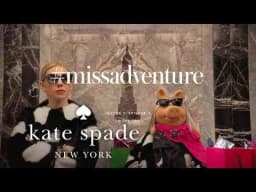
How Kate Spade Sent Miss Piggy to the Top of the Empire State Building
How Kate Spade's Miss Adventure Holiday Film Brought Miss Piggy to New York in 2016 Kate Spade New...
Under Armour Jessie Graff and the Unlike Any Campaign
Under Armour's Unlike Any campaign is a 2017 women's athlete initiative created by Droga5 that pairs six individual short films with spoken-word poetry to celebrate the distinct identities of professional female athletes across the United States, launching globally on July 19, 2017.
The campaign features six Under Armour athletes: ballerina Misty Copeland, distance runner and Harlem Run founder Alison Désir, world champion sprinter Natasha Hastings, professional stuntwoman Jessie Graff, Chinese taekwondo champion and actress Zoe Zhang, and alpine ski racer Lindsey Vonn. Each athlete receives her own dedicated film, and each film is matched with an original spoken-word composition performed by a commissioned poet. As noted by marketingdive.com, the campaign produced more than 200 pieces of content distributed across digital and social channels, making it one of the more expansive content productions in Under Armour's history.
The campaign launched in the United States market and extended internationally, with a physical pop-up activation held at Chelsea Market in New York City on July 20, 2017, the day after the digital release, according to marketingdive.com. Media partners for the campaign included Facebook, YouTube, Pinterest, Snapchat, Refinery29, Well+Good, and SoundCloud, reflecting a deliberate effort to reach women across the full spectrum of digital lifestyle platforms rather than confining distribution to traditional sports media. The Unlike Any campaign earned a Clapboard Score of 79 out of 100, recognising the strength of its creative structure and its culturally coherent approach to athlete portraiture. Submitted to Clapboard.com almost 8 years ago, the campaign remains a reference point in Fashion and Apparel advertising for its integration of literary craft with athletic identity.
Under Armour's Unlike Any campaign builds directly on a strategic platform the brand established three years earlier. According to marketingdive.com and graffica.info, the 2017 campaign extended the women-focused territory first staked out by I Will What I Want in 2014, also created by Droga5, which originally featured Misty Copeland and marked Under Armour's serious entry into female consumer marketing in the United States. The decision to return Copeland as one of six athletes in Unlike Any signals continuity rather than reinvention — the brand is deepening an established identity rather than pivoting.
The strategic challenge in the United States sportswear market is acute. According to selfstorming.com, Nike held approximately 15 to 25 percent of global sportswear market share around 2017, with Adidas holding approximately 8 to 15 percent, while Under Armour occupied a considerably smaller position of approximately 1 to 3 percent. Nike's annual global sales were approximately 28 billion US dollars versus approximately 3 billion US dollars for Under Armour around the same period, according to selfstorming.com. In the United States, the sportswear market was valued at approximately 44 billion US dollars with projected growth, according to selfstorming.com. Against competitors of this scale, Under Armour's Unlike Any campaign pursues differentiation through cultural authority rather than price or breadth. Nike and Adidas both command dominant shelf presence and athlete rosters; Under Armour counters with a more editorial, story-first approach that positions the brand as a curator of individual athletic identity.
The selection of Alison Désir — a distance runner and community organiser rather than an Olympic medalist — alongside Jessie Graff, a stuntwoman whose discipline sits outside conventional sports marketing, reveals the insight driving the campaign: that women in the United States relate more readily to athletes defined by will and singularity than by podium position alone. The Unlike Any name codifies this insight directly into the campaign architecture.
Director Georgia Hudson of Agile Films helmed the Unlike Any campaign, bringing a documentary sensibility to each of the six athlete portraits. Hudson's approach, as documented by clapboard.com and shots.net, treats each film as an independent short rather than a branded content unit, allowing the subject's environment and physicality to dictate visual grammar. Jessie Graff's film leans into kineticism and physical precision, while Alison Désir's portrait grounds itself in community and urban landscape, and Zoe Zhang's reflects a dual identity straddling competitive sport and popular culture.
The creative team at Droga5 responsible for the campaign includes Doug Hamilton, Kia Heinnen, Castro Desroches, and Diana Perez, according to clapboard.com. Their structural decision to anchor each film in spoken-word poetry rather than conventional voiceover or interview narration is the campaign's most distinctive craft choice. The poets commissioned — Saul Williams, Aja Monet, Kojey Radical, Dominique Christina, and Aristophanes — each wrote original work in response to the athlete they were paired with, as documented by The Drum and clapboard.com. This process inverts the usual branded content model: instead of copy written to serve footage, the poetry functions as a primary creative text that the imagery is designed to honour.
The result is a tonal consistency across all six films that would be difficult to achieve through conventional scriptwriting. Each piece carries a distinct literary voice while sharing the same formal constraint — a single athlete, a single poet, a single unbroken argument about what it means to compete as a woman in the United States. The production by Agile Films and the distribution architecture built across more than 200 content pieces, as reported by marketingdive.com, ensure the creative ambition is matched by executional reach across the Fashion and Apparel category.
No verified performance data for the Unlike Any campaign is publicly available in terms of sales lift, brand tracking shifts, or media ROI figures attributed to named sources. What the public record does confirm is the campaign's structural effectiveness across several measurable dimensions of creative ambition.
The production of more than 200 pieces of content, as reported by marketingdive.com, indicates a media strategy designed for sustained presence rather than a single launch moment. The deployment across Facebook, YouTube, Pinterest, Snapchat, Refinery29, Well+Good, and SoundCloud demonstrates platform-native thinking — each channel receives content calibrated to its own consumption behaviour rather than a single asset repurposed across formats. The Chelsea Market pop-up in New York City on July 20, 2017, according to marketingdive.com, extended the campaign into physical experience, creating earned media opportunity at the point of highest press attention.
The campaign's competitive significance is structural. In a United States market where Nike and Adidas command disproportionate market share, according to selfstorming.com, Under Armour's decision to invest in literary craft and documentary filmmaking represents a deliberate move toward cultural capital over media spend. Unlike Any positions the brand in the Fashion and Apparel lifestyle space as much as in performance sportswear, a category expansion with long-term brand equity implications. The presence of athletes like Jessie Graff and Alison Désir — figures with devoted communities but limited mainstream sports media coverage — amplifies this positioning by demonstrating that Under Armour's definition of athletic excellence is wider than its competitors'. The campaign's Clapboard Score of 79 out of 100 reflects the coherence of this ambition and the integrity of its execution almost 8 years after its original release.
Unlike Any is a 2017 Under Armour women's campaign created by Droga5. It features six athlete films, including a portrait of professional stuntwoman Jessie Graff, each paired with original spoken-word poetry. The campaign launched globally on July 19, 2017, and distributed more than 200 pieces of content across digital and social platforms in the United States, according to marketingdive.com.
Unlike Any features six Under Armour athletes. Alongside Jessie Graff, the campaign profiles ballerina Misty Copeland, distance runner and Harlem Run founder Alison Désir, world champion sprinter Natasha Hastings, taekwondo champion and actress Zoe Zhang, and alpine ski racer Lindsey Vonn, according to marketingdive.com and clapboard.com.
Georgia Hudson directed the Unlike Any campaign films. Hudson worked through production company Agile Films, with the creative team at Droga5 comprising Doug Hamilton, Kia Heinnen, Castro Desroches, and Diana Perez, according to clapboard.com. Poets including Saul Williams, Aja Monet, and Dominique Christina contributed original spoken-word work to each film.
Unlike Any extends Under Armour's I Will What I Want platform launched in 2014, also by Droga5. That earlier campaign originally featured Misty Copeland, who returned as one of the six athletes in Unlike Any. According to graffica.info and marketingdive.com, the 2017 campaign deepens the same strategic territory rather than replacing it with a new direction.
Alison Désir is a distance runner and founder of Harlem Run, a community running movement. Her inclusion signals that Unlike Any prioritises will and community impact over podium achievement alone. This positioning differentiates Under Armour from competitors Nike and Adidas in the United States by widening the definition of athletic identity within the Fashion and Apparel category.
Unlike Any received a Clapboard Score of 79 out of 100 on clapboard.com. The score reflects the campaign's creative coherence, its integration of documentary filmmaking with spoken-word poetry, and its strategic clarity in positioning Under Armour within the women's lifestyle and Fashion and Apparel space across the United States market almost 8 years after its 2017 launch.
.webp)
Creative Collaboration Platform: The Backbone of Modern Creative WorkWhat is a creative collaboration platform?Clapboard defines a creative collaboration platform as the operational core for today’s distributed creative teams. This is not a collection of digital collaboration tools stitched together; Clapboard’s system


Understanding the Creative Production MarketplaceWhat is a Creative Production Marketplace?Clapboard defines a creative production marketplace as a structured ecosystem where brands, agencies, and production talent converge to execute video, advertising, and branded content at scale. Unlike the legacy agency or freelanREAD FULL ARTICLE

The Urgent Need for a Creative Production Operating SystemWhy Traditional Creative Production Models Break DownClapboard sees the creative production landscape shifting under pressure. Content velocity is no longer a buzzword—it’s a mandate. Modern advertising demands relentless output across dozens of channels, each wREAD FULL ARTICLE