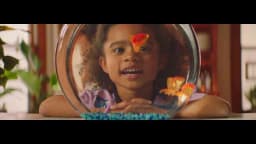
JFK Library's 'Words Count' campaign, created by The Martin Agency in November 2018, revived Kennedy's voice across Twitter, billboards, and digital media

How the JFK Library Used Kennedy's Words to Challenge a Twitter Era
The JFK Library's 'Words Count' campaign, created by The Martin Agency and launched in the United States on November 16, 2018, used the verified Twitter account @JohnFKennedy to publish authentic quotations from President John F. Kennedy, positioning his documented rhetoric as a pointed counterpoint to the political discourse of the moment.
The campaign extended across digital platforms, out-of-home advertising, billboards, newspaper ads, and Twitter throughout its planned run from November 2018 into winter 2019, according to reporting by the Boston Globe and coverage published by Ads of the World. The primary creative mechanism was deceptively simple: Kennedy's own words, unaltered, delivered through a contemporary social media channel to audiences who had come to expect something very different from a presidential Twitter presence. In the United States, where the relationship between political leadership and social media had become a defining cultural friction point, the choice of channel carried as much meaning as the content itself.
The JFK Library, formally the John F. Kennedy Presidential Library and Museum Foundation, had maintained a pro bono creative relationship with The Martin Agency dating back no later than 2006, according to documented campaign records. 'Words Count' represents one of the most culturally resonant executions of that partnership, arriving in a November news cycle already saturated with political noise. The campaign's Recreation and Leisure sector categorisation reflects its broader civic and cultural ambition: to reintroduce Kennedy's narrative not as historical artefact but as living, relevant language capable of earning its place in a contemporary feed.
The Martin Agency identified a specific cultural tension in the United States to anchor the 'Words Count' strategy. Presidential language had become a daily provocation on Twitter, and the agency recognised that Kennedy's documented words — crafted with deliberate eloquence — could function as both historical record and implicit contrast without the campaign ever needing to name its contemporary reference point. The work let the audience complete the argument.
Ad Age published coverage of the campaign on November 18, 2018, labelling it an Editor's Pick and framing the work as a timely alternative to Donald Trump's presidential Twitter presence, describing Kennedy as effectively 'tweeting from the grave,' according to Ad Age. That framing, unsolicited by the campaign itself, confirmed that the strategic logic had landed precisely as intended. The absence of explicit commentary was the strategy. In a media environment where brands including competitors in the cultural institution and museum space — such as the Smithsonian Institution and the Abraham Lincoln Presidential Library — compete for attention and civic relevance, the JFK Library chose restraint as its differentiating posture.
The Martin Agency's Richmond, Virginia team, led creatively by Chief Creative Officer Karen Costello and Executive Creative Director Jerry Hoak, built the campaign around a narrative insight that presidential eloquence is not nostalgic — it is measurable by contrast. The multi-channel structure, spanning outdoor, newspaper, and digital formats alongside the Twitter activation, ensured that the campaign reached United States audiences who would never encounter it through social media alone. According to Muse by Clio, the campaign's integration across these formats gave the quotations a cumulative weight that a single-channel execution could not have achieved.
The Martin Agency assembled a named creative team for the 'Words Count' campaign whose individual roles reflect the precision the work required. Chief Creative Officer Karen Costello and Executive Creative Director Jerry Hoak oversaw the creative direction, with Senior Art Director Ty Harper and Senior Copywriter Raymond McKinney responsible for the executional craft across formats, according to campaign credits documented by Ads of the World and Clapboard.
The creative challenge was one of curation rather than invention. Every word in the campaign already existed. The agency's task was to select, frame, and distribute Kennedy's quotations in a sequence that felt urgent rather than archival — to make language written decades earlier read as if composed for the present moment in the United States. Senior Strategic Planner Cecelia Parrish shaped the narrative logic that determined which words would appear and when, a sequencing decision that carried the full weight of the campaign's cultural argument.
The out-of-home and newspaper executions provided the typographic backbone of the work, presenting Kennedy's words in formats that demanded pause — a deliberate contrast to the velocity of the Twitter feed where the same quotations also appeared. Account Director Michael Henry and Associate Media Director Austin Bader oversaw the channel coordination that made this tonal contrast function as a unified campaign rather than a set of disconnected placements, per credits recorded by Clapboard and Ads of the World. On the client side, JFK Library Executive Director Steve Rothstein's team provided the archival authority that gave the creative team confidence in the authenticity of every line published. The film medium component of the campaign contained one media asset, as documented by Clapboard, which grounded the broader multi-channel narrative in a single cohesive visual statement.
 ARCHIVE
No verified performance data for the 'Words Count' campaign is publicly available in terms of reach figures, engagement rates, or conversion metrics. What the public record does confirm is the quality of the editorial reception the campaign earned in the United States immediately following its November 2018 launch.
Ad Age designated the work an Editor's Pick within two days of launch, according to Ad Age's November 18, 2018 coverage — a form of industry recognition that reflects both creative distinction and cultural timeliness. That designation, awarded by one of the United States advertising industry's most widely read trade publications, functions as a qualitative benchmark for campaigns that lack formally reported performance data. The Boston Globe also covered the campaign, according to available sourcing, lending the work mainstream cultural visibility beyond the advertising trade press.
Structurally, the campaign demonstrates several characteristics associated with durable cultural impact. The multi-channel architecture — combining the immediacy of Twitter with the permanence of out-of-home and print — allowed the JFK Library's message to inhabit different registers of attention simultaneously. The decision to use only verified, authentic Kennedy quotations eliminated a category of credibility risk that undermines many heritage brand campaigns. And the implicit rather than explicit framing of the campaign's contemporary relevance gave audiences the interpretive agency that tends to produce genuine engagement rather than passive consumption. Clapboard assigns 'Words Count' a score of 72 out of 100, reflecting strong strategic coherence and creative restraint in the context of a campaign whose measurable outcomes remain undisclosed.
The JFK Library's Words Count campaign published authentic Kennedy quotations through the verified @JohnFKennedy Twitter account in the United States beginning November 2018. Created by The Martin Agency, the campaign also ran across billboards, digital platforms, and newspaper ads, positioning Kennedy's documented words as a contemporary cultural counterpoint without naming any direct reference.
The Martin Agency, based in Richmond, Virginia, created Words Count for the JFK Library. The agency held a pro bono creative relationship with the JFK Presidential Library dating back no later than 2006, according to documented campaign records, making this 2018 campaign part of a long-running institutional partnership.
The JFK Library's Words Count campaign ran across Twitter, digital media, out-of-home advertising, billboards, and newspaper ads in the United States, according to reporting by the Boston Globe and Ads of the World. The campaign launched November 16, 2018, and was planned to continue through winter 2019 across all these formats.
Ad Age named Words Count an Editor's Pick on November 18, 2018, according to Ad Age's own published coverage. No additional award wins are publicly documented. Clapboard assigns the campaign a score of 72 out of 100, reflecting strong strategic coherence and creative restraint within the Recreation and Leisure category.
The Martin Agency's Words Count team included Chief Creative Officer Karen Costello, Executive Creative Director Jerry Hoak, Senior Art Director Ty Harper, and Senior Copywriter Raymond McKinney, per credits documented by Ads of the World and Clapboard. Strategic direction came from Senior Strategic Planner Cecelia Parrish, who shaped the quotation sequencing central to the campaign's narrative logic.
Words Count stands apart from competitors such as the Smithsonian Institution and the Abraham Lincoln Presidential Library by using a live social media account as its primary creative vehicle rather than exhibition promotion. The implicit rather than explicit framing of its contemporary relevance gave the JFK Library a distinctive voice in the United States cultural institution advertising space during 2018.
.webp)
Creative Collaboration Platform: The Backbone of Modern Creative WorkWhat is a creative collaboration platform?Clapboard defines a creative collaboration platform as the operational core for today’s distributed creative teams. This is not a collection of digital collaboration tools stitched together; Clapboard’s system


Understanding the Creative Production MarketplaceWhat is a Creative Production Marketplace?Clapboard defines a creative production marketplace as a structured ecosystem where brands, agencies, and production talent converge to execute video, advertising, and branded content at scale. Unlike the legacy agency or freelanREAD FULL ARTICLE

The Urgent Need for a Creative Production Operating SystemWhy Traditional Creative Production Models Break DownClapboard sees the creative production landscape shifting under pressure. Content velocity is no longer a buzzword—it’s a mandate. Modern advertising demands relentless output across dozens of channels, each wREAD FULL ARTICLE