 ARCHIVE
We Save Lives Last Word Puts Distracted Driving in the Dock
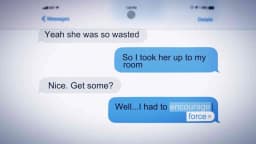
We Save Lives' "Last Word" is a public-interest film campaign produced by Y&R/Bravo Miami in April 2014 that confronts distracted driving by presenting the final text messages sent by victims before fatal collisions, turning a documentary approach into an emotional indictment of a behaviour that claims thousands of American lives each year.
We Save Lives published the campaign in the United States in April 2014. The organisation was founded in 2011 by Candace Lightner, who also founded Mothers Against Drunk Driving, and it broadened its advocacy mission to address what it calls the Three Ds: drunk, drugged, and distracted driving. "Last Word" sits squarely within that expanded mandate, zeroing in on the moment a driver chooses to read or send a text — a choice that in many documented cases preceded a collision. The film takes a single media asset and asks viewers to sit with an uncomfortable question: what were the last words typed into a phone before the crash?
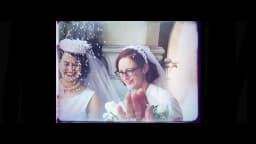
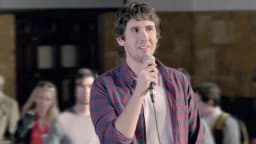
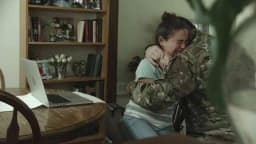
The campaign operates as a social experiment rather than a conventional public-service announcement. Rather than relying on staged reconstructions or statistics presented on screen, it surfaces authentic human detail — the mundane, the affectionate, the trivial — to underscore that distraction is not an abstract risk but a human reality lived out in ordinary moments. In the United States, where road safety campaigns must compete for attention across a crowded media landscape, that specificity of detail is a deliberate strategic choice. The film was created for the public-interest category and was submitted through Y&R/Bravo's Miami office, the agency's Latin American hub, bringing an international creative sensibility to a domestic American road-safety challenge, according to Wesavelives.
ARCHIVEDistracted driving represented a growing and distinct threat on American roads by 2014. According to the National Highway Traffic Safety Administration, distracted driving claimed the lives of more than 3,000 people in the United States in 2013, the year immediately preceding the campaign's publication. The NHTSA further documented that sending or reading a text takes a driver's eyes off the road for an average of five seconds — equivalent, at highway speed, to travelling the length of a football field without looking up. These figures, reported by NHTSA, gave Y&R and We Save Lives a concrete behavioural truth to work from rather than a generalised danger, according to Transportation Gov.
The 2014 competitive landscape for road-safety communications in the United States was served primarily by government agencies, enforcement bodies, and nonprofit advocacy groups rather than by commercial advertisers. The US Department of Transportation operated its own distracted driving awareness platform, and organisations including the Ad Council had long produced public-service campaigns on related road-safety themes. Against that backdrop, We Save Lives needed creative work that would not read as institutional. The social experiment format — presenting real or representative final messages rather than policy talking points — was Y&R's answer to that institutional fatigue.
The strategic rationale connects directly to We Save Lives' organisational DNA. Founded by Candace Lightner, whose earlier work at Mothers Against Drunk Driving demonstrated that personal testimony could shift public opinion and ultimately change legislation, We Save Lives understood that emotional specificity moves people in ways that aggregate data does not. "Last Word" applies that lesson to distracted driving, a behaviour that research published in peer-reviewed literature and tracked by NHTSA consistently shows drivers underestimate their own susceptibility to, according to Nhtsa Gov. The campaign does not lecture; it witnesses.
Rodrigo Saavedra directed "Last Word" for production company LANDIA. The film employs a documentary register — restrained, observational, resistant to melodrama — that suits the gravity of its subject without tipping into exploitation. That tonal discipline is among the most consequential craft decisions in the work: distracted driving campaigns that lead with graphic crash imagery risk triggering avoidance rather than engagement, and Saavedra's approach sidesteps that trap entirely by keeping the camera's attention on words and faces rather than wreckage.
Creative direction was shared by Claudio Lima and Marcos Calandrelli. The two brought a sensibility shaped by Y&R/Bravo's Miami operation, a creative environment that has historically blended North American strategic rigour with Latin American formal inventiveness. Art direction was handled by Valeria Sorge, and the visual grammar she established — intimate, unadorned, domestic in scale — reinforces the campaign's core argument that distracted driving is not a distant catastrophe but a household risk.
Director of photography Demian Rodenstein lit and framed the film in a way that keeps the viewer close to its subjects. Executive producer Juan Taylor and producer Diego Dutil oversaw the production through LANDIA, a company with a consistent track record in Latin American and US Hispanic advertising. Wardrobe was managed by Celina de Colle, whose choices in costuming underline the ordinariness of the people depicted — a visual cue that these are not exceptional victims but representative ones. The resulting single media asset carries the entire communicative burden of the campaign, a constraint that concentrates rather than limits its emotional reach. MSNBC covered the campaign on April 14, 2014, as reported by MSNBC, indicating that the film reached mainstream news audiences beyond the advertising trade press.
No verified performance data for the "Last Word" campaign is publicly available. No audited reach figures, no documented behavioural change metrics, no reported donation or membership uplift for We Save Lives, and no independently verified media spend have been identified in connection with the campaign. The campaign received no confirmed entries or awards at Cannes Lions, the Effie Awards, The One Show, D&AD, the Clio Awards, the Webby Awards, or the WARC Awards, according to Reddit.
Structurally, however, the campaign demonstrates several properties associated with effective public-interest communication. Its reliance on a single film asset concentrates production quality and demands that every craft decision serve the core message — a discipline that tends to favour longevity of impact over breadth of reach. The social experiment format, by presenting authentic-feeling human detail rather than abstracted statistics, engages the viewer's self-identification mechanism: the implicit question is not whether distracted driving is dangerous in general but whether the viewer recognises their own behaviour in what they are watching. That personalisation of risk is, according to road-safety communication research catalogued by the NHTSA, among the more durable approaches to behaviour-change messaging.
The MSNBC feature dated April 14, 2014, as reported by MSNBC, confirms the campaign generated earned media beyond its original distribution, a meaningful indicator of creative resonance even in the absence of formal effectiveness metrics. Clapboard rates "Last Word" at 63 out of 100, reflecting a campaign with genuine craft integrity and a sound strategic premise that is constrained by limited documented reach and the absence of measurable outcome data.
"Last Word" is a public-interest film created by Y&R/Bravo Miami for We Save Lives, published in the United States in April 2014. It confronts distracted driving by presenting the final messages sent by victims before fatal collisions, using a social experiment format to make the risk feel personally immediate rather than statistically abstract.
Rodrigo Saavedra directed "Last Word" for production company LANDIA. Creative directors Claudio Lima and Marcos Calandrelli led the campaign at Y&R/Bravo Miami. The film's restrained documentary style was a deliberate craft choice designed to engage viewers without relying on graphic crash imagery, which research suggests can trigger avoidance rather than reflection.
Y&R chose a social experiment format to separate "Last Word" from institutional road-safety messaging in the United States in 2014. By presenting authentic-feeling final messages rather than policy statistics, the campaign follows the advocacy tradition of We Save Lives founder Candace Lightner, whose work at Mothers Against Drunk Driving demonstrated that personal testimony shifts behaviour more effectively than aggregate data.
No verified awards for "Last Word" have been identified at Cannes Lions, the Effie Awards, The One Show, D&AD, the Clio Awards, the Webby Awards, or the WARC Awards, according to Tryadlicio. Clapboard rates the campaign 63 out of 100, recognising its craft integrity and strategic clarity while noting the absence of documented reach and measurable outcome data.
We Save Lives is the organisation behind "Last Word." Founded in 2011 by Candace Lightner, also the founder of Mothers Against Drunk Driving, We Save Lives focuses on the Three Ds: drunk, drugged, and distracted driving. The 2014 "Last Word" campaign specifically targeted distracted driving behaviour among audiences in the United States.
"Last Word" entered a US landscape where, according to the National Highway Traffic Safety Administration, distracted driving claimed more than 3,000 lives in 2013 alone. The campaign appeared alongside government and Ad Council road-safety efforts but distinguished itself through a documentary approach that personalised risk rather than presenting institutional warnings, earning coverage from MSNBC in April 2014.
.webp)
Creative Collaboration Platform: The Backbone of Modern Creative WorkWhat is a creative collaboration platform?Clapboard defines a creative collaboration platform as the operational core for today’s distributed creative teams. This is not a collection of digital collaboration tools stitched together; Clapboard’s system


Understanding the Creative Production MarketplaceWhat is a Creative Production Marketplace?Clapboard defines a creative production marketplace as a structured ecosystem where brands, agencies, and production talent converge to execute video, advertising, and branded content at scale. Unlike the legacy agency or freelanREAD FULL ARTICLE

The Urgent Need for a Creative Production Operating SystemWhy Traditional Creative Production Models Break DownClapboard sees the creative production landscape shifting under pressure. Content velocity is no longer a buzzword—it’s a mandate. Modern advertising demands relentless output across dozens of channels, each wREAD FULL ARTICLE