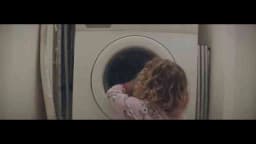
The "Ceiling crasher" campaign by the American Heart Association, created by Deutsch in 2014, leverages a documentary-style social experiment to heighten awareness around heart health issues. The brand proposition centers on confronting and breaking through invisible barriers—metaphorically represented as ceilings—that prevent individuals from recognizing the risks of heart disease or taking proactive health measures. By focusing on this "ceiling," the campaign implicitly promises to expose hidden dangers and encourage a shift in mindset towards cardiovascular wellness.
The market strategy employs a real-world social experiment format to create authentic engagement and emotional resonance. This approach aims to connect with a broad public audience by presenting relatable, everyday scenarios that reveal widespread misconceptions or overlooked factors in heart health. The choice of a documentary genre supports the campaign’s credibility and urgency, aligning with the American Heart Association’s role as an authoritative public interest organization. The campaign's targeting appears to prioritize awareness-building over direct calls to action, addressing the general U.S. population with a subtle but impactful narrative designed to catalyze reflection and behavior change. The low engagement metrics on YouTube suggest limited digital reach, possibly indicating a focus on traditional or alternative media channels more aligned with public service communications in 2014. Overall, the campaign’s creative angle—the metaphor of a ceiling as a barrier to health awareness—strategically frames heart disease prevention as a collective issue requiring societal and individual breakthrough.
FORMAT#3 SYMBOLIZE THE PROBLEM — Uses symbols or analogies to represent the problem instead of showing it literally.
The title "Ceiling crasher" and the campaign’s context—American Heart Association, public service, genre marked as "Documentary/Social Experiment"—point strongly to a symbolic representation of a social or health barrier, likely the "glass ceiling" that women face in leadership roles or health prioritization. Given the absence of explicit product demonstration, testimonial, or comparison, and the use of metaphor in the campaign’s title, it is most probable that the creative leverages a ceiling as an analogy or visual metaphor to powerfully symbolize an invisible obstacle affecting heart health or awareness. Instead of depicting heart issues directly, the campaign uses this creative device to make an abstract problem tangible and memorable.
ADVERTISING FORMATS EXPLAINED: https://www.clapboard.com/blog/branding-and-advertising/brand-strategy/12-advertising-creative-formats
1. American Red Cross – Market Positioning
The American Red Cross positions itself as a comprehensive emergency response and health education organization, focusing on disaster relief, blood donation, and CPR training. It differentiates through its vast volunteer network and long-standing reputation in providing rapid humanitarian aid alongside health-related services, blending community resilience with public health awareness.
2. Centers for Disease Control and Prevention (CDC) – Market Positioning
CDC serves as the national public health institute, emphasizing research, data-driven policy, and disease prevention. It differentiates by leveraging scientific expertise to influence health guidelines and community interventions, positioning itself as the authoritative source for health information aimed at both policymakers and the general public.
3. American Diabetes Association – Market Positioning
Focused on diabetes prevention, education, and research, the American Diabetes Association positions itself by advocating for improved care standards and supporting individuals living with diabetes. It combines patient-centered advocacy with extensive research funding, creating a niche in chronic disease management within the public interest health space.
4. National Kidney Foundation – Market Positioning
The National Kidney Foundation specializes in kidney disease education, prevention, and patient support. Its strategic angle is raising awareness about kidney health’s impact on overall wellbeing, promoting early detection, and offering resources for treatment, distinguishing itself through a targeted disease-specific advocacy focus within public health.
5. Susan G. Komen Foundation – Market Positioning
Susan G. Komen leads breast cancer awareness, research funding, and advocacy efforts. It differentiates by combining emotional storytelling with large-scale fundraising campaigns, fostering community engagement and survivor support. The foundation focuses on early detection and equitable access to care, strategically positioning itself around patient empowerment and hope.
Q: What is Ceiling crasher about?
A: Ceiling crasher is a professional film campaign launched in the United States in 2014 for the American Heart Association, created by the agency Deutsch. The campaign uses a documentary-style social experiment format to address heart health awareness, focusing on the metaphor of breaking through invisible barriers that prevent individuals from taking proactive steps against cardiovascular disease. Through a single, impactful media asset, Ceiling crasher aims to inspire viewers to recognize and overcome the societal and personal obstacles that contribute to heart health neglect, positioning the American Heart Association as a leading resource for education and prevention in the public interest sector.
Q: What creative device does Ceiling crasher use?
A: Ceiling crasher employs the FORMAT#3 SYMBOLIZE THE PROBLEM technique, as classified by Clapboard’s 12-format taxonomy. Instead of depicting heart disease directly, the campaign uses the visual metaphor of a ceiling to represent the unseen barriers that hinder individuals from prioritizing their heart health. This symbolic approach transforms an abstract public health issue into a tangible and memorable narrative, allowing the audience to engage emotionally with the challenge of overcoming both personal and societal obstacles related to cardiovascular wellness.
Q: What is the campaign proposition for Ceiling crasher?
A: The campaign proposition for Ceiling crasher centers on challenging viewers to confront and break through the invisible ceilings that prevent them from acknowledging and addressing the risks of heart disease. By leveraging a documentary-style social experiment, the American Heart Association communicates the urgency of heart health awareness to a broad U.S. audience, highlighting the often-overlooked dangers and encouraging a shift in mindset toward prevention. This strategic positioning underscores the importance of individual and collective action in reducing cardiovascular risk, reinforcing the brand’s mission within the public service market category.
Q: How does Ceiling crasher rank in Clapboard's archive?
A: Ceiling crasher holds a Clapboard Campaign Score of 63/100 in Clapboard’s global ad archive. This score reflects the campaign’s creative ambition, the quality of its execution, and its relevance within the cultural and public health landscape at the time of release.
Q: Who are the competitors in American Heart Association's category?
A: In the public service health sector, the American Heart Association competes with organizations such as the American Red Cross, which is known for its emergency response and health education initiatives; the Centers for Disease Control and Prevention, which leverages scientific expertise to shape national health policy and prevention strategies; the American Diabetes Association, which focuses on advocacy and research for diabetes care; the National Kidney Foundation, specializing in kidney disease awareness and prevention; and the Susan G. Komen Foundation, recognized for its leadership in breast cancer awareness and community engagement. Each competitor occupies a distinct position in advancing public health through education, advocacy, and support.


 ARCHIVE
.webp)