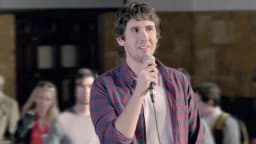
Dallas Pets Alive's 'Lucky' film campaign by Dieste launched in December 2013 in the United States, using emotional narrative storytelling to drive pet

How Dallas Pets Alive's 'Lucky' Turned Pet Adoption Into an Emotional Film
"Lucky" is a public-interest film campaign created by Dallas, Texas-based agency Dieste for Dallas Pets Alive, published in the United States in December 2013, using emotional narrative storytelling to build awareness for homeless pet adoption and the lifesaving mission of the organisation.
Dallas Pets Alive is a nonprofit rescue organisation operating in the Dallas, Texas area, committed to achieving a no-kill status for the city's animal shelters. The organisation recognised that awareness and public empathy were among the most powerful tools available to a resource-constrained nonprofit in a crowded charitable landscape. "Lucky" was Dallas Pets Alive's first digital campaign, developed in partnership with Dieste's creative and digital teams. Rather than relying on statistics or appeals to guilt, the campaign chose to anchor its message in character-driven storytelling, presenting the life of a shelter animal through an emotionally resonant cinematic lens. The campaign's central message promoted pet adoption by conveying that giving a homeless animal a home extends and transforms that animal's life.
Published in December 2013, the campaign consisted of a single film asset, deploying the medium at a moment in the calendar when American audiences are historically most receptive to themes of compassion, generosity, and family. In the United States, the holiday season has long served as a strategic window for public-interest communications, when emotional narratives travel further across social platforms and earned media. Dieste, a Dallas-headquartered agency with deep roots in multicultural and general-market advertising across the US market, channelled that cultural timing into a piece of work that Dallas Pets Alive Executive Director Leslie Sans stated the organisation expected to increase public awareness of their adoption mission. The Clapboard Score for "Lucky" is 63 out of 100, reflecting a campaign that demonstrates clear emotional craft and strategic focus within the constraints of a nonprofit budget and a single-asset execution.
Dallas Pets Alive faced a structurally difficult communications environment in 2013. The organisation competed for public attention, donations, adoptions, and volunteer engagement not only against other local shelters in the Dallas area but against large national animal-welfare organisations with substantially greater resources. The Humane Society of the United States reported an annual budget of approximately 180 million dollars in 2013, according to the Better Business Bureau's Wise Giving Alliance. The ASPCA had distributed roughly 33 million dollars in grants to more than 1,350 organisations across all fifty states since 2008, according to BBB Wise Giving Alliance records. Against competitors of that scale operating across the United States, a local nonprofit's most defensible asset was not budget — it was authenticity and emotional proximity.
Dieste's strategic insight for "Lucky" was to close that proximity gap through film. A December 2013 report by HispanicAd.com characterised the campaign as "very emotional," noting the deliberate choice to foreground feeling over function. This approach reflected a broader creative philosophy within public-interest advertising: audiences who connect emotionally with a cause are more likely to act than those who receive informational appeals alone. In the United States in 2013, digital video was becoming an increasingly viable distribution channel for nonprofit organisations, lowering the barrier to reach that had previously favoured well-funded national players like PETA, which maintained a significantly larger national media presence, according to PETA.org's publicly documented communications activity. By committing to film as the medium and to narrative as the mechanism, Dieste positioned Dallas Pets Alive to compete on creative terms rather than on media spend, a strategic decision consistent with the agency's broader work developing emotionally grounded campaigns for value-driven brands across the US market.
Director Karina Minujin led the production of "Lucky," working through production company Landia, with music provided by Elastik Music. The creative team at Dieste included Paco Olavarrieta, Ciro Sarmiento, and Jose Benitez, alongside Zeta and Minujin herself as collaborative creative contributors. That combination of a dedicated director with a production company known for craft-led commercial filmmaking and a musically sensitive sound studio signals an intention to treat this nonprofit brief with the same production rigour typically applied to high-budget brand advertising.
The film's emotional architecture, as characterised in contemporaneous coverage by HispanicAd.com, was built around the idea that a shelter animal's story is not one of loss alone but of potential transformation. By naming the central subject "Lucky" — a name that functions simultaneously as ironic counterpoint and aspirational declaration — the creative team embedded the campaign's entire argument into its title. The naming choice is a small but precise piece of craft: it invites the viewer to question whether luck is something an animal is born with or something a human can choose to give.
Produced in December 2013 in the United States, the film represents Dieste's capacity to operate with restraint and emotional precision. Paco Olavarrieta and Ciro Sarmiento, as senior creative contributors, brought to the project a sensibility shaped by Dieste's multicultural advertising heritage — an understanding that emotional truth, when rendered with specificity, crosses demographic and cultural lines. Jose Benitez's contribution to the creative team further reflects the collaborative, multi-voice approach Dieste applied to a campaign that needed to feel personal rather than institutional. The single-asset format, rather than limiting the campaign, concentrated its creative energy into one sustained emotional experience, allowing the narrative to breathe and the audience to arrive at the adoption message without being directed to it didactically.
No verified performance data for "Lucky" is publicly available. No campaign-specific effectiveness metrics — including view counts, adoption rate changes attributable to the film, or documented media reach figures — have been published in verifiable sources for this campaign. Dallas Pets Alive did not receive a documented award for "Lucky" at Cannes Lions, the Effie Awards, The One Show, D&AD, the Clio Awards, the Webby Awards, or WARC-tracked competitions.
What the record does establish is that "Lucky" was Dallas Pets Alive's first digital campaign, which positions it as a foundational strategic move rather than a mature iteration. First campaigns of this kind are rarely optimised for measurable return; their primary function is to establish a brand voice, test a creative approach, and build the internal and external confidence needed to invest further. The subsequent trajectory of the Dallas Pets Alive and Dieste relationship supports this reading. The "Adoptable Trends" campaign, which followed and was active by 2015 and 2016, won a Gold IAB Mixx Award in Search Marketing in 2015, according to circulocreativo.org. Dallas Pets Alive later received a Bronze Effie Award in 2020 for Non-Profit Sustained Success for a separate campaign titled "Hacking Them Into Your Life," according to the Effie Awards. That arc — from "Lucky" as a debut digital film in 2013 to Effie recognition by 2020 — suggests the organisation and its agency partner built creative and strategic capability incrementally, with the 2013 campaign serving as a proof of concept for emotionally led, digitally distributed public-interest storytelling in the United States.
"Lucky" is a public-interest film campaign created by Dieste for Dallas Pets Alive, published in the United States in December 2013. It was the organisation's first digital campaign and used emotional narrative storytelling to promote pet adoption and raise awareness for homeless animals in the Dallas area.
Dieste, a Dallas-based advertising agency, created "Lucky" for Dallas Pets Alive in 2013. The creative team included Paco Olavarrieta, Ciro Sarmiento, and Jose Benitez. Director Karina Minujin led production through production company Landia, with music delivered by Elastik Music.
"Lucky" did not receive documented awards at Cannes Lions, the Effie Awards, The One Show, D&AD, the Clio Awards, the Webby Awards, or WARC-tracked competitions. Dallas Pets Alive later won a Bronze Effie in 2020 and a Gold IAB Mixx Award in 2015, but for separate campaigns.
"Lucky" aimed to increase public awareness of pet adoption in the United States through emotional narrative film. Dallas Pets Alive Executive Director Leslie Sans stated the organisation expected the campaign to grow awareness of its adoption mission, positioning the nonprofit against larger national animal-welfare organisations.
"Lucky" was Dallas Pets Alive's first digital campaign, launched in December 2013. It established the organisation's relationship with Dieste and set a precedent for emotionally driven public-interest storytelling. Subsequent campaigns including "Adoptable Trends" and "Hacking Them Into Your Life" built on that foundation with measurable award recognition.
.webp)
Creative Collaboration Platform: The Backbone of Modern Creative WorkWhat is a creative collaboration platform?Clapboard defines a creative collaboration platform as the operational core for today’s distributed creative teams. This is not a collection of digital collaboration tools stitched together; Clapboard’s system


Understanding the Creative Production MarketplaceWhat is a Creative Production Marketplace?Clapboard defines a creative production marketplace as a structured ecosystem where brands, agencies, and production talent converge to execute video, advertising, and branded content at scale. Unlike the legacy agency or freelanREAD FULL ARTICLE

The Urgent Need for a Creative Production Operating SystemWhy Traditional Creative Production Models Break DownClapboard sees the creative production landscape shifting under pressure. Content velocity is no longer a buzzword—it’s a mandate. Modern advertising demands relentless output across dozens of channels, each wREAD FULL ARTICLE