Friends of Animals and agency Chemistry launched 'Freedom is Under Attack' in September 2018, reframing wild horse protection as a constitutional freedom under

Friends of Animals Frames Wild Horse Freedom as a Civil Rights Issue
Friends of Animals' 'Freedom is Under Attack' is a 2018 United States public interest film campaign, created by agency Chemistry, that reframes the federal management of wild horses not as an animal welfare issue but as a direct assault on the principle of freedom itself.
The campaign launched in September 2018 and consists of a single film asset, produced by Ampersand and directed by Whitney Bolster. Rather than relying on conventional wildlife conservation imagery, the work adopts the visual and rhetorical language of civil liberties advocacy — invoking freedom as a shared value that transcends the divide between human rights and animal rights. The strategic intent is to expand the audience for wild horse protection beyond committed animal advocates and into the broader American public concerned with governmental overreach and constitutional principles.
In the United States, wild horses occupy a contested political and ecological space. The Bureau of Land Management's ongoing roundup and removal programmes have been a flashpoint for conservation organisations, ranching interests, and federal legislators for decades. Friends of Animals, a nonprofit advocacy group with decades of activism on record according to friendsofanimals.org, has consistently challenged these management practices. 'Freedom is Under Attack' represents a deliberate escalation in rhetorical strategy, choosing film — a medium capable of emotional sweep and documentary credibility — to prosecute that argument to a national audience.
The campaign's Clapboard Score of 63 out of 100 reflects competent creative execution within the public service category, with particular strength in strategic framing, though limited measurable distribution data tempers the overall assessment. The work sits within a long tradition of cause-driven filmmaking that attempts to make wildlife conservation feel personally urgent to viewers who may not identify as environmentalists.
Friends of Animals identified a strategic tension at the heart of wild horse advocacy. The organisation recognised that framing wild horses purely as animals in need of protection activates a sympathetic but limited audience segment, while framing their management as a freedom issue activates a far wider coalition of Americans predisposed to distrust governmental control over natural and public resources.
This pivot reflects a sophisticated understanding of values-based messaging. Research in public interest communication has long demonstrated that connecting environmental causes to foundational civic values — liberty, rights, constitutional protection — significantly broadens the persuadable audience beyond baseline supporters. Chemistry, the Atlanta-based agency responsible for the creative, applied this insight to produce work that feels less like a charity appeal and more like a political statement, closer in register to the American Civil Liberties Union's campaign communications than to traditional nonprofit animal welfare advertising.
The competitive landscape for public interest film in the United States in 2018 was defined by organisations with substantially larger media budgets. The ASPCA, according to aspca.org, maintains one of the most recognised direct-response television presences in the US nonprofit sector. PETA's 2018 campaigns, as reported across trade coverage, generated significant corporate policy changes including commitments from major consumer brands. Against competitors operating at that scale, Friends of Animals and Chemistry chose depth of argument over breadth of media placement, producing a single, narratively ambitious film rather than a multi-asset saturation campaign. That choice carries both creative integrity and practical risk: a single asset requires exceptional resonance to generate organic reach in the United States media environment without paid amplification behind it.
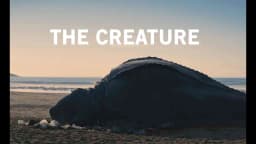
Whitney Bolster directs the film with a sensibility drawn from documentary practice rather than conventional public service announcement convention. The decision to approach the material with documentary grammar — observational framing, a sense of unmediated reality, images that feel witnessed rather than constructed — is central to the campaign's credibility. Wild horse footage that appears earned rather than staged carries a fundamentally different emotional weight than polished wildlife cinematography, and Bolster's direction leans into that distinction.
Videographer Zach Wolfe's work on the film reflects a similar discipline. The visual approach appears to prioritise authenticity over spectacle, using the landscape of the American West not as backdrop but as active argument — the openness of that terrain functioning as a visual synonym for the freedom the campaign claims is under threat. Audio, handled by Kevin Jones, presumably works in the same register, using natural sound and restrained scoring to keep the emotional temperature purposeful rather than manipulative.
The creative team assembled by Chemistry — creative director Chris Breen, art director Adam Millman, and copywriter Lauren Glynn — constructed a campaign where the copywriting burden is carried as much by image selection and editorial rhythm as by explicit language. Account director Jen McElroy oversaw the client relationship for a project that required navigating the particular sensitivities of nonprofit advocacy work, where authenticity and mission alignment are non-negotiable creative constraints. Production company Ampersand executed the physical production. The overall craft profile of the campaign reflects a team working with economy and intention, characteristics that typically distinguish effective public interest filmmaking from work that mistakes emotional volume for emotional truth.
No verified performance data for 'Freedom is Under Attack' is publicly available. No campaign metrics — including views, impressions, media placements, audience reach, or conversion data — appear in trade publications, the Friends of Animals website as documented at friendsofanimals.org, or in advertising industry records accessible at the time of this analysis. ispot.tv, which tracks television advertising activity in the United States, does not surface verified broadcast data for this campaign. No award recognition from Cannes Lions, D&AD, The One Show, the Clios, the Webby Awards, or the Effies has been recorded for this work.
Structural analysis, in the absence of performance data, points to several meaningful indicators of campaign effectiveness. The decision to concentrate creative investment in a single film rather than a dispersed multi-format campaign reflects a strategic bet on depth over frequency — appropriate for an issue, wild horse conservation, that demands audience education rather than simple brand recall. The civil liberties framing is structurally sound: it identifies a genuine value shared by a wide American audience and connects it, without obvious strain, to the specific legislative and bureaucratic reality facing wild horses in the United States. That connective logic is the campaign's most durable creative asset. The Clapboard Score of 63 out of 100 positions 'Freedom is Under Attack' as a campaign with clear strategic ambition and credible craft, operating in a space where distribution scale and measurable impact data would be required to push the score meaningfully higher.
'Freedom is Under Attack' is a 2018 public interest film campaign created by Friends of Animals and agency Chemistry in the United States. It reframes wild horse conservation as a civil liberties issue, arguing that federal management practices threaten a foundational American value. The campaign consists of a single film asset, directed by Whitney Bolster and produced by Ampersand.
Chemistry, a United States advertising agency, created 'Freedom is Under Attack' for Friends of Animals. The creative team included Chris Breen as creative director, Adam Millman as art director, Lauren Glynn as copywriter, and Jen McElroy as account director. The film was directed by Whitney Bolster through production company Ampersand.
Friends of Animals used a freedom framing to broaden the campaign's persuadable audience beyond committed animal welfare supporters. By connecting wild horse protection to civil liberties values, the campaign speaks to Americans concerned with governmental overreach, significantly expanding its potential reach across the United States beyond those who already identify as wildlife conservation advocates.
No award recognition for 'Freedom is Under Attack' has been recorded. No wins or shortlist entries from Cannes Lions, D&AD, The One Show, the Clios, the Webby Awards, or the Effies are publicly documented for the Friends of Animals and Chemistry campaign published in September 2018 in the United States.
'Freedom is Under Attack' holds a Clapboard Score of 63 out of 100. The score reflects competent creative execution and a strategically sound civil liberties framing for wild horse conservation, while noting that the absence of verified distribution data and measurable campaign performance limits the overall assessment of the 2018 United States public interest film.
.webp)
Creative Collaboration Platform: The Backbone of Modern Creative WorkWhat is a creative collaboration platform?Clapboard defines a creative collaboration platform as the operational core for today’s distributed creative teams. This is not a collection of digital collaboration tools stitched together; Clapboard’s system


Understanding the Creative Production MarketplaceWhat is a Creative Production Marketplace?Clapboard defines a creative production marketplace as a structured ecosystem where brands, agencies, and production talent converge to execute video, advertising, and branded content at scale. Unlike the legacy agency or freelanREAD FULL ARTICLE

The Urgent Need for a Creative Production Operating SystemWhy Traditional Creative Production Models Break DownClapboard sees the creative production landscape shifting under pressure. Content velocity is no longer a buzzword—it’s a mandate. Modern advertising demands relentless output across dozens of channels, each wREAD FULL ARTICLE