Save the Elephants and Picture Farm launched a 2018 short film in New York City contrasting urban life with Samburu's wildlife to deepen public interest in

How Picture Farm and Save the Elephants Moved City Dwellers to Care About Wildlife
Save the Elephants partnered with New York production company Picture Farm in June 2018 to release a short documentary film designed to inspire city dwellers across the United States to form a deeper, more personal connection to wildlife preservation by contrasting the rhythms of New York City life with the landscapes and stakes of elephant conservation in Kenya's Samburu National Reserve.
The campaign launched on June 10 and 11, 2018, according to records documented by Save the Elephants and corroborated by Clapboard's editorial archive. Its creative premise functions as a social experiment: bring representatives of the elephant conservation world — specifically Benjamin Loloju of Save the Elephants and Letoiye Serenoy of Elephant Watch Camp in Samburu National Reserve — into an urban American environment and capture how that encounter reshapes perspective, both for the participants and for the audience watching. The film medium was chosen deliberately, carrying the weight of documentary authenticity rather than the frictionless optimism of a traditional public service announcement. In doing so, Picture Farm and Save the Elephants signaled an intent to move beyond awareness messaging and into something more emotionally durable.
The campaign belongs to the Public Interest category and operates as a single-asset film release. Its geographic anchor is the United States, with New York City serving as both the production location and the symbolic counterpoint to the Kenyan landscape the film asks viewers to care about. The juxtaposition is the argument: if wildlife conservation feels distant and abstract to urban Americans, the film's approach is to collapse that distance by placing the human voices of conservation directly inside the city these audiences inhabit. That structural choice defines both the creative execution and the public service ambition behind it.
Save the Elephants occupies a specific position in the conservation landscape: a research-led organisation whose credibility derives from long-term fieldwork in Samburu National Reserve rather than from celebrity-driven mass campaigns. That distinction shapes the strategic logic of the 2018 Picture Farm film. Where competitor organisations in the public interest space have historically reached for scale — WildAid, for instance, built its model around high-profile ambassadors including former Chinese basketball star Yao Ming, who fronted the 2015 Stop Demand anti-ivory campaign developed with the African Wildlife Foundation and the Yao Ming Foundation, according to Save the Elephants — this campaign pursues depth over reach, betting on the persuasive force of witnessed encounter rather than broadcast repetition.
The strategic insight driving the film is straightforward. Urban Americans, concentrated in cities like New York, are the intended audience for conservation messaging but exist furthest from the ecological realities those campaigns describe. The social experiment format acknowledges this distance and makes it the subject of the film rather than an obstacle to work around. By bringing Benjamin Loloju and Letoiye Serenoy to New York City and documenting how that experience unfolds, Picture Farm created a vehicle for audiences to project themselves into a perspective shift they might not otherwise undertake.
The broader media environment in 2018 supported this kind of content. Online video advertising grew year over year in 2018, according to data cited by Cambridge University Press researchers, and social media video consumption was accelerating in ways that made short documentary formats increasingly viable for public service distribution in the United States market. The campaign's single-film format positioned it for sharing-driven amplification rather than paid placement, a practical constraint that also reinforced its documentary credibility.
Picture Farm directed, shot, and edited the film under the creative leadership of Kess Broekman-Dattner, who served as writer, director, camera operator, and editor — a consolidation of roles that preserves a unified point of view across every stage of the filmmaking process. That decision is not incidental. Documentary work gains authority when the observational eye remains consistent, and Broekman-Dattner's omnipresence in the production chain ensures the film's visual and narrative logic are inseparable.
Ben Freedman served as executive producer, according to production records documented by Save the Elephants. The post-production team assembled for the film reflects a professional infrastructure well beyond the scale of a typical public service film: Ryan Teague composed the score, Roslyn Di Sisto of Nice Shoes handled color grading, and Leslie Yoon supervised post-production. Kari Ickert served as post producer. An ensemble of assistant editors — Regina Spurlock, who also mixed sound, alongside Matt Egan, Jose Roman, DeAnita Redwood, and Jennifer Roberts — processed the footage, while Claudia Perez created graphics. These credits, as documented by Save the Elephants, describe a production pipeline that treats a conservation public service film with the craft seriousness of commercial documentary work.
The film's central creative mechanism is contrast. New York City provides visual density, noise, and the compressed anonymity of urban American life. Samburu National Reserve provides scale, stillness, and proximity to the natural world. Benjamin Loloju and Letoiye Serenoy move through New York as witnesses, and the camera watches what that witnessing produces. The score by Ryan Teague functions as connective tissue between these two environments, giving the edit an emotional continuity that the geographic contrast alone cannot sustain. Production credits for this campaign are documented by Save the Elephants.
No verified performance data for the Picture Farm and Save the Elephants 2018 campaign is publicly available. The film did not appear in the verified results of the Cannes Lions, Effie Awards, The One Show, D&AD, Clio Awards, Webby Awards, or WARC Awards databases for 2018, meaning no independently adjudicated recognition is on record. For context, the public interest category in 2018 produced significant award-recognised work: the Trash Isles ocean plastic pollution campaign won a Cannes Lions PR Grand Prix that year, according to reporting by Communicate Magazine, illustrating the competitive standard the category reached.
Structurally, the campaign carries genuine effectiveness logic even without verified metrics. The social experiment format generates emotional authenticity that traditional PSA production rarely achieves because its outcome — how Benjamin Loloju and Letoiye Serenoy respond to New York City — cannot be scripted in advance. That unpredictability is the source of the film's credibility, and credibility is the currency that converts passive viewing into the kind of sustained concern conservation organisations depend on.
The single-asset format limits reach by definition, but concentrates attention in ways that multi-asset campaigns rarely manage. In the United States, where conservation organisations compete for public interest against an enormous volume of cause-driven content, depth of engagement rather than breadth of impression is increasingly the measure that matters for donor behaviour and long-term advocacy alignment. The Clapboard Score for this campaign is 60 out of 100, reflecting the strength of its creative premise and craft against the absence of documented distribution scale and measurable public impact.
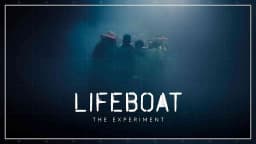
The campaign is a short documentary film released in June 2018 in the United States. Picture Farm brought Save the Elephants field researchers Benjamin Loloju and Letoiye Serenoy to New York City, contrasting urban American life with Samburu National Reserve to inspire deeper public connection to elephant conservation.
Kess Broekman-Dattner directed the film and also served as writer, camera operator, and editor. Ben Freedman served as executive producer, according to Save the Elephants production records. Ryan Teague composed the score, and Roslyn Di Sisto of Nice Shoes handled color grading for the 2018 production.
Benjamin Loloju is a staff member of Save the Elephants, and Letoiye Serenoy is affiliated with Elephant Watch Camp in Samburu National Reserve, Kenya. Both appear as the human subjects of the 2018 New York City social experiment documented by Picture Farm, according to Save the Elephants.
No verified awards for this campaign appear in the Cannes Lions, Effie Awards, The One Show, D&AD, Clio Awards, Webby Awards, or WARC Awards databases for 2018. The campaign earned a Clapboard Score of 60 out of 100, reflecting strong creative premise against limited documented distribution and measurable reach.
Save the Elephants pursued documentary depth over broadcast scale for this 2018 United States release. WildAid built its conservation model around celebrity ambassadors, including Yao Ming in the 2015 Stop Demand anti-ivory campaign, according to Save the Elephants. Picture Farm's film prioritises witnessed encounter over mass-reach repetition as its persuasion strategy.
The Clapboard Score for this campaign is 60 out of 100. The score reflects the campaign's genuinely distinctive social experiment premise and its professional documentary craft, balanced against the absence of publicly verified distribution metrics and independently documented audience impact for this 2018 United States public interest film.
.webp)
Creative Collaboration Platform: The Backbone of Modern Creative WorkWhat is a creative collaboration platform?Clapboard defines a creative collaboration platform as the operational core for today’s distributed creative teams. This is not a collection of digital collaboration tools stitched together; Clapboard’s system


Understanding the Creative Production MarketplaceWhat is a Creative Production Marketplace?Clapboard defines a creative production marketplace as a structured ecosystem where brands, agencies, and production talent converge to execute video, advertising, and branded content at scale. Unlike the legacy agency or freelanREAD FULL ARTICLE

The Urgent Need for a Creative Production Operating SystemWhy Traditional Creative Production Models Break DownClapboard sees the creative production landscape shifting under pressure. Content velocity is no longer a buzzword—it’s a mandate. Modern advertising demands relentless output across dozens of channels, each wREAD FULL ARTICLE