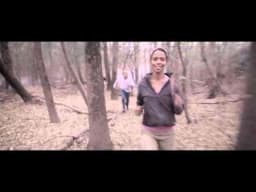
PFLAG's Nobody's Memories campaign by FCB Toronto and FCB Chicago used simulated 8mm wedding footage to advocate for same-sex marriage legalisation across the

PFLAG Imagines the Memories Same-Sex Couples Never Got to Make
Nobody's Memories is a 2015 public-interest film created by FCB Toronto and FCB Chicago for PFLAG, using reconstructed 8mm-style wedding footage to depict the same-sex marriages that could not legally happen before marriage equality, closing with the message: "For all the memories that never happened. Let's make marriage legal for everyone, everywhere."
Published in June 2015, the campaign arrived at a decisive moment in the United States, weeks before the Supreme Court's landmark Obergefell v. Hodges ruling made same-sex marriage a constitutional right across the country. PFLAG, the organisation historically focused on supporting families of LGBTQ people, used Nobody's Memories to shift its public voice toward explicit legal and social-justice advocacy. The campaign directed audiences to the Love Made Legal website and petition, translating emotional engagement into civic action.
The principal creative asset was a 60-second film, supported by print extensions, as documented by Strategyonline Ca. The film simulated the texture of archival home video — the grain, the light leaks, the amateur framing of 8mm footage — to conjure celebrations that history had denied to same-sex couples. In doing so, it made absence visible and personal rather than abstract and political. The campaign launched across a run period spanning April to June 2015, according to strategyonline.ca, placing it squarely within the final weeks of legal debate over same-sex marriage in the United States. Clapboard scores Nobody's Memories 71 out of 100, recognising its emotional architecture and cultural timing as its primary strengths.
PFLAG grounded Nobody's Memories in a single, irreversible human truth: legal prohibition does not erase desire, it erases evidence. The campaign's strategic logic rested on making that erasure emotionally legible to audiences who might otherwise regard same-sex marriage as a policy abstraction rather than a personal loss. By simulating the visual grammar of family memory — the flickering warmth of 8mm film — FCB Toronto and FCB Chicago translated legislative history into felt experience.
The campaign launched during a period of rapid legal change in the United States. In 2015, public opinion on same-sex marriage had shifted substantially, with Pew Research Center reporting that a majority of Americans supported marriage equality for the first time in that organisation's tracking. That cultural momentum made Nobody's Memories's advocacy both timely and strategically sound: the campaign did not need to persuade from a hostile position but to consolidate and emotionalise an emerging consensus, then convert it into petition signatures through the Love Made Legal platform, as reported by strategyonline.ca.
Within the public-interest category, Nobody's Memories operated in a space increasingly contested by sophisticated advocacy campaigns. Competitors such as the Human Rights Campaign and the Ad Council had both used broadcast and digital media to advance LGBTQ awareness in the United States. FCB's differentiating choice was formal rather than rhetorical — the decision to work in the documentary and social-experiment mode, constructing footage that felt found rather than produced, separated the campaign from the declarative, testimonial approach common to the category. That formal choice also reflected a broader shift in nonprofit communications toward cinematic craft as a primary persuasion tool, a shift that strategyonline.ca identified as central to the campaign's competitive positioning.
Nobody's Memories succeeds formally before it succeeds emotionally. The production centres on a single visual conceit: simulating the look and feel of analogue 8mm home-movie footage to depict same-sex wedding celebrations as if they had been filmed in decades past. The technical execution — grain structure, colour temperature, lens aberration, and the unsteady framing of amateur cinematography — was precise enough to read as archival rather than constructed, giving the absence at the film's core its full moral weight.
Creative director Jon Flannery and chief creative officer Jeff Hilts led the FCB team, with Krystle Mullin serving as writer, as documented by strategyonline.ca and confirmed through Mullin's own professional record at krystlemullin.com. The account team comprised Cynthia Roach and Rebecca Gorveatt, with print production overseen by Victor Carvalho, according to strategyonline.ca. Media planning was handled by Initiative, with Shannon Pluem and Ryan Ghaeli named as the agency leads, per the same source. Production companies Lord and Thomas and Duck Pond contributed to the film's realisation, as recorded by strategyonline.ca.
Rob Myhren, reviewing the work in Strategy magazine on June 27, 2015, described the PFLAG campaign as "phenomenal" and "profound," and noted that judges "went from happiness to feelings of wow" when watching the spot. That jury response reflects the film's structural design: it opens in warmth and celebration before the viewer registers that what they are watching never happened. The writing sustains that ambiguity long enough for the emotional pivot to land with full force. In the context of a documentary and social-experiment approach, that tonal precision is the craft achievement Nobody's Memories rests on.
Nobody's Memories earned verified, externally documented recognition across the industry's most scrutinised award circuits. The campaign won a Silver Lion at the 2015 Cannes Lions International Festival of Creativity in the Film Lions category for Charities, Fundraising, Appeals, Non-Profit Organizations, Public Health and Safety, and Public Awareness Messages, as reported by strategyonline.ca and corroborated by Reason Why and bizcommunity.com. FCB Toronto and FCB Chicago also won Gold at the Canadian Marketing Awards 2015 in the Pro-bono category for the same work, according to strategyonline.ca. The One Show awarded the campaign Merit recognition in three disciplines — Craft in Writing, Craft in Cinematography, and Non-Profit Film — as documented by krystlemullin.com.
No independently verified audience reach figures or petition conversion data for Nobody's Memories are publicly available. What the award record does confirm is the campaign's effectiveness at the level of craft and cultural impact as assessed by expert juries. The Silver Lion result in particular places it among the recognised work in its category at Cannes in a year when the public-interest field was highly competitive globally. The film's formal precision — the 8mm simulation and Mullin's restrained writing — is structurally well-suited to earned media amplification, since the work rewards repeated viewing and shares across social platforms without explanation. That self-sufficiency is a measurable structural asset even where audience metrics remain undisclosed.
Nobody's Memories is a 2015 public-interest film by FCB Toronto and FCB Chicago for PFLAG. It uses simulated 8mm wedding footage to depict same-sex marriages that could not legally occur before marriage equality, closing with a call to action directing viewers to the Love Made Legal petition, as reported by strategyonline.ca.
FCB Toronto and FCB Chicago created Nobody's Memories for PFLAG. Creative director Jon Flannery and chief creative officer Jeff Hilts led the work, with Krystle Mullin as writer, according to strategyonline.ca. The campaign was produced with support from production companies Lord and Thomas and Duck Pond.
Nobody's Memories won a Silver Lion at Cannes Lions 2015 in the Film Lions nonprofit category, as reported by strategyonline.ca. The campaign also won Gold at the Canadian Marketing Awards 2015 in the Pro-bono category and received One Show Merit recognition in Craft Writing, Craft Cinematography, and Non-Profit Film, per krystlemullin.com.
FCB used simulated 8mm home-movie aesthetics to make absent same-sex wedding memories feel historically real. The grain, colour, and unsteady framing constructed the appearance of archival footage, allowing the emotional argument — that legal prohibition erased evidence of love — to land through form rather than rhetoric alone.
Nobody's Memories launched between April and June 2015, according to strategyonline.ca. In the United States, it preceded the Supreme Court's Obergefell v. Hodges ruling that legalised same-sex marriage nationwide. The campaign was designed to convert public support for marriage equality into direct civic action through the Love Made Legal petition platform.
Clapboard scores Nobody's Memories 71 out of 100. The score reflects the campaign's strong emotional architecture and precise formal execution in the documentary and social-experiment mode, balanced against the absence of publicly verified audience reach or conversion metrics for the Love Made Legal petition component.
.webp)
Creative Collaboration Platform: The Backbone of Modern Creative WorkWhat is a creative collaboration platform?Clapboard defines a creative collaboration platform as the operational core for today’s distributed creative teams. This is not a collection of digital collaboration tools stitched together; Clapboard’s system


Understanding the Creative Production MarketplaceWhat is a Creative Production Marketplace?Clapboard defines a creative production marketplace as a structured ecosystem where brands, agencies, and production talent converge to execute video, advertising, and branded content at scale. Unlike the legacy agency or freelanREAD FULL ARTICLE

The Urgent Need for a Creative Production Operating SystemWhy Traditional Creative Production Models Break DownClapboard sees the creative production landscape shifting under pressure. Content velocity is no longer a buzzword—it’s a mandate. Modern advertising demands relentless output across dozens of channels, each wREAD FULL ARTICLE