People Like Us launches #NameTheBias, a 2025 public service campaign exposing how ethnically diverse names drive workplace inequality and the UK ethnicity pay

People Like Us Makes Name Bias Impossible to Ignore in the UK
#NameTheBias is a 2025 public service campaign by workplace equality organisation People Like Us and independent creative studio Worth Your While, launching in the United Kingdom on 8 January 2025 to expose how name bias in hiring disadvantages ethnic minority workers before they reach an interview stage, and to demand mandatory ethnicity pay gap reporting from government.
People Like Us launches the campaign on Ethnicity Pay Gap Day, a date chosen to anchor the work to the UK's ongoing legislative debate around compulsory pay transparency. The campaign draws on research from the University of Oxford, which finds that candidates with ethnic-minority names must submit 60 percent more job applications than white British applicants to receive a callback, according to that institution's published findings. A concurrent survey conducted by People Like Us in partnership with Censuswide documents alarming disparities in workplace treatment and pay transparency between white and ethnic minority workers across the United Kingdom, reinforcing the structural argument at the campaign's core.
The campaign spans a two-minute black-and-white film, digital and social distribution, and London out-of-home advertising placements. On the day of launch, the film received a parliamentary screening at both the House of Lords and the Houses of Parliament, accompanied by a live spoken-word performance, an activation that brings the campaign's public interest argument directly in front of the policymakers with the authority to act on it. Clapboard rates #NameTheBias 73 out of 100, recognising the campaign's strategic coherence, creative specificity, and direct legislative ambition within the United Kingdom's public service advertising landscape.

People Like Us grounds #NameTheBias in a documented structural failure of the UK labour market. The campaign's central data point — that candidates with ethnic-minority names must submit 60 percent more job applications to secure a callback, according to University of Oxford research — is not a new finding, but the campaign makes explicit what the data implies: the disparity has remained unchanged since the 1960s. That historical continuity is the strategic provocation. Worth Your While positions the campaign not as consciousness-raising alone, but as a direct intervention in a live policy debate over whether ethnicity pay gap reporting should be made mandatory for UK employers.
In the United Kingdom, ethnicity pay gap reporting remains voluntary for employers, a point of ongoing contention documented by Business in the Community and referenced in parliamentary proceedings held at Data Parliament Uk. The government's own guidance, published on Gov Uk, acknowledges the gap between voluntary frameworks and the mandatory gender pay gap reporting that has existed since 2017. This regulatory asymmetry gives #NameTheBias a clear legislative target, distinguishing it from campaigns that advocate for cultural change without a concrete policy ask.
People Like Us has pursued this policy objective across a documented creative partnership with Worth Your While spanning at least three calendar years by 2025, as reported by marketing-beat.co.uk. Earlier campaigns in this lineage include Signatures for Signatures, which mobilised UK professionals to add a petition link to their email signatures in support of mandatory ethnicity pay gap reporting, and Autocorrected Pay Gap, both launched in 2023. Competitors in the workplace equality communications space — including employer-facing initiatives by Business in the Community and VERCIDA — address diversity and inclusion broadly, but neither has pursued the sustained single-issue legislative strategy that defines the People Like Us and Worth Your While body of work.
Naghmeh Pour directs the centrepiece film of #NameTheBias through production company new—land. Pour is described as an award-winning filmmaker in campaign documentation cited by The Drum, which named the work its Ad of the Day on 8 January 2025, with Creative Editor Tom Banks singling out Pour's direction alongside Yasmin Ali's spoken-word performance as the creative engine of the piece, as reported by thedrum.com.
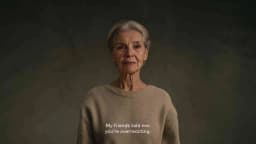
The film runs two minutes and is shot entirely in black and white. It opens on a group of ethnic minority workers waiting at a bus stop — an everyday, deliberately unglamorous setting that grounds the campaign's argument in recognisable working life in the United Kingdom. Over these images, British Bangladeshi lyricist and copywriter Yasmin Ali delivers a bespoke spoken-word piece that directly subverts Shakespeare's "What's in a name?" from Romeo and Juliet. The inversion is precise: where Shakespeare argues that a name carries no intrinsic meaning, Ali's piece demonstrates the material consequences that a name carries in the UK labour market before a person ever speaks in a room.
The creative team at Worth Your While is led by agency co-founders Darain Faraz and Sheeraz Gulsher, with creative direction by Tim Pashen and Lukas Lund. Tali Madsen serves as Chief Strategy Officer. Art direction is credited to Katrine Winblad, with copywriting shared between Yasmin Ali and Tim Pashen. Typographic and consultant design direction is credited to Craig Ward of Ward Studio. Creatives Jakob Hjulström and Malou Ruotsalainen, account manager Celina Ranum Aagaard, project manager Christine Lorentzen, and account director and CEO Morten Ingemann complete the documented production team, per clapboard.com credits. Campaign Brief reported on 9 January 2025 that the film's black-and-white visual register reinforces emotional authenticity and keeps audience attention fixed on the argument rather than spectacle, as reported by campaignbrief.com.
The Drum names #NameTheBias its Ad of the Day on 8 January 2025, as reported by thedrum.com — a recognition that measures editorial impact within the United Kingdom's advertising trade press rather than commercial effectiveness, and which is meaningful precisely because this is a public service campaign whose primary currency is attention from policymakers and media, not consumers.
No verified audience reach, engagement, or conversion figures for #NameTheBias are publicly available in documented trade or campaign sources at the time of writing. What is verifiable is the structural reach of the launch activation: simultaneous parliamentary screenings at the House of Lords and the Houses of Parliament on 8 January 2025 placed the film in front of legislators directly, a distribution mechanism that few advertising campaigns of any category achieve. Coverage appeared across fairplaytalks.com, campaignbrief.com, famouscampaigns.com, marketing-beat.co.uk, and ethicalmarketingnews.com within the campaign's launch window, indicating broad uptake across trade, HR, and ethical business media in the United Kingdom.
The campaign's structural effectiveness rests on a logic that is relatively straightforward to assess without performance data. #NameTheBias deploys a single, repeatable, externally validated data point — the 60 percent figure from University of Oxford research — across a multimedia campaign timed to a designated awareness date, distributed to a legislative audience in person, and amplified through digital and out-of-home channels in the United Kingdom. That architecture is designed for earned media multiplication and policy influence rather than direct response, and the breadth of trade coverage in the launch week suggests the mechanism is working as intended. Clapboard scores #NameTheBias 73 out of 100.
#NameTheBias is a 2025 public service campaign created by People Like Us and independent creative studio Worth Your While in the United Kingdom. It exposes how name bias in UK hiring disadvantages ethnic minority job applicants and calls for mandatory ethnicity pay gap reporting, launching on Ethnicity Pay Gap Day, 8 January 2025.
University of Oxford research shows that candidates with ethnic-minority names must submit 60 percent more job applications than white British applicants to receive a callback. The #NameTheBias campaign cites this finding as evidence that name bias in UK hiring has remained structurally unchanged since the 1960s, forming the campaign's central policy argument.
Award-winning filmmaker Naghmeh Pour directs the #NameTheBias film through production company new—land. The two-minute film is shot in black and white and features British Bangladeshi lyricist Yasmin Ali delivering a spoken-word piece that subverts Shakespeare's "What's in a name?" to demonstrate the real consequences of ethnically diverse names in the UK labour market.
#NameTheBias screened at the House of Lords and Houses of Parliament on 8 January 2025, accompanied by a live spoken-word performance by Yasmin Ali. The campaign also distributed across digital and social channels and London out-of-home advertising, targeting both UK policymakers and a broader public audience simultaneously.
People Like Us and Worth Your While have pursued mandatory ethnicity pay gap reporting as a single legislative goal across at least three years of documented campaigns. Earlier work includes Signatures for Signatures and Autocorrected Pay Gap, both from 2023, establishing #NameTheBias as the most recent chapter in a sustained public interest campaign strategy in the United Kingdom.
Clapboard rates #NameTheBias 73 out of 100. The score reflects the campaign's strategic coherence in targeting UK workplace equality legislation, the creative specificity of its black-and-white documentary film format, and its direct legislative distribution through parliamentary screenings, balanced against the absence of publicly verified audience performance data at the time of assessment.
.webp)
Creative Collaboration Platform: The Backbone of Modern Creative WorkWhat is a creative collaboration platform?Clapboard defines a creative collaboration platform as the operational core for today’s distributed creative teams. This is not a collection of digital collaboration tools stitched together; Clapboard’s system


Understanding the Creative Production MarketplaceWhat is a Creative Production Marketplace?Clapboard defines a creative production marketplace as a structured ecosystem where brands, agencies, and production talent converge to execute video, advertising, and branded content at scale. Unlike the legacy agency or freelanREAD FULL ARTICLE

The Urgent Need for a Creative Production Operating SystemWhy Traditional Creative Production Models Break DownClapboard sees the creative production landscape shifting under pressure. Content velocity is no longer a buzzword—it’s a mandate. Modern advertising demands relentless output across dozens of channels, each wREAD FULL ARTICLE