 ARCHIVE
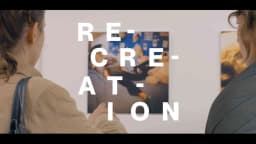
Caméléon Association RECREATION Turns a Photo Exhibition Into a Warning
How Caméléon Association's RECREATION Reframed Child Safety as a Gallery Visit RECREATION is a 2022...
Scope Turns Valentine's Day Into a Disability Conversation
Scope's 'Kiss Awkward Goodbye' campaign is a 2015 Valentine's Day activation created by Grey London that used a set of four illustrated, disability-themed greeting cards distributed in the United Kingdom to challenge public discomfort around disability, dating, and everyday social interaction.
Launched in February 2015, the campaign sits within Scope's broader End the Awkward platform, which the disability charity introduced in 2014 to address uncertainty and unease that many non-disabled people experience when interacting with disabled people, according to Scope Org Uk. Rather than adopting the earnest register typical of public interest advertising, Scope and Grey London chose irreverence as their instrument. Cards carrying slogans such as 'Get your cane, you've pulled' and 'I love you (and it's not just for the free parking)' reframe disability through the lens of romantic humour, disarming the reader before delivering a more pointed message about inclusion and social equality.
Distribution operated across two channels simultaneously. In the United Kingdom, the physical cards were given away free with every purchase at Scope's Camden store, ensuring a tangible, shareable object reached an audience already sympathetic to the charity's work. Online, the cards were made available for sharing at the campaign's dedicated web address and across social media platforms, extending the activation far beyond a single London location. The campaign's digital medium classification reflects this dual-channel logic: the cards functioned as both physical artefacts and social content designed for organic amplification. Scope received a Clapboard Score of 73 out of 100 for this work, recognising the campaign's clarity of strategic intent and the sharpness of its creative execution within the public service category.
Scope built the 'Kiss Awkward Goodbye' campaign on a specific and verifiable consumer insight. According to shots.net, research commissioned for the campaign found that only seven per cent of people had dated or asked out a disabled person, a figure that exposed the degree to which social discomfort translates into real exclusion in the United Kingdom's dating landscape. That single data point gave Grey London a precise strategic target: not prejudice in its overt form, but the quieter, more pervasive awkwardness that prevents non-disabled people from engaging with disabled people as equals.
The End the Awkward platform, of which this Valentine's activation forms a part, was designed from the outset to reframe that discomfort as something addressable rather than inevitable, according to scope.org.uk. Valentine's Day provided a culturally loaded moment when questions of attraction, desirability, and romantic confidence are already in public circulation, making it the natural occasion to introduce disability into that conversation without the register feeling forced or didactic.
The United Kingdom charity advertising market provided a competitive backdrop that rewarded creative differentiation. According to fundraising.co.uk, UK charity advertising expenditure reached approximately £458.8 million in 2015 and 2016, a market crowded with organisations competing for public attention and emotional engagement. In that environment, campaigns from larger charities such as Cancer Research UK and the NSPCC dominated television spend, which according to fundraising.co.uk accounted for approximately £120.5 million of total charity advertising expenditure in the same period. Scope's decision to anchor its campaign in digital and earned social rather than paid broadcast was both a budget-appropriate choice and a strategically sound one, given that humorous, shareable card content travels through social networks in ways that a thirty-second television spot cannot replicate.
Grey London built the 'Kiss Awkward Goodbye' campaign around a deliberately simple creative unit: the illustrated greeting card. The greeting card is a form so familiar and so laden with Valentine's Day convention that subverting it requires only a small tonal shift to produce significant cognitive dissonance. Each of the four cards pairs accessible illustration with a punchline that uses disability-specific language — parking badges, canes, and the lived logistics of disabled life — as the source of the joke rather than as the object of pity.
The campaign extended beyond static card imagery into film. According to shots.net, the film component featured three real-life couples, each including a disabled partner, speaking about their relationships in their own words. That casting decision is critical to the creative integrity of the work. It anchors the campaign's humour in authentic experience rather than in imagined disability, preventing the tone from tipping into condescension. The couples' presence gives the broader End the Awkward platform its human specificity: real people, real relationships, real evidence that the awkwardness the campaign targets is a problem of the non-disabled majority rather than a condition of disabled life itself.
Production credits for 'Kiss Awkward Goodbye' are not fully documented in publicly available sources. What is documented, per shots.net, is that the agency responsible for the work is Grey London, operating in 2015 under creative leadership that had developed the End the Awkward platform from its 2014 inception, according to scope.org.uk. The illustrated card style sits in a lineage of British charity creative that prioritises wit over sentimentality — a tradition that Grey London was well positioned to execute given its history of culturally attuned work in the United Kingdom public interest space. The decision to keep the visual language clean and the copy tight reflects a confidence in the idea itself: when the slogan lands, decoration is unnecessary.
No independently verified post-campaign performance metrics for 'Kiss Awkward Goodbye' are publicly available in terms of reach figures, social shares, or conversion data. What the structural evidence does support is a campaign designed for earned amplification rather than paid scale.
The campaign's distribution mechanics — free cards in a physical retail environment combined with freely shareable digital assets — are consistent with a strategy that prioritises media value generated through public engagement rather than media spend. In the United Kingdom, where according to fundraising.co.uk the charity sector operated with total income of approximately £47.8 billion in 2015 and 2016, smaller activations that achieve disproportionate earned coverage represent an efficient use of charitable resource. According to disabilityhorizons.com, the campaign attracted coverage that extended its reach meaningfully beyond Scope's existing audience, placing the End the Awkward message in front of publics who had not previously engaged with the charity's work.
According to adweek.com, the campaign was noted internationally as an example of disability-focused advertising that used humour without condescension, a qualitative indicator of creative effectiveness that is meaningful in a category where tone frequently fails. The research statistic — that only seven per cent of people had dated or asked out a disabled person, per shots.net — served as both a campaign brief and a media hook, giving journalists a specific and surprising number around which to frame coverage. That dual function, where the insight powers both the creative and the earned media narrative, is a mark of strategic coherence. Scope's Clapboard Score of 73 out of 100 reflects exactly this quality: a campaign whose parts reinforce one another, and whose cultural timing is precise.
'Kiss Awkward Goodbye' is a Valentine's Day campaign created by Grey London for Scope in February 2015. It used four illustrated disability-themed greeting cards with humorous slogans to challenge public discomfort around disability and dating in the United Kingdom, distributed both in Scope's Camden store and online.
Scope used Valentine's Day because the occasion places questions of attraction and romantic confidence in public conversation. Research cited by shots.net found that only seven per cent of people had dated or asked out a disabled person, making the season a precise moment to address social exclusion through romantic humour in the United Kingdom.
Grey London created 'Kiss Awkward Goodbye' for Scope. The campaign launched in February 2015 as part of Scope's broader End the Awkward platform, which the charity had introduced in 2014 to address discomfort and uncertainty that non-disabled people experience when interacting with disabled people, according to scope.org.uk.
Scope's cards carried slogans including 'Get your cane, you've pulled' and 'I love you (and it's not just for the free parking).' The four illustrated cards used disability-specific references as the source of humour, aiming to disarm readers before delivering a message about inclusion, as documented by clapboard.com.
The cards were distributed through two channels. Physically, they were given free with every purchase at Scope's Camden store in the United Kingdom. Digitally, they were made available for sharing via the campaign website and social media platforms, extending reach beyond the store's immediate audience, per clapboard.com.
The campaign included a film featuring three real-life couples, each including a disabled partner, according to shots.net. This extension grounded the campaign's humour in authentic lived experience and reinforced the End the Awkward platform's argument that social discomfort around disability reflects the non-disabled majority rather than disabled people themselves.
.webp)
Creative Collaboration Platform: The Backbone of Modern Creative WorkWhat is a creative collaboration platform?Clapboard defines a creative collaboration platform as the operational core for today’s distributed creative teams. This is not a collection of digital collaboration tools stitched together; Clapboard’s system


Understanding the Creative Production MarketplaceWhat is a Creative Production Marketplace?Clapboard defines a creative production marketplace as a structured ecosystem where brands, agencies, and production talent converge to execute video, advertising, and branded content at scale. Unlike the legacy agency or freelanREAD FULL ARTICLE

The Urgent Need for a Creative Production Operating SystemWhy Traditional Creative Production Models Break DownClapboard sees the creative production landscape shifting under pressure. Content velocity is no longer a buzzword—it’s a mandate. Modern advertising demands relentless output across dozens of channels, each wREAD FULL ARTICLE