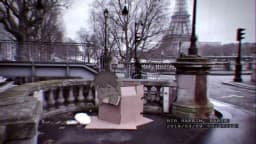
Virgin Radio Romania and WWF's 2018 campaign 'The Deforestation Beat' by McCann Bucharest turned a reported forest-loss rate of one tree every 1.2 seconds into

Virgin Radio and WWF Turn Deforestation Into a Music Beat
The Deforestation Beat is a 2018 public interest campaign created by McCann Bucharest for Virgin Radio Romania and WWF Romania, in which the reported pace of forest loss in Romania — one tree every 1.2 seconds, according to Little Black Book — was converted into a recurring musical beat embedded across remixed songs by six Romanian artists, allowing listeners to Shazam the tracks, receive an environmental message, and donate directly to WWF Romania.
The campaign launched in August 2018, targeting Romanian audiences through Virgin Radio's broadcast platform. Its central ambition was to transform an environmental statistic into a cultural moment — specifically, to encode a crisis into the format most native to a younger generation: popular music. In Romania, virgin forest was disappearing at a rate of approximately 10,000 square metres per hour, according to lbbonline.com. That rate, abstracted into a rhythmic pulse, became the structural DNA of every participating track.
The six artists invited to collaborate were INNA, Mihail, Vanotek, The Motans, Grimus, and DJ Shiver, according to lbbonline.com — a roster spanning pop, indie, and electronic genres, chosen to maximise reach across different youth listening communities in Romania. Each artist reworked an existing or original song so that the deforestation beat was woven into its production, making the statistic audible rather than merely readable. The creative mechanic then extended beyond the radio: listeners who Shazamed the remixed tracks were connected to an environmental message and a WWF Romania donation pathway, turning passive consumption into an actionable public interest gesture.
McCann Bucharest identified a core tension in Romanian environmental communication. Deforestation data existed in abundance — reported figures, square-metre tallies, hourly loss rates — but abstract numbers rarely sustain public attention long enough to generate behaviour change, particularly among younger demographics. The insight driving The Deforestation Beat was that rhythm is involuntary: a beat lodges in the body before the mind processes its meaning.
In Romania, illegal and semi-legal logging had drawn sustained criticism from environmental organisations and international press throughout the years preceding the campaign. WWF Romania's involvement gave the campaign institutional credibility, while Virgin Radio's youth-oriented broadcast platform provided the reach needed to place the beat inside daily listening habits rather than specialist environmental media. As Orieta Hulea, Director of WWF Romania, stated in coverage published by lbbonline.com on September 13, 2019: this campaign translates a huge problem into the language of the young generation.
The Shazam mechanic was a strategically precise choice for the Romanian market. Rather than directing listeners to a campaign website — a step that requires active intent — the mechanic intercepted an action many music listeners already perform reflexively. Competitive context matters here: environmental campaigns in the Central and Eastern European media landscape have historically relied on outdoor and print formats, with organisations such as Greenpeace Romania deploying visual stunts and physical installations. The Deforestation Beat chose radio and streaming adjacency instead, recognising that Virgin Radio's broadcast environment offered a captive and habitual audience that neither outdoor nor social formats could replicate with the same consistency.
Cătălin Dobre served as Chief Creative Officer at McCann Worldgroup Romania for this campaign. In coverage published by lbbonline.com on September 13, 2019, Dobre described the strategic and creative intent directly: we are transforming the numbers and warnings into entertainment. That statement captures the essential craft challenge — to make a rhythm derived from environmental data feel musically native rather than didactic.
The production task required translating a rate — one tree every 1.2 seconds, as reported by lbbonline.com — into a tempo marker that could be integrated into songs across different genres without sounding grafted on. Art direction for the campaign was handled by Lia Bira, with copywriting by Alexandru Vasile and Irina Popp, according to Clapboard's editorial records. Agency account direction was led by Raluca Fundeanu. The campaign was documented as a film medium execution containing one primary media asset, submitted to the Clapboard archive approximately seven years ago.
The six-artist roster was not assembled arbitrarily. INNA carries international recognition within Romanian pop, while Vanotek and DJ Shiver occupy the electronic music space, and The Motans and Grimus represent indie and alternative listenership. Mihail adds a further pop-crossover dimension. Together, according to goldendrum.com's coverage of the campaign, these artists provided coverage of the Romanian music mainstream broad enough to embed the deforestation beat across listener communities that would not otherwise overlap. The creative execution therefore operated simultaneously as a media placement strategy: the beat was not broadcast once but reproduced inside multiple songs, each functioning as its own distribution vehicle across Virgin Radio's airwaves.
No verified performance data for The Deforestation Beat — including download figures, donation totals, or confirmed audience reach — is publicly available at the time of writing. Campaign coverage on lbbonline.com and goldendrum.com documents the concept and production in detail but does not publish quantified outcomes. Horizont.net and Adplayers Ro similarly covered the campaign's creative framework without reporting measurable results.
Structurally, however, the campaign presents several elements that advertising analysts would consider conducive to effectiveness. The Shazam mechanic created a measurable conversion pathway between listening and donating — a rare feature in cause-led broadcast campaigns that typically rely on recall rather than in-moment action. The multi-artist deployment meant the beat was exposed across multiple songs rather than a single execution, multiplying the number of occasions on which a listener could encounter the environmental message without the campaign repeating itself identically.
The campaign's public interest positioning — using entertainment infrastructure to carry an environmental message in Romania — also aligned Virgin Radio with a social purpose at a moment when Romanian forest loss was a sustained news story, lending the station editorial relevance beyond its programming schedule. McCann Bucharest's decision to make the statistic the beat, rather than illustrate the statistic visually, represented a genuinely distinctive creative choice within the Central and Eastern European media landscape. The Deforestation Beat holds a Clapboard Score of 63 out of 100, reflecting the campaign's conceptual clarity and craft while acknowledging the absence of verified performance data and the limited scale of its documented single-asset media footprint.
The Deforestation Beat is a 2018 public interest campaign from McCann Bucharest for Virgin Radio Romania and WWF Romania. It converted Romania's reported forest-loss rate of one tree every 1.2 seconds into a musical beat embedded in remixed songs, allowing listeners to Shazam tracks and donate to WWF Romania, according to lbbonline.com.
Six Romanian artists participated in The Deforestation Beat. INNA, Mihail, Vanotek, The Motans, Grimus, and DJ Shiver each incorporated the deforestation beat into remixed songs broadcast on Virgin Radio Romania, according to lbbonline.com. The roster was chosen to cover pop, electronic, and indie audiences across the Romanian music landscape.
Listeners who Shazamed the remixed tracks were connected to an environmental message and a WWF Romania donation pathway. The mechanic intercepted a reflexive listener behaviour, converting passive radio consumption into a direct charitable action without requiring listeners to seek out a separate campaign website or platform.
McCann Bucharest created The Deforestation Beat in August 2018. Cătălin Dobre served as Chief Creative Officer at McCann Worldgroup Romania. Art direction was by Lia Bira, with copywriting by Alexandru Vasile and Irina Popp, and account direction by Raluca Fundeanu, according to Clapboard's editorial records.
The campaign was built around two reported figures: one tree lost every 1.2 seconds, and approximately 10,000 square metres of virgin forest disappearing every hour in Romania, according to lbbonline.com. McCann Bucharest translated the per-second rate into a recurring musical tempo embedded in each participating artist's remix.
The Deforestation Beat holds a Clapboard Score of 63 out of 100. The score reflects the campaign's strong conceptual clarity — encoding a crisis into a musical beat — and its craft execution, while accounting for the absence of verified public performance data and its documented single-asset media footprint.
.webp)
Creative Collaboration Platform: The Backbone of Modern Creative WorkWhat is a creative collaboration platform?Clapboard defines a creative collaboration platform as the operational core for today’s distributed creative teams. This is not a collection of digital collaboration tools stitched together; Clapboard’s system


Understanding the Creative Production MarketplaceWhat is a Creative Production Marketplace?Clapboard defines a creative production marketplace as a structured ecosystem where brands, agencies, and production talent converge to execute video, advertising, and branded content at scale. Unlike the legacy agency or freelanREAD FULL ARTICLE

The Urgent Need for a Creative Production Operating SystemWhy Traditional Creative Production Models Break DownClapboard sees the creative production landscape shifting under pressure. Content velocity is no longer a buzzword—it’s a mandate. Modern advertising demands relentless output across dozens of channels, each wREAD FULL ARTICLE