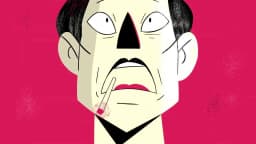
Radio Mix FM's Mix Against AIDS campaign by Quê agency used Facebook's auto-share mechanic to mirror HIV transmission, reaching over one million people on

Radio Mix FM Turns a Facebook Virus Into an AIDS Prevention Lesson
Mix Against AIDS is a 2012 HIV awareness media campaign created by Brazilian agency Quê for Radio Mix FM, activated on December 1, World AIDS Day, in which two sexually suggestive Facebook videos automatically shared themselves to users' profiles to mirror the unconscious spread of the HIV virus.
Radio Mix FM is a national Brazilian radio network with roots in São Paulo, where it began broadcasting as Rádio SP-1 in 1995 before adopting the Mix FM name in 1996, according to En Wikipedia. The station, part of Grupo Mix de Comunicação and associated with Grupo Objetivo, historically targeted a qualified young audience up to age 29 with pop music from Brazil and abroad, making it a natural vehicle for a youth-focused HIV prevention message.
The campaign operated as a social experiment disguised as entertainment. Agency Quê posted two videos with what the brief describes as sexy appeal — one featuring a woman, one a man — to Radio Mix FM's Facebook profile. The videos were engineered to exploit the platform's sharing mechanism, spreading automatically to the personal profiles of every user who clicked. At the video's conclusion, viewers encountered the campaign's message: that with HIV, the process is identical — a moment of distraction, the virus acquired, and the transmission shared without the person ever realising it. The wall each user was invited to inspect had already been altered by their own click. The metaphor was not decorative; it was the mechanism.
In Brazil, where the campaign launched and circulated entirely within the national Facebook audience, the activation achieved more than 6,000 video views in six hours and exposed over one million people to its message, according to adsoftheworld.com. Facebook eventually identified and overturned the auto-sharing behaviour, but not before the campaign had completed its primary run. The Clapboard Score for Mix Against AIDS is 76 out of 100, reflecting strong conceptual integration and measurable reach against a limited production footprint.
Quê agency built the Mix Against AIDS campaign on a single, transferable insight: the way information spreads on social media is structurally identical to the way HIV spreads between people. Both depend on a moment of lowered attention, an action taken without full awareness of consequence, and an outcome that propagates beyond the original point of contact.
Radio Mix FM's core audience in Brazil — young adults up to age 29, according to en.wikipedia.org — represented both the demographic most active on Facebook in 2012 and the population most targeted by public health messaging around HIV prevention. Rather than producing a conventional public service announcement, Quê chose to deliver the lesson experientially: the user would not be told about unconscious transmission, they would experience it. The medium and the message became the same object.
Brazil's advertising market context reinforces why a digital, zero-media-spend approach made strategic sense. Brazil's total advertising expenditure reached approximately R$30.1 billion in 2012, according to slideshare.net, a market dominated by television, which left digital activations — particularly social media experiments — with significant room to cut through. Competing HIV awareness efforts at the time, including campaigns by Brazil's Ministry of Health and internationally by organisations such as the Kaiser Family Foundation, relied primarily on broadcast and out-of-home formats. A Facebook-native social experiment occupied a different category of attention entirely.
The decision to launch on December 1, World AIDS Day, was not merely tactical. It aligned the campaign with a moment of established global attention around HIV prevention, giving journalists and social media users a ready-made frame for sharing and contextualising what they had experienced. As reported by adsoftheworld.com, the campaign was subsequently shortlisted at Cannes Lions 2012 in the Promo and Activation category, confirming that the strategy read as coherent and original to the advertising industry's most rigorous international jury.
The creative execution of Mix Against AIDS rests on a single formal decision: the campaign object and the campaign message are the same thing. The work does not describe viral transmission — it performs it.
Quê produced two short videos for Radio Mix FM's Facebook profile, each carrying what the agency described as sexy appeal, one centred on a female subject and one on a male. The choice to produce a binary pair was deliberate. It broadened the demographic surface of the campaign, ensuring that users encountering either video on their feed would find a point of personal attraction or curiosity sufficient to prompt a click. The content was designed to be clicked by instinct rather than considered engagement.
The reveal at the video's conclusion is the campaign's primary creative asset. The message — that with HIV the process is exactly this: distraction, acquisition, and sharing without awareness — arrives after the user has already participated in the mechanism being described. The instruction to look at one's own wall, where the video has already appeared, transforms the final frame into a mirror. The user is not shown what carelessness looks like from the outside; they are shown what it looks like from inside their own profile. According to Adverblog, where writer Martina covered the campaign on 28 March 2012, the viral idea was described as awesome and singled out for the precision of its conceptual structure.
The auto-sharing mechanism, described by adsoftheworld.com as exploiting a behaviour sometimes associated with third-party Facebook applications at the time, was the production's technical spine. When Facebook identified and reversed the sharing behaviour, it was a confirmation that the mechanism had been operating as intended — the platform's own moderation response became evidence of the campaign's reach. Production credits for Mix Against AIDS are not publicly documented beyond the agency attribution to Quê and the client Radio Mix FM.
Mix Against AIDS delivered measurable results within a compressed time window. According to adsoftheworld.com, the campaign achieved more than 6,000 video views in six hours and reached over one million people across Brazil before Facebook intervened to reverse the auto-sharing mechanism. No additional verified performance data — including click-through rates, earned media value, or post-campaign brand lift metrics — is publicly available for this activation.
The structural effectiveness of the campaign, however, is legible in its architecture. A campaign that reaches one million people without a paid media budget, in six hours, on a single platform, and in a market where Brazil's advertising expenditure was concentrated heavily in television, according to slideshare.net, demonstrates that the creative mechanic was doing the distribution work that media spend would otherwise perform. The fact that Facebook's moderation system was triggered is a de facto third-party confirmation that the sharing volume was significant enough to register as anomalous platform behaviour.
The Cannes Lions Shortlist in the Promo and Activation category in 2012, as reported by adsoftheworld.com, is the campaign's most formally verifiable external recognition. A shortlist placement at Cannes Lions is awarded through a competitive jury process and represents independent creative and strategic validation. For a radio brand producing a digital-only campaign with no documented production budget, reaching that stage of the world's most scrutinised advertising awards is a material result.
The campaign's central weakness, from an effectiveness standpoint, is the absence of longitudinal data. Reach and views within a six-hour window are proxies for attention, not for behavioural change. Whether Mix Against AIDS shifted attitudes toward HIV prevention testing or condom use among Radio Mix FM's young Brazilian audience remains undocumented in the public record.
Mix Against AIDS was a 2012 HIV awareness campaign in Brazil by agency Quê for Radio Mix FM. Two sexually suggestive Facebook videos spread automatically to users' profiles on World AIDS Day, mirroring HIV transmission. The campaign reached over one million people in six hours, according to adsoftheworld.com.
Quê posted videos to Radio Mix FM's Facebook profile that auto-shared to any user's wall upon clicking. The final message revealed the metaphor: distraction leads to transmission. Users discovered the video already on their own profiles, making the experience of unconscious HIV spread personally immediate rather than abstract.
Brazilian agency Quê created Mix Against AIDS for client Radio Mix FM. It launched on December 1, World AIDS Day, with the campaign subsequently published and archived in March 2012, according to adsoftheworld.com and clapboard.com records indicating submission approximately thirteen years ago.
Mix Against AIDS received a Cannes Lions Shortlist in the Promo and Activation category in 2012, as reported by adsoftheworld.com. A shortlist placement at Cannes Lions represents formal jury recognition of the campaign's creative and strategic merit at the industry's most competitive international awards.
Facebook reversed the auto-sharing mechanism because the campaign's viral spread triggered the platform's moderation systems as anomalous behaviour. According to adsoftheworld.com, this occurred after the campaign had already achieved over 6,000 views and exposed more than one million people to the HIV prevention message in Brazil.
The campaign's effectiveness came from making the medium enact the message. Users experienced simulated unconscious transmission rather than receiving a conventional warning. In Brazil's television-dominated advertising market, according to slideshare.net, a zero-spend Facebook mechanism achieving one million impressions in six hours represented structurally efficient communication.
.webp)
Creative Collaboration Platform: The Backbone of Modern Creative WorkWhat is a creative collaboration platform?Clapboard defines a creative collaboration platform as the operational core for today’s distributed creative teams. This is not a collection of digital collaboration tools stitched together; Clapboard’s system


Understanding the Creative Production MarketplaceWhat is a Creative Production Marketplace?Clapboard defines a creative production marketplace as a structured ecosystem where brands, agencies, and production talent converge to execute video, advertising, and branded content at scale. Unlike the legacy agency or freelanREAD FULL ARTICLE

The Urgent Need for a Creative Production Operating SystemWhy Traditional Creative Production Models Break DownClapboard sees the creative production landscape shifting under pressure. Content velocity is no longer a buzzword—it’s a mandate. Modern advertising demands relentless output across dozens of channels, each wREAD FULL ARTICLE