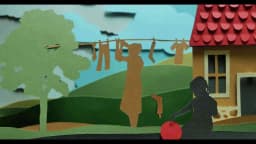
Boatos.org and Filadelfia launched 'The Story of Tsutomu Yamaguchi' in Brazil in April 2019, using a factually true but seemingly impossible story to challenge

Boatos.org and Filadelfia Turn a True Story Into a Misinformation Lesson
"The Story of Tsutomu Yamaguchi" is a 2019 Brazilian branded-content animation created by Filadelfia for fact-checking platform Boatos.org, using the documented but almost unbelievable life of Tsutomu Yamaguchi — the only person officially recognised as a survivor of both atomic bombings in Hiroshima and Nagasaki — to argue that true stories can appear indistinguishable from misinformation.
Published in Brazil in April 2019, the campaign operates through a single animated film produced by Março and directed by Leo Drigo. Its strategic premise is as economical as it is precise: if a verified historical fact sounds fake, then the instinct to dismiss extraordinary claims as misinformation is itself unreliable. The campaign transforms that paradox into a direct argument for Boatos.org's fact-checking mission, inviting Brazilian audiences to question the reflexive scepticism that makes fabricated content so dangerous in the first place.
Boatos.org is a Brazilian fact-checking website that has been operating since 2013, according to Clapboard's editorial records. Its editorial mandate — identifying and correcting false information circulating across Brazilian social media and digital platforms — makes Tsutomu Yamaguchi's life story a particularly potent creative vehicle. A man who survived two atomic bombs in a single week is the kind of fact that social media users would flag as fiction, and the campaign leans deliberately into that tension. The work was submitted to Ads of the World and later published by STASH on April 12, 2019, per stashmedia.tv, which described the underlying story as "remarkable." In Brazil, where the digital information environment was under growing pressure from viral misinformation in 2019, the campaign's core message — that true stories may seem fake — carried immediate cultural relevance. The film received an entry in The One Show 2020 Design awards database, as documented by The One Club, affirming its reach beyond the Brazilian market into international creative recognition. Clapboard rates this campaign 74 out of 100.
Boatos.org occupies a specific and contested position inside Brazil's digital media landscape. Brazil's digital display and video advertising market exceeded R$2.4 billion in 2019, according to CENP Meios data cited by dentsu, reflecting the scale of the online environment in which misinformation competes for the same audience attention as verified journalism. That environment created both the problem Boatos.org exists to solve and the media channel through which a campaign like this one could function.
Filadelfia's strategic insight was to sidestep conventional fact-checking messaging entirely. Most misinformation campaigns in Brazil and elsewhere rely on didactic communication — here is a false claim, here is the correction. That approach positions the fact-checker as an authority figure correcting a passive audience. The Tsutomu Yamaguchi campaign inverts the relationship. It presents an authenticated historical fact and then invites the audience to catch themselves dismissing it as implausible. The viewer becomes the subject of the experiment rather than the recipient of the lesson. As reported by stashmedia.tv, the campaign's strategy rested on placing an unbelievable but factually true story in front of an audience trained by social media to distrust the extraordinary.
In Brazil, Freedom House's reporting on press freedom and digital information flows has consistently documented the scale of misinformation on platforms including WhatsApp, which commands an exceptionally high penetration rate among Brazilian internet users. Competitors in the Brazilian fact-checking space — including Agência Lupa and Aos Fatos, both of which operate editorial fact-checking models with institutional backing — rely primarily on text-based corrections and debunking articles. Boatos.org's decision to invest in a premium animated film format, distributed through digital video channels, marked a differentiated approach to audience engagement that neither Agência Lupa nor Aos Fatos pursued through comparable production in the same period. Brazilian advertising budgets were shifting from television to online platforms during this period, with quarterly advertising expenditure increasing year over year in April 2019, according to data cited by dentsu, making digital video a strategically sound distribution channel for the campaign.
Leo Drigo directed the film. The production was handled by Março, a Brazilian production company, with creative direction shared between Dan Zecchinelli and Manuel Rolim, art direction by Ricardo Matos, and copywriting by Manuel Rolim, according to the campaign credits documented across adsoftheworld.com and stashmedia.tv.
The choice of animation as the primary format for a campaign about factual truth is not incidental. Animation allows the production team to visualise the historical events surrounding Tsutomu Yamaguchi's survival without the evidentiary weight of documentary footage, which does not exist for the specific moments being depicted. It creates a visual register that sits between historical record and illustrated narrative, a formal ambiguity that reinforces the campaign's thematic argument about how audiences perceive the line between fact and fabrication. The film's craft is designed to make the viewer feel the unreality of a real story, which is precisely the sensation Boatos.org wants to convert into action.
STASH, which published the campaign on April 12, 2019, per stashmedia.tv, highlighted the strategic coherence between the film's subject matter and its intended effect on the audience. The production by Março and the direction by Drigo demonstrate a restraint common to branded-content animation that prioritises narrative clarity over visual spectacle. In a market where Brazilian digital video content was competing for diminishing audience attention against a high volume of social media content, the film's ability to sustain a single surprising factual premise across its runtime is its primary creative asset. The campaign was submitted to Ads of the World and subsequently recognised in The One Show 2020 Design awards database, as documented by oneclub.org, suggesting that the craft and strategic coherence of the execution registered with international creative juries as well as with Brazilian audiences.
No verified performance data for "The Story of Tsutomu Yamaguchi" is publicly available. No published figures for reach, engagement, traffic growth, brand-tracking uplift, or media value have been disclosed, as confirmed by Clapboard's editorial research. No media budget or production budget has been made public.
What is documentable is the campaign's trajectory through the professional creative community. It was published by STASH on April 12, 2019, per stashmedia.tv — a platform that curates animation and motion design work with a selective editorial standard — which constitutes an independent signal of craft quality. Its entry into The One Show 2020 Design awards database, as recorded by oneclub.org, places it in the company of internationally competitive work from the same period, though the specific award level achieved has not been verified through public records.
Structurally, the campaign's effectiveness rests on the efficiency of its argument. A single animated film, built around a single historical fact about Tsutomu Yamaguchi, advances Boatos.org's core value proposition more directly than a portfolio of debunking articles could. The film creates a replicable moment of cognitive dissonance for each viewer who encounters it and doubts it — which is precisely what Boatos.org exists to resolve. In the Brazilian media landscape of 2019, where digital advertising spend was growing rapidly according to CENP Meios data cited by dentsu, a branded-content film entering international award shortlists represents a return on creative investment that extends well beyond its original domestic audience. Clapboard scores this campaign 74 out of 100, reflecting strong strategic coherence and credible craft execution against a limited evidence base for measurable audience impact.
"The Story of Tsutomu Yamaguchi" is a 2019 Brazilian animated film created by Filadelfia for fact-checking platform Boatos.org. It uses the verified but seemingly impossible life story of the sole official survivor of both atomic bombings to argue that true stories can appear indistinguishable from misinformation, directly reflecting Boatos.org's editorial mission.
Leo Drigo directed the film. Production was handled by Brazilian production company Março. Creative direction was shared by Dan Zecchinelli and Manuel Rolim, with art direction by Ricardo Matos and copywriting by Manuel Rolim, according to credits documented on adsoftheworld.com and stashmedia.tv.
Filadelfia, a Brazilian agency based in Belo Horizonte, created the campaign. The work was published in Brazil in April 2019 and subsequently featured by stashmedia.tv on April 12, 2019, which described the underlying story as remarkable and praised the campaign's strategic approach to fact-checking communication.
The campaign appeared in The One Show 2020 Design awards database, as documented by oneclub.org. The specific award level has not been verified through public records. No Cannes Lions, D&AD, Clio, or Effie recognition has been identified for this campaign, according to Clapboard's editorial research.
Boatos.org is a Brazilian fact-checking website operating since 2013, according to Clapboard's records. It commissioned the campaign to communicate its core purpose — distinguishing true information from fabricated content — by demonstrating that even verified facts can appear unbelievable, a tension central to Brazil's digital misinformation environment in 2019.
Clapboard rates "The Story of Tsutomu Yamaguchi" 74 out of 100. The score reflects strong strategic coherence between the campaign's creative concept and Boatos.org's fact-checking mission, credible craft execution by director Leo Drigo and production company Março, and international creative recognition, balanced against the absence of verified audience performance metrics.
.webp)
Creative Collaboration Platform: The Backbone of Modern Creative WorkWhat is a creative collaboration platform?Clapboard defines a creative collaboration platform as the operational core for today’s distributed creative teams. This is not a collection of digital collaboration tools stitched together; Clapboard’s system


Understanding the Creative Production MarketplaceWhat is a Creative Production Marketplace?Clapboard defines a creative production marketplace as a structured ecosystem where brands, agencies, and production talent converge to execute video, advertising, and branded content at scale. Unlike the legacy agency or freelanREAD FULL ARTICLE

The Urgent Need for a Creative Production Operating SystemWhy Traditional Creative Production Models Break DownClapboard sees the creative production landscape shifting under pressure. Content velocity is no longer a buzzword—it’s a mandate. Modern advertising demands relentless output across dozens of channels, each wREAD FULL ARTICLE