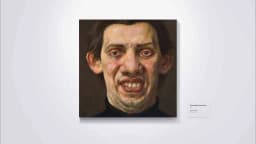
Tretyakov Gallery's 2016 Ivan Aivazovsky campaign by BBDO Russia dramatised the painter's final hours to promote a landmark Moscow exhibition marking his 200th

Tretyakov Gallery Turns Aivazovsky's Final Hours Into a Film Campaign
The Tretyakov Gallery's 2016 Ivan Aivazovsky campaign is a cinematic short film produced by BBDO Russia Group that dramatises the final hours of the celebrated Russian marine painter as he worked on his last canvas, shifting audience attention from his iconic sea paintings to the man himself and premiering in Russia in October 2016 to coincide with a major retrospective exhibition in Moscow.
The campaign's central strategic problem, as documented by BBDO Russia Group on Bbdo-Group Ru, was a persistent emotional gap in public perception. Many viewers either responded deeply to Aivazovsky's art or dismissed it as a collection of sea pictures with little personal resonance. To close that gap, BBDO Russia Group made a deliberate creative decision: move the emphasis away from the ocean and onto the painter's biography. The film recounts one of the most remarkable moments in Aivazovsky's life, when he was working on the painting known as the Explosion of the Turkish Ship in the final hours before his death — almost to the very end, as described in the agency's own account on bbdo-group.ru.
In Russia, the campaign launched in October 2016, timed precisely to support the Tretyakov Gallery's retrospective exhibition held at the gallery's Krymsky Val building in Moscow. According to tretyakovgallerymagazine.com, the exhibition ran from July 29 to November 20, 2016, and brought together 120 paintings and 55 etchings by Ivan Aivazovsky in a single presentation commemorating the 200th anniversary of his birth. The campaign belongs to the Recreation and Leisure category and was executed entirely in the film medium, consisting of one primary media asset. Per rbth.com, this represented a notable departure for the institution, as the Tretyakov Gallery had not previously used internet content of this kind to attract visitors to an exhibition.
 ARCHIVE
BBDO Russia Group identified a specific audience barrier at the heart of the Tretyakov Gallery brief. The challenge was not awareness of Ivan Aivazovsky as a canonical figure in Russian art history but rather emotional engagement with his work, particularly among visitors who perceived his sea paintings as aesthetically distant or formally repetitive. The agency's response, documented on bbdo-group.ru, was to reframe the campaign entirely around the narrative genre rather than the visual genre — telling a human story rather than promoting an art category.
This strategic choice reflects a broader truth about cultural institution marketing in Russia and globally. Museum audiences respond to biography, drama, and intimate storytelling in ways that catalogue-style promotion of paintings alone cannot replicate. The 200th anniversary of Aivazovsky's birth provided a natural editorial hook, but BBDO Russia Group chose to anchor the campaign not to the anniversary as a date but to a single, emotionally concentrated moment: a painter at work, hours before his death, completing a canvas about destruction and survival at sea.
In the competitive landscape of Moscow's cultural institutions, the Tretyakov Gallery faces sustained competition from venues including the Pushkin State Museum of Fine Arts, which runs its own major temporary exhibition programme, and the Hermitage in Saint Petersburg, which regularly draws international audiences to blockbuster shows. By producing what rbth.com described as the gallery's first internet content campaign of this type, the Tretyakov Gallery positioned itself as a modern cultural communicator willing to use cinematic storytelling to reach audiences beyond its established visitor base. According to theartnewspaper.com, global museum attendance data for 2016 reflected the ongoing challenge institutions faced in sustaining and growing physical footfall, making digital and film-based outreach a strategically sound investment for a gallery seeking to maximise attendance at a time-limited exhibition in Russia.
Igor Isakov directed the campaign film for Ivan Aivazovsky, working under the production partnership of Hype Production and students from the Moscow Film School, as documented on bbdo-group.ru. This collaboration between an established production company and emerging filmmakers gave the work a particular texture — intimate and carefully observed rather than conventionally glossy — appropriate for a subject rooted in the final, private act of a great painter's life.
The creative execution places the viewer inside Aivazovsky's studio during his last hours, using the narrative genre to do what a gallery wall cannot: create suspense, empathy, and biographical intimacy around a figure most Russian art audiences know primarily through the surface of his canvases. The film does not rely on the visual spectacle of Aivazovsky's most famous sea paintings but instead uses the drama of creation itself as its subject — a painter working against the limit of his own life on a canvas depicting a moment of violent rupture at sea.
This formal choice — prioritising character and situation over the display of artworks — is consistent with the broader creative strategy articulated by BBDO Russia Group on bbdo-group.ru: shifting the emphasis from the global ocean to the painter himself. The result is a campaign that functions simultaneously as a biographical short film, an advertisement for the Tretyakov Gallery exhibition, and a meditation on Russian art and the act of making. The involvement of Moscow Film School students in production also signals an institutional sensibility — connecting the campaign to the living ecosystem of Russian filmmaking culture rather than presenting it as a purely commercial production. Production credits beyond those named above are not fully detailed in publicly available documentation.
No verified performance data for the Ivan Aivazovsky campaign is publicly available in terms of view counts, conversion to ticket sales, or measurable uplift in exhibition attendance. The Tretyakov Gallery has not published granular audience metrics attributable specifically to this campaign, and BBDO Russia Group's documentation on bbdo-group.ru addresses creative rationale rather than quantified outcomes.
Structurally, however, the campaign demonstrates several characteristics associated with effective cultural institution advertising. It resolves a clearly defined audience barrier — the perception of Aivazovsky's sea paintings as emotionally inaccessible — through a precisely targeted narrative strategy rather than a broad awareness push. The choice of the film medium for a Russian audience in 2016 reflected the growing primacy of online video as a channel for cultural content, a shift well documented by culture360.org in its reporting on digital engagement across European and Russian cultural institutions during this period.
The exhibition itself, running for nearly four months and presenting 120 paintings and 55 etchings according to tretyakovgallerymagazine.com, represented one of the most significant Aivazovsky retrospectives staged in Russia to mark the 200th anniversary of his birth — an event with inherent news value that the campaign's cinematic approach was well positioned to amplify. The campaign earns a Clapboard Score of 69 out of 100, reflecting strong strategic clarity and an emotionally coherent creative concept, with room to have pressed further in production ambition and measurable audience integration.
The campaign is a cinematic short film produced by BBDO Russia Group that dramatises Aivazovsky's final hours as he worked on his last painting. It was created to promote the Tretyakov Gallery's 2016 retrospective exhibition in Moscow marking the 200th anniversary of Aivazovsky's birth, reframing his sea paintings through personal biography.
Igor Isakov directed the film, according to documentation on bbdo-group.ru. The production was a collaboration between Hype Production and students from the Moscow Film School. BBDO Russia Group served as the lead agency, and the campaign was published in Russia in October 2016 to coincide with the gallery's major retrospective exhibition.
The campaign promoted a retrospective exhibition at the Tretyakov Gallery's Krymsky Val building in Moscow. According to tretyakovgallerymagazine.com, the exhibition ran from July 29 to November 20, 2016, and featured 120 paintings and 55 etchings by Ivan Aivazovsky, presented to mark the 200th anniversary of his birth.
BBDO Russia Group identified an emotional gap in audience perception, with many viewers seeing Aivazovsky's work as merely sea pictures. As documented on bbdo-group.ru, the agency shifted emphasis from the ocean to the painter himself, using his final hours working on the Explosion of the Turkish Ship as the campaign's dramatic and narrative core.
Per rbth.com, the campaign represented the Tretyakov Gallery's first use of internet content of this type to attract exhibition visitors. Produced in the film medium and released in Russia in October 2016, it marked a significant shift in how the gallery approached digital and narrative-driven audience outreach for a major Russian art exhibition.
The campaign receives a Clapboard Score of 69 out of 100. The score reflects strong strategic clarity in addressing a defined audience barrier and a coherent narrative creative concept rooted in Russian art history. Areas for further development include production ambition and measurable integration of audience engagement outcomes beyond the film itself.
.webp)
Creative Collaboration Platform: The Backbone of Modern Creative WorkWhat is a creative collaboration platform?Clapboard defines a creative collaboration platform as the operational core for today’s distributed creative teams. This is not a collection of digital collaboration tools stitched together; Clapboard’s system


Understanding the Creative Production MarketplaceWhat is a Creative Production Marketplace?Clapboard defines a creative production marketplace as a structured ecosystem where brands, agencies, and production talent converge to execute video, advertising, and branded content at scale. Unlike the legacy agency or freelanREAD FULL ARTICLE

The Urgent Need for a Creative Production Operating SystemWhy Traditional Creative Production Models Break DownClapboard sees the creative production landscape shifting under pressure. Content velocity is no longer a buzzword—it’s a mandate. Modern advertising demands relentless output across dozens of channels, each wREAD FULL ARTICLE