



Varun Katyal | Founder, Clapboard
Varun Katyal is the Founder & CEO of Clapboard and a former Creative Director at Ogilvy, with 15+ years of experience across advertising, branded content, and film production. He built Clapboard after seeing firsthand that the industry’s traditional ways of sourcing talent, structuring teams, and delivering creative work were no longer built for the volume, velocity, and complexity of modern content. Clapboard is his answer — a video-first creative operating system that brings together a curated talent marketplace, managed production services, and an AI- and automation-powered layer into a single ecosystem for advertising, branded content, and film. It is designed for a market where brands need content at a scale, speed, and level of specialization that legacy agencies and generic freelance platforms were never built to deliver. The thinking, frameworks, and editorial perspective behind this blog are shaped by Varun’s experience across both the agency world and the emerging platform-led future of creative production. LinkedIn: https://www.linkedin.com/in/varun-katyal-clapboard/
Core Responsibilities in the Art Director Job Description
Key Responsibilities Outlined in an Art Director Job Description
The art director job description is, at its core, a blueprint for translating abstract ideas into tangible visual realities. The art director’s primary mandate is to set the visual direction and artistic tone for a project—whether it’s a campaign, a film, or a brand refresh. This is not just a matter of taste. It’s a process of making deliberate, consequential choices about color, composition, and style, all in service of a unified vision. Every decision is a negotiation between creative ambition and real-world constraints. The art director is responsible for ensuring that the look and feel of the work align with the client’s objectives and the audience’s expectations.
But the art director’s remit extends far beyond mood boards and reference decks. They are the connective tissue between creative ideation and final execution, translating initial concepts into actionable plans for their teams. This includes establishing clear visual guidelines and maintaining a critical eye throughout every stage of production. The art director’s judgment shapes not only the aesthetics, but also the tone and coherence of the project as a whole.
Managing Teams and Creative Processes
Project management in design is inseparable from the art director’s daily reality. The role demands a blend of leadership and diplomacy. Art directors manage design teams—graphic designers, illustrators, set dressers, and more—guiding them through complex workflows and tight deadlines. They must allocate tasks based on both skill and temperament, knowing when to push for innovation and when to protect the integrity of the schedule.
Effective creative oversight means more than just approving or rejecting work. It’s about fostering an environment where ideas can be challenged and refined. The art director acts as both mentor and critic, providing constructive feedback while maintaining momentum. They anticipate bottlenecks, resolve conflicts, and keep the team focused on the project’s core objectives. This hands-on stewardship is what separates a competent art director from a transformative one.
Ensuring Brand Consistency Across Projects
One of the less glamorous but essential aspects of the art director job description is overseeing consistency in branding and messaging. Every asset—whether a single social post or a multi-channel campaign—must reinforce the brand’s identity. The art director polices color palettes, typography, and visual motifs with rigor, ensuring that nothing slips through the cracks. This attention to detail is foundational to building brand equity over time.
Liaising with clients and stakeholders is another critical responsibility. Art directors are translators between creative teams and business leaders, articulating the rationale behind visual decisions and absorbing feedback without diluting the project’s vision. This requires a sharp understanding of both creative language and business priorities. It’s not just about keeping clients happy—it’s about aligning the work with broader strategic goals.
Finally, budget and resource allocation responsibilities sit squarely within the art director’s purview. They must balance creative ambition with financial and logistical realities, making tough calls about where to invest and where to compromise. It’s a discipline that demands both imagination and pragmatism—qualities that define the best art directors working today.
Defining the Art Director Job Description in Modern Creative Teams
The art director job description has never been static. It is a role shaped by the shifting demands of creative industries, evolving technology, and the ever-complex interplay between concept and execution. Today’s art director is not just a stylistic gatekeeper—they are a strategic operator, responsible for translating abstract ideas into coherent visual narratives that serve both brand and audience. Their remit spans from the granular details of a single campaign to the broader visual language of a company or project, making them indispensable in any high-performing creative team.
What is Included in an Art Director Job Description?
At its core, the art director job description centers on visual leadership. Art directors define and maintain the aesthetic framework for projects, ensuring consistency and clarity across all visual touchpoints. This means overseeing everything from mood boards and storyboards to final deliverables, whether in film, advertising, digital content, or experiential design. Art directors work closely with copywriters, designers, cinematographers, and producers—guiding the team’s creative output while remaining deeply involved in the craft itself. Their role is both visionary and practical: setting standards, but also making real-time decisions on lighting, composition, palette, and more.
Comparing Art Directors and Creative Directors
Confusion between art director and creative director roles is common, but the distinction matters. Creative directors are responsible for the overarching creative strategy and narrative. They set the tone, voice, and conceptual direction. Art directors, on the other hand, operationalize that vision—translating abstract ideas into concrete visual form. Where the creative director is the architect, the art director is the builder, orchestrating the team’s efforts on the ground. In smaller teams, these roles may overlap, but in mature creative organizations, the separation is clear: the art director’s focus is visual execution and cohesion.
Core Skills for Today’s Art Director
The modern art director cannot rely on taste and intuition alone. Their toolkit must include a blend of creative team management, technical proficiency, and acute awareness of emerging media. Visual leadership skills are paramount—art directors must inspire and direct, but also listen and adapt. They need fluency in current design software, an understanding of motion and interactive media, and the ability to prototype ideas quickly. Equally, they must be capable managers, able to delegate, critique, and nurture talent within their teams. The best art directors are those who can move seamlessly between hands-on creation and high-level decision-making.
How the Art Director Job Description Has Evolved
New media has fundamentally changed the art director’s landscape. Once, the role was bounded by print or broadcast; now, it spans social platforms, immersive experiences, and real-time content. This expansion has made adaptability essential. Art directors must now consider not just static images, but motion, interaction, and even data-driven personalization. The shift demands ongoing learning and a willingness to engage with tools and processes that didn’t exist a decade ago. Yet the essence remains: the art director is the linchpin between creative vision and tangible output, shaping how ideas are seen, felt, and understood.
In sum, the art director job description is a study in balance—between vision and execution, strategy and craft, leadership and collaboration. As creative teams and technologies evolve, so too does the role, but its core remains: to make the invisible visible, and to do so with both rigor and imagination.
Art Director vs. Other Creative Roles: Where the Boundaries Lie
Art Director vs. Creative Director: Key Differences
The art director job description is often conflated with that of the creative director, but the distinction is structural and significant. The creative director steers the broader vision—departmental strategy, budgets, hiring, and timelines. The art director, in contrast, interprets that vision into tangible visual direction, leading teams of artists to manifest the look and feel of a project based on the creative director’s guidance (GCU Blog, 2023). The creative director operates at the altitude of “why” and “what.” The art director, at the level of “how.” This boundary is not just semantic; it’s a matter of decision-making authority and the locus of creative ownership.
How Art Directors Collaborate with Designers
Within the design team hierarchy, art directors are not hands-on creators in the same way as graphic designers or illustrators. Their remit is orchestration. Art directors determine the visual presentation of concepts, select and approve elements like photos, illustrations, and overall style, and supervise the execution by designers. They review, critique, and refine, ensuring coherence and fidelity to the project’s visual direction. Graphic designer responsibilities, by contrast, are focused on the craft—producing assets, layouts, and visual solutions within the parameters set by the art director (StudioBinder, 2023). The relationship is symbiotic but not interchangeable: designers execute; art directors direct.
Production Designer and Art Director: Delineating the Line
Confusion often arises between the art director and production designer, especially in film and large-scale commercial environments. The production designer is architect of the physical world—a role with ultimate responsibility for the overall look of sets, locations, props, and costumes. The art director, in this context, is the lieutenant: translating the production designer’s concepts into actionable plans, managing the art department, and ensuring execution aligns with the intended aesthetic. The art director’s influence is real, but it is bounded by the production designer’s vision and the production’s logistical realities. This distinction is crucial in environments where scale and complexity demand clear lines of authority.
Decision-Making Authority and Project Influence
The art director sits at a fulcrum of creative influence and operational responsibility. They are accountable for managing creative teams, defining project visual direction, collaborating with stakeholders, and overseeing timelines and budgets—always in concert with, or reporting to, the creative director (Built In, 2024). Their authority is both delegated and situational: they own the “how” of visual execution, but within the strategic and financial boundaries set above. This dual accountability is what makes the art director role complex and, at times, misunderstood.
When and Why Role Confusion Occurs
Role confusion is endemic in creative industries. Titles are fluid, especially in lean teams or emerging sectors where boundaries blur out of necessity. It’s not uncommon for art directors to absorb responsibilities of graphic designers or even production designers, particularly on smaller projects. Conversely, some organizations inflate the art director title to encompass creative director duties, muddying the distinction. This is less about semantics and more about clarity of ownership: when lines blur, creative accountability suffers. A well-defined art director job description is not bureaucratic—it’s essential for creative efficiency and output quality.
Defining the Art Director’s Unique Value
The art director’s unique value lies in their ability to translate broad creative ambition into actionable, cohesive visual outcomes. They are interpreters and implementers, mediating between vision and execution. In the hierarchy of creative roles, the art director is the connective tissue—bridging strategy and craft,

Industry-Specific Variations in the Art Director Job Description
Advertising vs. Film: Art Director Job Description Compared
The art director job description is never a one-size-fits-all proposition. In advertising, the art director is a creative fulcrum—responsible for translating a client’s message into a visual language that is both arresting and coherent across every campaign touchpoint. This means not only directing designers on color, style, and branding, but also orchestrating how moving images, cinematography, editing, music, and pacing work in concert to shape the audience’s experience (StudioBinder, 2023). The advertising art director must be fluent in both the strategic intent of a campaign and the granular details of execution. Deliverables are often measured by campaign effectiveness—brand lift, recall, and conversion—rather than the aesthetic alone.
Contrast this with film and TV, where the art director’s responsibilities pivot toward the logistical and architectural. Here, the art director operates under the production designer, managing the art department’s personnel, budgets, and schedules, while ensuring the visual integrity of sets and props. Collaboration is less about client approval and more about aligning with directors, set decorators, and cinematographers to realize a cohesive visual world (Wikipedia, 2026). Success is measured not in click-through rates, but in the seamless integration of design within the narrative and the ability to deliver on time and within budget—an entirely different calculus from the advertising world.
Key Skills for Publishing and Print Art Directors
Publishing and print demand a distinct set of proficiencies. The art director here is a steward of consistency and brand identity across static media. They select cover art, oversee page layouts, and enforce visual standards that unify a publication’s look—whether it’s a glossy magazine, a book, or a newspaper. The technical skills required skew toward typography, layout software, and pre-press production. Collaboration happens with editors, photographers, and marketing teams, but the feedback loop is slower and more methodical than in advertising or film. Deliverables are tangible and fixed: the printed object is the final word, with success measured in sales, critical reception, and visual coherence across issues or titles.
Digital Media and the Evolving Art Director Role
Digital media has forced a reimagining of the art director job description. Here, the role expands beyond static visuals to encompass interactive design, user experience, and the choreography of visual elements across a constellation of platforms. Art directors in digital spaces oversee the creation of artwork for websites, apps, and social content, manage multidisciplinary design teams, and coordinate with marketing and development departments. The pace is relentless, and adaptability is as critical as aesthetic judgment. Success is measured by engagement metrics, usability scores, and the ability to pivot design in response to real-time analytics. The digital art director must bridge the gap between creative vision and technical feasibility, often presenting iterative designs directly to clients and stakeholders (Indeed Hire, 2026).
Collaboration and Metrics: What Changes, What Endures
Across industries, the art director is a linchpin—yet the nature of their collaboration shifts. In advertising, the art director is a partner to copywriters and account managers, balancing creative ambition with client needs. In film and TV, collaboration is hierarchical and cross-departmental, built on trust and clear lines of authority. In publishing, it’s about maintaining a visual dialogue with editorial and production. In digital, the art director must be a translator between creative, technical, and business teams, often in real time. The metrics of success—campaign impact, narrative cohesion, brand consistency, or digital engagement—reflect the priorities of each sector. But at the core, the art director’s role remains a synthesis of vision, leadership,
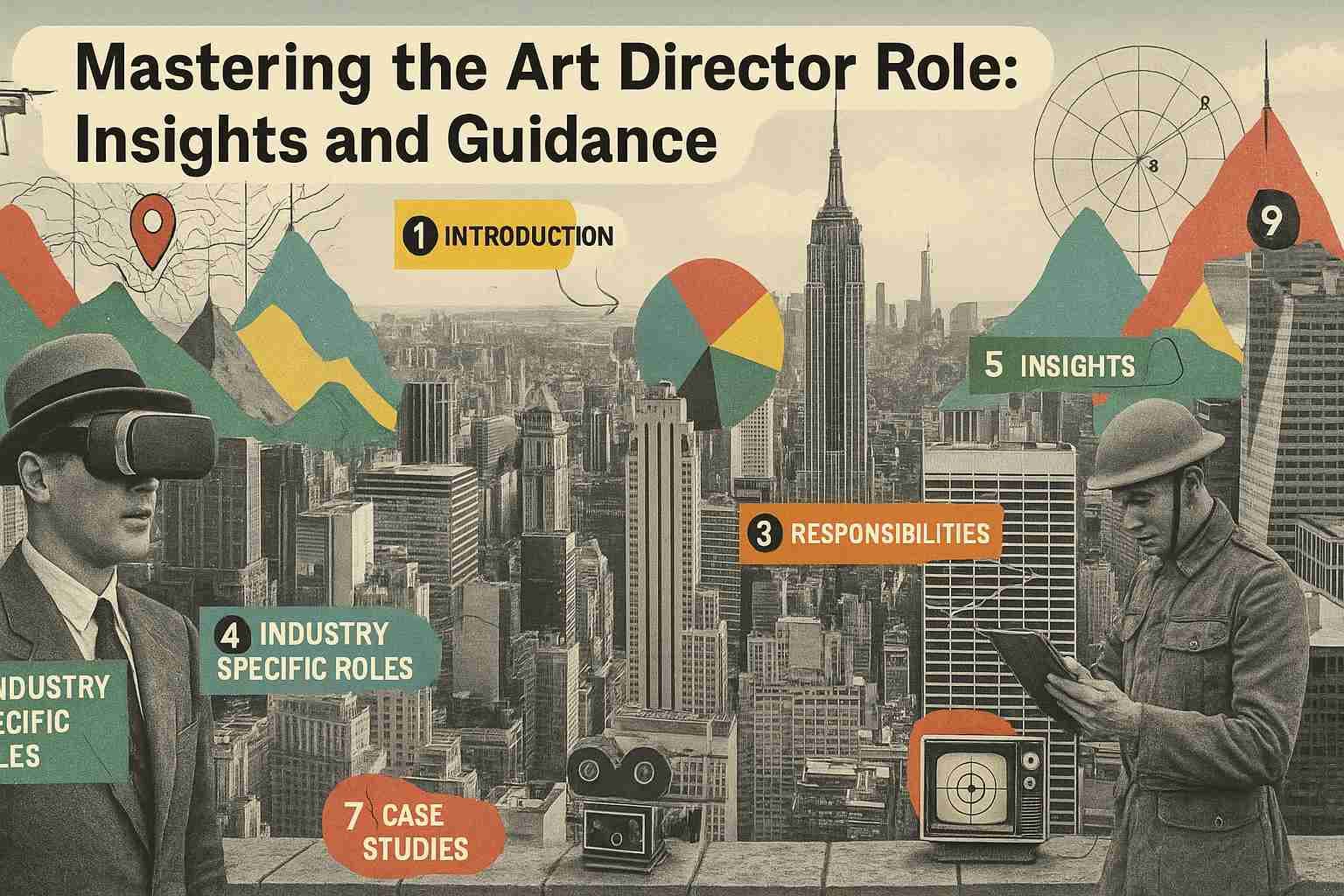
Decision-Making and Leadership: Beyond the Creative Brief
How Art Directors Make Creative Decisions
Creative decision making is rarely a straight line. Art directors operate in a liminal space—where the brief offers boundaries, but interpretation is the real work. The ability to read between the lines, to decode what isn’t said, is as critical as technical skill. In practice, this means treating each brief as a point of departure, not a fixed map. Art directors interrogate the brief’s intent, weighing brand values, audience, and cultural context before a single visual is sketched. They analyze not just what a client wants, but why they want it, using that understanding to shape a creative response that is both strategic and expressive.
Ambiguity is the constant. The best art directors are comfortable making decisions with incomplete information, building consensus around a vision that will inevitably evolve. They know when to push for clarity and when to let uncertainty drive experimentation. This is not guesswork—it’s informed risk, guided by experience and a finely tuned sense of what’s possible within real-world constraints.
Leadership Skills Every Art Director Needs
Art director leadership is not about command; it’s about orchestration. Teams look to the art director for both direction and permission—to pursue bold ideas, to challenge assumptions, and to recover quickly from setbacks. Effective leaders in this space cultivate psychological safety, encouraging critique without defensiveness and debate without ego. They recognize that creative problem-solving is a team sport, requiring the integration of diverse perspectives and skillsets.
Team management under deadline pressure reveals true leadership style. The art director must be the calm in the storm, setting priorities, allocating resources, and shielding the team from unnecessary noise. They model resilience, framing challenges as opportunities for invention rather than obstacles to be endured. When conflict arises—over vision, execution, or process—the art director’s role is to facilitate resolution, not impose a verdict. This means listening deeply, reframing disagreements as creative friction, and guiding the team toward solutions that serve both the project and the people behind it.
Balancing Vision with Client Expectations
Every project is a negotiation between creative ambition and practical realities. The art director stands at the fulcrum, making trade-offs between what the team wants to build and what the client actually needs. This requires a nuanced understanding of both sides: the internal drive for innovation, and the external pressures of budget, timeline, and stakeholder politics.
Feedback loops are where this negotiation plays out. Art directors manage iteration with intent, filtering feedback to preserve the integrity of the vision without dismissing legitimate concerns. They know when to defend a bold concept and when to adapt, ensuring that the final output is not just a compromise, but a synthesis—something that advances the client’s goals while maintaining creative integrity.
In environments defined by tight deadlines and shifting expectations, these skills are the difference between chaos and momentum. The art director who leads through ambiguity, who makes decisions with both confidence and humility, shapes not just the work, but the culture of the team itself. This is creative decision making at its highest level: analytical, interpretive, and always in dialogue with the real world.
What Skills and Qualifications Should an Art Director Have?
Essential Skills for an Art Director
The phrase “art director skills and qualifications” is often reduced to a checklist, but the reality is more layered. At its core, the role demands visual fluency and technical mastery—proficiency in design software (Adobe Creative Suite is table stakes, but 3D and motion tools are increasingly relevant), a deep grasp of composition, color theory, and spatial storytelling. Yet technical skill alone is insufficient. Art directors must think structurally: how does every visual choice serve the project’s narrative, brand, or campaign objective?
Interpersonal skills are not optional. Art directors act as the connective tissue between creative vision and execution. This means translating abstract concepts into actionable briefs, mediating between directors, producers, and crew, and giving clear, constructive feedback. Leadership is implicit in the title. The best art directors inspire trust, manage egos, and keep teams focused when pressure mounts. Adaptability is also essential; creative direction is rarely linear, and pivots are inevitable.
Education Requirements for Art Directors
There is no single “required qualification” for art directors, but patterns emerge across the industry. Most hold a bachelor’s degree in fields such as fine arts, graphic design, architecture, or film. Formal education delivers foundational knowledge—art history, design principles, visual theory—but it’s not a substitute for practical experience. Increasingly, creative industry qualifications are assessed by outcomes: what have you made, and can you articulate the choices behind it?
Some art directors arrive via nontraditional routes—self-taught artists, experienced set decorators, or production designers who’ve built credibility through consistent craft. While postgraduate study can deepen expertise, it’s rarely a gatekeeper. What matters more is the ability to demonstrate creative and technical fluency in real-world contexts.
Building a Portfolio for Art Direction Roles
No qualification matters if your portfolio is thin. Aspiring art directors must curate a body of work that signals range, taste, and authorship. This means more than assembling pretty images. Each project should show evidence of problem-solving: how did you respond to a brief, collaborate with others, and elevate the result? A strong portfolio is narrative-driven—showing not just what you made, but why it mattered within the context of the production.
Experience is cumulative. Early-career roles—assistant art director, set dresser, or even graphic designer—are often stepping stones on the art director career path. Each role should add a layer to your skill set: managing budgets, leading small teams, or integrating new technologies. The throughline is growth—demonstrated progression from execution to vision.
Balancing Craft, Leadership, and Adaptability
Art director education and experience are only meaningful if they translate into creative leadership. The essential art director skills blend craft with the ability to marshal teams, navigate ambiguity, and drive projects to completion. It’s not a role for specialists or lone geniuses; it’s for those who can see the whole picture, then bring others along for the ride. In an industry where the only constant is change, adaptability is the most underrated qualification of all.
The Art Director Job Description in Practice: Daily Routines and Workflows
What Does a Typical Day Look Like for an Art Director?
The core of art director daily tasks is orchestration—balancing vision with logistics, and creative energy with practical constraints. The day rarely starts with a blank slate. Instead, most art directors begin by reviewing briefs, moodboards, and production notes—often before the first meeting of the morning. The early hours are about aligning with the project’s creative lead, production designer, and key department heads. This is where intent is clarified, and the day’s priorities are set.
From there, the art director’s routine moves quickly into internal reviews: checking in on set builds, approving prop selections, or troubleshooting fabrication issues. If the project is in pre-production, the focus is on translating concept art into actionable build lists and schedules. If mid-shoot, attention shifts to set readiness and rapid problem-solving. Client presentations and feedback cycles are woven throughout—each one a negotiation between creative ambition and budgetary reality. By late afternoon, it’s about revising plans in response to feedback, updating the team, and prepping for the next day’s challenges.
Managing Multiple Projects as an Art Director
The reality of creative project management is that art directors rarely have the luxury of single-project focus. Overlapping timelines are standard. An art director might be scouting locations for one job, overseeing fabrication for another, and reviewing post-production art assets for a third—all within the same week. Prioritization becomes an art in itself, guided by production milestones, client deadlines, and the creative stakes of each deliverable.
Weekly routines are structured around standing meetings—internal check-ins, production status updates, and cross-department syncs. These are not just bureaucratic rituals; they’re the backbone of risk management and creative alignment. The art director’s presence is often required in both granular discussions (should the wallpaper be eggshell or matte?) and high-level strategy sessions (how do we visually differentiate this campaign from last quarter’s?). The ability to toggle between detail and big picture is non-negotiable.
Workflow Tools for Art Directors
Effective daily workflow management hinges on the right tools. Art directors rely on a blend of analog and digital systems: annotated scripts, cloud-based asset libraries, collaborative boards, and real-time communication platforms. Visual references are constantly updated and circulated, ensuring that everyone from set dressers to executive producers is working from the same playbook.
But tools are only as effective as the habits behind them. The best art directors carve out time for daily review—scrutinizing progress, flagging risks, and recalibrating resources. They document decisions rigorously, knowing that a missed note can cascade into costly errors down the line. The workflow is iterative, not linear; every feedback round, every production hiccup, is folded back into the project’s evolving blueprint.
Common Challenges in the Art Director Routine
No two days are identical, and unpredictability is the norm. Creative project workflow is inherently volatile—budgets shift, timelines compress, creative direction pivots. Art directors are expected to absorb these shocks without derailing the team or diluting the vision. The challenge is to maintain creative integrity while adapting to external pressures.
Time management is a constant test. The art director must protect focused creative time while remaining accessible to solve problems as they arise. The most effective practitioners develop a rhythm: set priorities early, delegate decisively, and leave space for the unforeseen. In the end, the art director’s routine is less about routine itself, and more about disciplined flexibility—anch
Misconceptions About the Art Director Job Description
Top Misconceptions About Art Directors
The phrase "art director" is a magnet for creative job stereotypes and persistent art director misconceptions. The most pervasive: the art director as a lone, eccentric genius, conjuring entire visual worlds from a singular vision. In reality, art direction is fundamentally collaborative. The job is not about dictating aesthetics from an ivory tower. It’s about orchestrating a team—designers, set decorators, prop masters, and more—toward a unified visual strategy. The myth of the solo auteur persists because it flatters the creative ego, but it erases the granular, negotiated nature of the work.
Another persistent art director myth: that the role is all about hands-on craft, or conversely, that it’s entirely managerial and detached from the creative process. Both are simplifications. The art director is neither a glorified technician nor a passive overseer. Instead, they operate in a liminal space—making high-level visual decisions, yes, but also knowing when to step in with technical guidance or step back to let specialists execute. Overestimating or underestimating their technical involvement leads to misunderstanding art direction at its core.
Art Direction vs. Design: Clearing the Confusion
One of the most common misunderstandings is the conflation of art direction with design. This confusion isn’t just semantic; it shapes hiring, collaboration, and project outcomes. Designers execute; art directors define the visual language, set the tone, and ensure coherence across every visual element. An art director’s palette is broader—encompassing not just graphic choices but spatial, material, and even atmospheric considerations. To reduce art direction to "making things look good" is to miss the point: their role is about intention, not mere decoration.
In the creative industry, myths about roles persist because they’re easy shorthand. But in production, the distinction between art direction and design is critical. Art directors are responsible for the visual thesis of a project; designers are the craftspeople who realize it. Blurring these lines breeds inefficiency and creative drift. For those looking to understand art director responsibilities explained in real terms, it’s crucial to see art direction as a discipline of synthesis and oversight, not execution alone.
What Art Directors Are Not Responsible For
There’s also a tendency to overstate the art director’s authority, assuming they have carte blanche over every visual decision. In reality, art directors work within constraints—budgets, client briefs, directorial vision, and logistical realities. They are not the final arbiters of taste, nor do they sign off on every creative detail. Leadership in art direction is less about command and more about alignment: corralling disparate inputs into a singular visual direction, often without the luxury of absolute authority.
Another misunderstanding: that art directors are responsible for every aspect of the set or campaign’s look. In practice, they delegate and trust specialists, focusing on cohesion rather than micromanagement. The job is not about omniscience but about knowing what to prioritize and where to intervene. This is where seasoned art directors distinguish themselves—not by doing everything, but by knowing what not to do.
These misconceptions aren’t just semantic errors; they shape how teams are built, how projects are run, and how creative leaders are evaluated. Debunking creative industry myths is not about defending the mystique of art direction, but about clarifying its real value. Understanding the truth behind art director misconceptions is essential for anyone serious about building effective, creatively fluent teams.
Career Growth and Salary Insights for Art Directors
Art Director Salary Trends and Influences
The art director salary and career path is shaped by a convergence of creative acumen and business realities. Median salaries for art directors vary widely—advertising and brand agencies often start in the $70,000–$90,000 range, while film, television, and high-end digital content push into six figures with experience. In-house creative leads at major brands may command even more, reflecting both creative responsibility and strategic influence.
Location remains a decisive factor. Metropolitan centers—New York, Los Angeles, London—offer higher compensation, but also steeper competition and living costs. Remote work has begun to rebalance this equation, but the creative industries still reward proximity to cultural and production hubs. Beyond geography, the art director’s portfolio is the truest currency. Those who build a distinct visual voice and demonstrate adaptability across formats—motion, digital, experiential—see accelerated salary growth. Technical fluency (3D, AR, interactive design) now commands a premium, as does the ability to lead cross-disciplinary teams.
Career Pathways in Art Direction
The art director career growth trajectory is rarely linear. Most begin as junior designers or assistants, learning the grammar of production and the politics of creative decision-making. With time, they move into senior designer or associate art director roles, taking on more responsibility for concept development, client interaction, and team leadership. The leap to full art director status is as much about trust—can you steer a project’s vision under pressure?—as technical skill.
From there, the ladder branches: some become creative directors, overseeing entire departments or agency portfolios. Others specialize—production design for film, UX/UI for digital, environmental graphics for architecture. Lateral moves into adjacent fields (brand strategy, content production, experiential marketing) are increasingly common, reflecting the porous boundaries of contemporary creative work.
How to Advance as an Art Director
Advancement in art direction is driven by more than tenure. Those who rise fastest blend creative innovation with strategic thinking. A reputation for delivering under tight deadlines, managing multidisciplinary teams, and translating abstract briefs into actionable concepts is essential. Recognition—industry awards, high-profile campaigns, published work—opens doors, but so does the ability to mentor others and shape studio culture.
Compensation factors extend beyond base salary. Bonuses, profit-sharing, and equity are on the rise in creative tech and content startups. Freelance art directors, meanwhile, can out-earn their salaried peers if they build a steady client base and negotiate well. Regardless of path, continuous skill development—learning new software, understanding emerging media, refining leadership—remains non-negotiable for sustained career growth.
Emerging Roles and the Future of Art Direction
The art director salary and career path is evolving with the industry. New roles—immersive experience director, creative technologist, content strategist—reflect the expanding scope of visual storytelling. Those who adapt to new platforms and collaborate across disciplines will find opportunities not just to earn more, but to redefine what art direction means in a hybrid creative economy.
For senior marketers and creative leaders, understanding these dynamics isn’t optional. It’s the difference between building teams that stagnate and those that set the pace for the next era of visual culture.
Conclusion
The art director’s role has never been static. It’s a position defined by flux—by the shifting boundaries between creative vision, visual leadership, and the operational realities of modern production. Today, art director roles demand a rare blend of conceptual acuity and grounded, practical management. The art director is not simply a stylist or a visual gatekeeper; they are the connective tissue between a project’s creative ambition and its executional discipline.
Within contemporary creative teams, the art director’s significance is measured by their ability to translate abstract ideas into clear, actionable frameworks. This means guiding visual language, shaping the look and feel of campaigns, but also orchestrating workflows and managing cross-disciplinary input. The job description has expanded: art directors now sit at the intersection of creative team management and hands-on craft, balancing the needs of directors, clients, and designers without losing sight of the project’s core intent.
What sets the art director apart is this dual fluency. While other creative team roles may specialize—copywriters in narrative, designers in execution, producers in logistics—the art director must synthesize. Their remit covers not just the surface but the underlying structure: aligning mood boards with budgets, harmonizing brand strategy with set builds, and ensuring every visual decision ladders up to a coherent whole. This is visual leadership in practice, not theory.
As the demands on creative teams intensify, the art director’s value lies in their adaptability and clarity of vision. They are both the architect and the steward, evolving with the industry while holding fast to the essentials of craft. In a landscape where boundaries blur and expectations rise, the art director remains the anchor—defining, refining, and elevating the visual narrative at every stage.
FAQs
What is the role of an art director in advertising?
An art director in advertising shapes the visual identity of campaigns, translating strategic ideas into concrete imagery. They oversee the look and feel of all creative assets, ensuring every visual element aligns with the brand’s goals and message. Their remit covers everything from concept development to execution, bridging creative vision and commercial objectives.
What are the key responsibilities of an art director?
Art directors are responsible for developing visual concepts, guiding design teams, and ensuring brand consistency across all outputs. They make critical decisions on style, tone, and composition, approve layouts and storyboards, and collaborate closely with copywriters, photographers, and producers to deliver cohesive, effective campaigns.
How does an art director differ from a creative director?
While both roles operate at the intersection of creativity and strategy, the art director’s focus is visual execution—crafting and refining the look of a project. The creative director takes a broader view, setting the overall vision, tone, and direction, and often manages multiple disciplines, including copy, design, and strategy.
What skills are required to become an art director?
Art directors need a blend of technical design proficiency, visual literacy, and a deep understanding of branding. Leadership and communication skills are essential for managing teams and collaborating with stakeholders. Adaptability and critical thinking are also crucial, given the pace and demands of agency and brand environments.
What does a typical day look like for an art director?
A typical day involves reviewing creative briefs, leading brainstorming sessions, providing feedback to designers, and overseeing shoots or edits. Art directors spend significant time in meetings with clients and internal teams, balancing hands-on design work with strategic oversight to keep projects on track and on brand.
What are common misconceptions about art directors?
One misconception is that art directors only “make things look good.” In reality, their work is deeply strategic, involving problem-solving and alignment with business objectives. Another myth: they work alone. Effective art direction is collaborative, drawing on the skills of diverse creative professionals to deliver results.
What are the current salary trends for art directors?
Salary trends for art directors vary by region, sector, and experience. Typically, compensation reflects both creative expertise and leadership responsibility. Art directors in major markets and digital-first agencies tend to command higher salaries, with freelance rates also rising for those with proven portfolios and industry recognition.
.webp)
Creative Collaboration Platform: The Backbone of Modern Creative WorkWhat is a creative collaboration platform?Clapboard defines a creative collaboration platform as the operational core for today’s distributed creative teams. This is not a collection of digital collaboration tools stitched together; Clapboard’s system

Understanding the Creative Production MarketplaceWhat is a Creative Production Marketplace?Clapboard defines a creative production marketplace as a structured ecosystem where brands, agencies, and production talent converge to execute video, advertising, and branded content at scale. Unlike the legacy agency or freelanREAD FULL ARTICLE

The Urgent Need for a Creative Production Operating SystemWhy Traditional Creative Production Models Break DownClapboard sees the creative production landscape shifting under pressure. Content velocity is no longer a buzzword—it’s a mandate. Modern advertising demands relentless output across dozens of channels, each wREAD FULL ARTICLE
JOIN THE NEWSLETTER.
Content Production insights, videos, books, and freebies, delivered to your inbox weekly


LEAVE A COMMENT
Your email address will not be published.