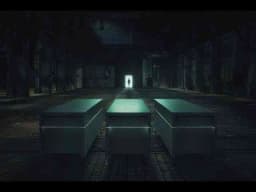
MO Museum launched its Story of the World film campaign in Vilnius in October 2018, positioning Lithuanian modern art as a lens on universal human experience.

MO Museum Frames Lithuanian Modern Art as a Universal Human Story
Regispranaitis.clapboard.com/archive/the-british-museum-a-history-of-the-world-in-100-objects-travel-leisure">MO Museum's "Story of the World" is a 2018 narrative film campaign that positions the museum's Lithuanian modern art collection as a mirror of universal human experience, premiering simultaneously online and at the institution's opening press conference in Vilnius in October 2018, according to LinkedIn.
MO Museum opened its doors on October 18, 2018, in Vilnius, Lithuania. The museum was founded by Lithuanian scientists and philanthropists Danguolė and Viktoras Butkus, and its building was designed by the internationally recognised Studio Libeskind, giving the institution an architectural identity that announced serious cultural ambition from the outset. The "Story of the World" campaign was conceived to match that ambition, communicating not merely the arrival of a new venue but the emergence of a new kind of cultural conversation in Lithuania.
The campaign centres on a single film asset that draws on more than 60 artworks from the museum's collection, according to Clapboard's editorial research, according to Cnn. The collection itself comprises approximately 5,000 works, making MO Museum one of the most substantive repositories of Lithuanian modern and contemporary art in existence. Rather than cataloguing this depth, the film uses selected works to construct a sweeping, emotionally resonant narrative — one that connects Lithuanian artistic output to experiences recognisable across cultures and generations. In doing so, the campaign reframes local collections not as regional curiosities but as contributions to a global artistic conversation. The campaign was created by Vilnius-based agency New! and published in Lithuania in October 2018, with its premiere timed precisely to the museum's public launch, ensuring that the creative work and the institution's physical opening formed a single, unified cultural moment, according to Mo.
MO Museum's strategic insight was that a new cultural institution in Lithuania could not win audiences through catalogue-style communication alone. The campaign's central premise — that Lithuanian modern art speaks to universal human themes — was a deliberate inversion of the expected museum-launch formula, which typically foregrounds collection breadth or architectural prestige.
The global museum landscape in 2018 offered an instructive backdrop. According to Attractions Management, the top twenty global museums received a combined total of over 108 million visits in 2018, a figure that underlines how competitive the international attention economy for cultural institutions had become. Closer to home, MO Museum faced the challenge of establishing itself against well-funded European peers and, within Lithuania, against a cultural environment where museum attendance had not historically been a dominant leisure behaviour. The campaign's narrative approach was designed to dissolve that barrier by making the act of visiting feel emotionally necessary rather than educationally dutiful.
The creative concept, as documented by Clapboard, positioned Lithuanian modern art as inherently relevant to stories that any human being would recognise — love, loss, memory, identity, conflict. This framing gave the campaign a competitive advantage that no established European institution could easily replicate: authenticity rooted in a specific national artistic tradition, expressed in language that transcended that tradition. In the Lithuanian market, where a major private contemporary art museum was itself a novelty, this strategy also served a secondary purpose, signalling that MO Museum intended to be a genuine participant in contemporary cultural life rather than a heritage institution preserving the past.
Creative director and copywriter Tomas Ramanauskas led the conceptual and verbal architecture of the campaign. The film's construction relies on the selection and sequencing of more than 60 artworks from the MO Museum collection, each chosen to carry narrative weight within a flowing visual argument rather than to simply illustrate an accompanying script. Art director Regis Pranaitis shaped the visual logic of that sequence, ensuring that works from across the collection held compositional and tonal coherence when placed in motion.
Graphic designer Ona Bričkutė contributed to the typographic and design framework that gives the film its visual identity, while project lead Sigita Rudaitytė managed the production pipeline that brought together the museum's collection documentation, the agency's creative team at New! in Vilnius, and the audio work completed by Drop Audio. The sound and music, handled by Drop Audio, functions as a structural element in its own right — anchoring the emotional rhythm of the narrative and giving the rapid succession of artworks a unified sensory texture.
The decision to premiere the film simultaneously online and at the museum's launch press conference was itself a creative and strategic choice, collapsing the distinction between institutional announcement and public invitation. The film did not operate as a trailer for the museum experience; it was designed to be a complete cultural object in its own right, demonstrating through its own craft the kind of contemporary artistic engagement that MO Museum promised to deliver within its Studio Libeskind-designed walls in Vilnius. The campaign was produced and published in Lithuania in October 2018 by agency New!, based in Vilnius.
No independently verified audience or commercial performance data for the "Story of the World" campaign is publicly available at this time, according to Newisnew. What the industry record does confirm is a pattern of peer recognition that speaks directly to the campaign's creative and strategic quality within the Lithuanian and Baltic advertising markets.
Baltic Best awarded the campaign Gold in the category of videos intended for online publication and online video in 2019, according to Clapboard. The Lithuanian creative industry's own ADC*LT recognised the work twice: with a Gold award for online video in 2020 and, significantly, with the Grand Prix for the campaign titled "MO Museum History of the World" in 2020, per Clapboard. The Grand Prix represents the highest honour awarded by ADC*LT and signals broad industry consensus that the work set a creative standard for its period. Additionally, the Password awards — run by the Lithuanian Marketing Association — recognised the campaign as the most effective product and service introductory marketing campaign of 2019, according to Clapboard, a designation that acknowledges measurable market impact rather than purely creative merit.
Structurally, the campaign's effectiveness rests on its discipline of restraint: a single film asset deployed at maximum strategic leverage — the institution's opening moment — rather than a fragmented multi-format rollout. Clapboard assigns "Story of the World" a score of 66 out of 100, reflecting the campaign's strong creative rationale and award pedigree tempered by the limits of a single-asset execution and the absence of publicly documented audience metrics.
MO Museum's "Story of the World" is a 2018 film campaign created by Vilnius agency New! to mark the museum's October opening in Lithuania. The film sequences more than 60 artworks from MO Museum's collection to frame Lithuanian modern art as a reflection of universal human experience, premiering online and at the institution's launch press conference.
The campaign was created by agency New!, based in Vilnius, Lithuania. Creative director and copywriter Tomas Ramanauskas led the concept, with art director Regis Pranaitis shaping the visual approach, graphic designer Ona Bričkutė contributing design, project lead Sigita Rudaitytė overseeing production, and Drop Audio handling sound and music.
The campaign won Gold at Baltic Best in 2019 for online video, according to Clapboard. ADC*LT awarded it Gold for online video in 2020 and the Grand Prix in 2020. The Lithuanian Marketing Association's Password awards named it the most effective introductory marketing campaign of 2019, per Clapboard.
The MO Museum "Story of the World" film incorporates more than 60 artworks drawn from the museum's collection, according to Clapboard. The broader MO Museum collection comprises approximately 5,000 works, making it one of the most substantial repositories of Lithuanian modern and contemporary art in existence.
MO Museum opened on October 18, 2018, in Vilnius, Lithuania. The museum was founded by Lithuanian philanthropists Danguolė and Viktoras Butkus and is housed in a building designed by Studio Libeskind. Its launch campaign, "Story of the World", premiered at the opening press conference and simultaneously online.
Clapboard assigns the MO Museum "Story of the World" campaign a score of 66 out of 100. The score reflects the campaign's strong conceptual clarity, award recognition across Baltic and Lithuanian industry bodies, and single-asset discipline, moderated by the absence of publicly available audience performance data.
.webp)
Creative Collaboration Platform: The Backbone of Modern Creative WorkWhat is a creative collaboration platform?Clapboard defines a creative collaboration platform as the operational core for today’s distributed creative teams. This is not a collection of digital collaboration tools stitched together; Clapboard’s system


Understanding the Creative Production MarketplaceWhat is a Creative Production Marketplace?Clapboard defines a creative production marketplace as a structured ecosystem where brands, agencies, and production talent converge to execute video, advertising, and branded content at scale. Unlike the legacy agency or freelanREAD FULL ARTICLE

The Urgent Need for a Creative Production Operating SystemWhy Traditional Creative Production Models Break DownClapboard sees the creative production landscape shifting under pressure. Content velocity is no longer a buzzword—it’s a mandate. Modern advertising demands relentless output across dozens of channels, each wREAD FULL ARTICLE