 ARCHIVE
Where MLB Makes the Postseason Feel Like a Proving Ground
How MLB 's 'Where Major is Made' Reframes the Postseason as Performance Theatre Major League...
How the San Francisco Giants Claimed a City's Soul in 2019
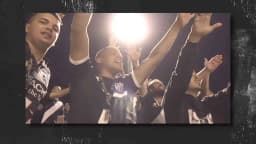
The San Francisco Giants' 2019 campaign 'We Built This City,' created by Goodby Silverstein & Partners and published in the United States in March 2019, is a single-film narrative that repositions the baseball franchise as a foundational pillar of San Francisco's cultural and civic identity by adapting Starship's song into 'We Built This City (on Giants' Soul).'
Goodby Silverstein & Partners launched the campaign on March 18, 2019, as reported by MediaPost, timed deliberately ahead of the Giants' April 5 Opening Day. The choice of launch window was strategic: placing the film in the public conversation while anticipation for the new season was still forming, giving the team a platform beyond the sports pages and into broader cultural discourse. In the United States, where professional baseball carries deep associations with civic pride and shared memory, that window represented a meaningful opportunity to prime audiences emotionally before a single pitch was thrown.
The campaign ran across local broadcast, social, and digital media channels, ensuring the film reached both loyal Giants supporters and the wider San Francisco community. Its central mechanics were rooted in narrative rather than spectacle. Rather than showcasing the 2019 roster's statistics or promising future glory, the film looked backward, referencing iconic moments in San Francisco Giants history to argue that the club's contributions to the city are inseparable from San Francisco's own story. In the United States sports advertising landscape, this kind of heritage-first framing is a deliberate counterprogramming move — one that trades short-term hype for long-term emotional equity. Clapboard's archive characterises the campaign as emotive storytelling connecting the Giants with San Francisco identity, and that framing is evident in every structural choice the film makes.
The San Francisco Giants entered the 2019 season without the championship momentum that typically fuels expectation-driven advertising. The strategic insight behind 'We Built This City' reflects that reality directly. Goodby Silverstein & Partners chose to anchor the campaign not in future aspiration but in historical legitimacy, positioning the Giants as co-authors of San Francisco's identity rather than contenders making seasonal guarantees.
This approach aligns with a broader pattern in United States sports advertising, where teams increasingly invest in emotional and cultural narratives to maintain fan engagement during transitional or rebuilding periods. The logic is commercially sound: emotional connection sustains attendance and merchandise revenue even when on-field results fluctuate. According to Nielsen, MLB and its 30 teams generated two point four billion dollars in cumulative Quality Index Media Value for sponsors during 2018 televised game broadcasts, a figure that underscores how much commercial weight rests on the league's ability to maintain audience attachment year over year.
Within the competitive landscape of United States professional sports entertainment, the Giants operate alongside franchises such as the Los Angeles Dodgers and the Chicago Cubs, both of whom have invested heavily in legacy-driven brand narratives of their own. The Dodgers in particular have used historical identity as a marketing cornerstone across multiple campaigns. Against that competitive context, 'We Built This City' represents the Giants' effort to assert a distinctly San Francisco claim — one that ties the team's fate to the city's own resilience and character rather than to league-wide comparisons. The earlier Giants positioning line 'Together We're Giant,' as noted by Adweek in coverage of the team's campaign lineage, had already established collective identity as a creative priority, and the 2019 campaign extended that thread by embedding the team into the physical and emotional fabric of the city itself.
The creative execution of 'We Built This City' rests on a single, structurally confident decision: the adaptation of Starship's iconic song title into the revised refrain 'We Built This City (on Giants' Soul).' That lyrical pivot does significant work. It imports a piece of broadly recognised American popular culture and redirects its meaning entirely, substituting the original song's meditation on rock and roll for an argument about baseball, belonging, and San Francisco's particular character.
The film medium allows the campaign to operate through montage and music simultaneously, pairing the adapted anthem with archival and contemporary imagery of Giants history. Referencing previous iconic moments in San Francisco Giants history, as reported by MediaPost, the film constructs a timeline in which the team is not merely a tenant of the city but a participant in its making. In the United States, where sports franchises frequently invoke history to build emotional legitimacy, the craft lies in selection — which moments are chosen, and how they are sequenced to produce a cumulative emotional effect rather than a simple highlight reel.
Production credits for the 'We Built This City' campaign are not publicly documented in available trade sources. What the finished film demonstrates, however, is a discipline of restraint. The campaign contains a single media asset, which signals a creative philosophy that prioritises depth of impact over volume of executions. Rather than fragmenting the narrative across multiple formats, Goodby Silverstein & Partners concentrated the campaign's emotional argument into one film, trusting that the combination of the adapted anthem, archival narrative, and civic framing would carry sufficient weight to move audiences across local broadcast, social, and digital platforms in the United States without dilution.
No verified performance data for the 'We Built This City' campaign is publicly available. No trade press awards, viewership figures, or engagement metrics have been attributed to the campaign in documented sources, and MediaPost's coverage from March 20, 2019 — the primary contemporaneous trade record — focused on campaign context rather than measurable outcomes.
Structural analysis, however, points to a campaign built for sustained emotional impact rather than short-term conversion. By launching on March 18, 2019 ahead of April 5 Opening Day, as reported by MediaPost, the film had more than two weeks to circulate across broadcast, social, and digital channels in the United States before a game was played. That runway is meaningful: it gives a narrative-led campaign time to accumulate cultural traction rather than competing directly with the news cycle of Opening Day itself.
The decision to produce a single media asset rather than a campaign suite also carries structural implications. In the United States sports advertising environment, where advertisers spent an estimated significant sum during the 2019 MLB playoffs according to Front Office Sports, the ability to concentrate audience attention on one definitive piece of creative is an advantage when the work is strong enough to sustain repeated exposure. 'We Built This City' was designed to function in precisely that register — a film that improves with familiarity rather than requiring novelty to land. Clapboard rates the campaign 63 out of 100, reflecting a well-constructed narrative execution that stops short of the creative distinctiveness required for category-leading status.
'We Built This City' is a 2019 film campaign created by Goodby Silverstein & Partners for the San Francisco Giants. Launched on March 18, 2019 ahead of Opening Day, it adapted Starship's song into 'We Built This City (on Giants' Soul),' connecting the team's history to San Francisco's civic identity across broadcast, social, and digital channels in the United States.
Goodby Silverstein & Partners created the 'We Built This City' campaign for the San Francisco Giants. The campaign was published in the United States in March 2019 and ran as a single film across local broadcast, social, and digital media, as reported by MediaPost and documented in the Clapboard archive.
The San Francisco Giants launched 'We Built This City' on March 18, 2019, as reported by MediaPost. The campaign preceded the team's April 5, 2019 Opening Day, giving the film time to build audience awareness across the United States before the new season began.
The campaign adapts Starship's well-known song, revising its hook to 'We Built This City (on Giants' Soul).' This lyrical adaptation, as reported by MediaPost and documented by Clapboard, redirects the song's cultural meaning toward the San Francisco Giants' history and their relationship with the city of San Francisco.
The campaign extends an earlier Giants positioning strategy. As noted by Adweek in coverage of the team's creative lineage, the prior 'Together We're Giant' platform had already prioritised collective identity. 'We Built This City' deepened that approach in 2019 by embedding the Giants directly into San Francisco's civic and cultural narrative.
Clapboard rates the 'We Built This City' campaign 63 out of 100. The score reflects a structurally confident narrative execution and a purposeful use of the film medium by Goodby Silverstein & Partners, while indicating the campaign does not reach the level of creative distinctiveness associated with top-tier sports advertising in the United States.
.webp)
Creative Collaboration Platform: The Backbone of Modern Creative WorkWhat is a creative collaboration platform?Clapboard defines a creative collaboration platform as the operational core for today’s distributed creative teams. This is not a collection of digital collaboration tools stitched together; Clapboard’s system


Understanding the Creative Production MarketplaceWhat is a Creative Production Marketplace?Clapboard defines a creative production marketplace as a structured ecosystem where brands, agencies, and production talent converge to execute video, advertising, and branded content at scale. Unlike the legacy agency or freelanREAD FULL ARTICLE

The Urgent Need for a Creative Production Operating SystemWhy Traditional Creative Production Models Break DownClapboard sees the creative production landscape shifting under pressure. Content velocity is no longer a buzzword—it’s a mandate. Modern advertising demands relentless output across dozens of channels, each wREAD FULL ARTICLE