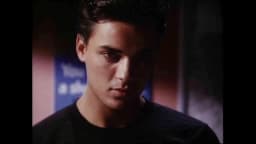
Rag & Bone's 2015 'Dance' film united Mikhail Baryshnikov and Lil Buck in a three-minute digital campaign that redefined fall winter menswear storytelling in

Rag & Bone Cast Baryshnikov and Lil Buck to Redefine Menswear Storytelling
Rag & Bone's 'Dance' campaign is a digital fashion film released in February 2015 in the United States, presenting the brand's Fall/Winter 2015–16 menswear collection through a three-minute encounter between classical ballet icon Mikhail Baryshnikov and contemporary jookin dancer Lil Buck, directed by Georgi Greville and premiered at the brand's Fall 2015 menswear presentation in New York on February 4, 2015.
The film arrived in the United States at a moment when conventional menswear runway presentations were under growing scrutiny for their distance from everyday audiences. Marcus Wainwright, co-designer and co-head of Rag & Bone, stated directly that runway shows do not resonate with regular audiences, and that motivation drove the brand to seek a format that could challenge and genuinely engage people. Rather than mount a traditional catwalk, Rag & Bone chose to let the clothing move — literally — through two bodies whose disciplines could not be further apart on the surface yet share a rigorous commitment to physical mastery.
The campaign carries the formal title 'Baryshnikov and Lil Buck' and is categorised as a digital medium work within the fashion and apparel industry. Media coverage of the film spread across the United States beginning February 5 and 6, 2015, as reported across multiple fashion and culture outlets. Baryshnikov was 67 years old at the time of the campaign, and his counterpart Lil Buck was 26, according to production records. The generational and stylistic distance between the two performers is not incidental — it is the creative argument the film makes for the collection itself. Rag & Bone earns a Clapboard Score of 78 out of 100 for this campaign, recognising its conceptual clarity, casting intelligence, and its effectiveness as an alternative to conventional fashion advertising formats.
Rag & Bone positions itself around the idea of contrast. Marcus Wainwright described the brand explicitly as being 'about opposites' and 'contrast — street and tailoring, America and England, hard and soft,' as reported by Vogue, framing the 'Dance' campaign not primarily as a film about movement but as a conversation about old school and new school sensibilities meeting on equal terms. This strategic clarity is what separates the campaign from celebrity endorsement dressed up as art direction.
In the United States in 2015, menswear occupied a meaningful but secondary position within the broader apparel market. According to Shenglufashion.com, menswear represented approximately 31.2 percent of the global apparel market that year, against a womenswear share of around 52.9 percent, underscoring the competitive pressure on brands seeking to grow men's fashion as a category. The US menswear segment was increasingly contested, with brands such as Ralph Lauren and J.Crew pursuing heritage-inflected storytelling, while newer entrants competed on streetwear credibility. Rag & Bone occupied an intelligent middle ground — British-founded, New York-based, and deliberately built on the tension between those two identities.
Choosing dance as the vehicle for a Fall/Winter 2015 menswear campaign was a calculated risk. Fashion film as a format was gaining traction internationally but had not yet displaced editorial photography as the dominant mode of campaign communication for mid-luxury American apparel brands. By selecting a format longer than three minutes, Rag & Bone implicitly bet that its audience would commit to watching rather than scrolling. The casting of Baryshnikov, a figure whose cultural authority in the United States extends well beyond fashion circles, alongside Lil Buck, who had been introduced to mainstream American audiences partly through a viral performance with Yo-Yo Ma, gave the film a pre-existing narrative that media could amplify without the brand needing to explain itself.
Director Georgi Greville shapes the film's visual argument around the bodies of its two performers. The approach, as documented in coverage from Vogue and Broadwayworld.com, places Mikhail Baryshnikov and Lil Buck in dialogue — not competition — allowing the Fall/Winter 2015–16 Rag & Bone menswear collection to be read through the specific physical language each man brings to the frame.
The music was composed by Venetian Snares, a choice that signals the film's refusal to settle into expected territory. Venetian Snares is known for densely constructed electronic and breakcore compositions, and the decision to score a fashion film featuring a 67-year-old classical ballet legend with music from that tradition is itself an act of creative contrast — precisely aligned with Marcus Wainwright's stated brand philosophy. The soundtrack does not attempt to split the difference between Baryshnikov's world and Lil Buck's; instead it creates a third space in which both performers operate with equal legitimacy.
The film's duration — more than three minutes, as reported by Broadwayworld.com — is a deliberate production decision. Most fashion advertising in 2015 operated in formats of thirty to ninety seconds for digital distribution. Greville and Rag & Bone chose to give the movement room to develop, allowing viewers to observe not just the clothing in motion but the intelligence behind how each dancer inhabits it. Baryshnikov's background in classical ballet and Lil Buck's mastery of Memphis jookin produce starkly different silhouettes and spatial relationships, which in turn demonstrate range within a single men's collection. The film premiered publicly at Rag & Bone's Fall 2015 menswear presentation in New York, according to Broadwayworld.com, giving it a live-event anchor before its wider digital release across the United States.
No verified performance data for the 'Dance' campaign — including view counts, engagement rates, or attributed sales figures — is publicly available. What can be assessed is the structural effectiveness of the film's design and the quality of earned media response it generated in the United States.
ELLE, in coverage attributed to writer Leah Rose Chernikoff published February 6, 2015, responded positively to the campaign's casting and concept, reflecting the kind of editorial attention that functions as unpaid amplification for a brand without a mass-media advertising budget in the conventional sense. Coverage also appeared across Vogue, Broadwayworld.com, and additional fashion and culture outlets in the days immediately following the February 4 premiere, according to those sources respectively, suggesting the film achieved meaningful press cut-through within its target US market at launch.
From a structural standpoint, the campaign succeeds on several dimensions that are legible without quantitative metrics. The casting decision — pairing Baryshnikov at 67 with Lil Buck at 26 — generates inherent newsworthiness that extends the film's reach beyond fashion media into culture and arts coverage. The choice of a format longer than three minutes signals confidence in the material and differentiates Rag & Bone from competitors relying on shorter, more interruptive formats. The brand's lineage in campaign innovation also provides relevant context: Rag & Bone's first advertising campaign, launched for Fall/Winter 2012 and featuring Kate Moss photographed by Craig McDean in Kentish Town, North London, as reported by Design Scene, established a precedent for casting and creative decisions that prioritise cultural resonance over conventional fashion imagery. The 'Dance' film extends that lineage into moving image with comparable ambition.
Mikhail Baryshnikov is a classical ballet legend and Lil Buck is a contemporary jookin dancer. Rag & Bone cast both performers in its Fall/Winter 2015 digital film to embody the brand's philosophy of contrast — pairing old school and new school disciplines within a single menswear campaign released in the United States in February 2015.
The film premiered on February 4, 2015, at Rag & Bone's Fall 2015 menswear presentation in New York, according to Broadwayworld.com. Wider media coverage across the United States followed on February 5 and 6, 2015, with editorial responses appearing in publications including Vogue and ELLE.
Georgi Greville directed the film. Greville's approach placed both performers in dialogue rather than competition, allowing the Fall/Winter 2015–16 menswear collection to be expressed through contrasting movement vocabularies. The film's score was composed by Venetian Snares, an unusual choice that reinforced the campaign's creative distance from conventional fashion advertising.
Co-designer Marcus Wainwright stated that runway shows do not resonate with regular audiences, motivating Rag & Bone to pursue a format that could genuinely engage people. The resulting digital film, running over three minutes, was designed to be memorable and to express the brand's identity around contrasts — street versus tailoring, hard versus soft.
The campaign's concept is contrast. Marcus Wainwright described Rag & Bone as a brand built on opposites — street and tailoring, America and England, hard and soft. Casting Baryshnikov's classical ballet against Lil Buck's Memphis jookin made that brand philosophy physical and visible, translating an abstract positioning into a specific, watchable argument for the menswear collection.
Rag & Bone has pursued culturally weighted casting since its first advertising campaign for Fall/Winter 2012, which featured Kate Moss photographed by Craig McDean in North London, as reported by Design Scene. The 2015 Baryshnikov and Lil Buck film extends that approach into fashion film, applying the same logic of meaningful talent selection to a moving-image format for US audiences.
.webp)
Creative Collaboration Platform: The Backbone of Modern Creative WorkWhat is a creative collaboration platform?Clapboard defines a creative collaboration platform as the operational core for today’s distributed creative teams. This is not a collection of digital collaboration tools stitched together; Clapboard’s system


Understanding the Creative Production MarketplaceWhat is a Creative Production Marketplace?Clapboard defines a creative production marketplace as a structured ecosystem where brands, agencies, and production talent converge to execute video, advertising, and branded content at scale. Unlike the legacy agency or freelanREAD FULL ARTICLE

The Urgent Need for a Creative Production Operating SystemWhy Traditional Creative Production Models Break DownClapboard sees the creative production landscape shifting under pressure. Content velocity is no longer a buzzword—it’s a mandate. Modern advertising demands relentless output across dozens of channels, each wREAD FULL ARTICLE