The Levi’s 'Launderette' campaign, launched in 1985 by Bartle Bogle Hegarty, encapsulates the brand’s core proposition of authentic, youthful self-expression through timeless denim. It positions Levi’s jeans not merely as apparel but as a symbol of individuality and casual confidence, appealing to consumers seeking both style and cultural relevance. By focusing on everyday scenarios—the laundrette setting—the campaign grounds the brand in relatable, real-life moments, reinforcing Levi’s as accessible yet iconic.
Strategically, the campaign leverages a cultural insight into the emerging youth identity of the mid-1980s, tapping into a sense of youthful independence and rebellion articulated through fashion choices. The creative angle employs visual storytelling and subtle narrative cues that resonate with a demographic valuing authenticity over overt commercialism. By situating the jeans within a natural, social environment rather than a traditional fashion context, the campaign effectively targets young adults who view clothing as a medium for personal and social expression. This approach not only differentiates Levi’s from competitors but also strengthens emotional engagement by embedding the brand within everyday life and subcultural ethos. The modest digital presence years later, as reflected in limited online engagement, suggests the campaign’s primary impact lay in its original cultural moment, functioning as a touchstone in the evolution of Levi’s identity rather than a contemporary digital driver.
FORMAT#10 ASSOCIATED USER IMAGERY — Shows a user profile the target audience can relate to or aspire to.
The Levi’s ‘Launderette’ campaign is iconic for depicting a stylish young man confidently stripping down to his boxers in a public laundromat, catching everyone’s attention and setting a cool, rebellious tone. Rather than focusing on storytelling, direct demonstration, or comparison, the ad spotlights the aspirational user image—a fashionable, self-assured, trend-setting youth in classic Levi’s jeans. This imagery invites the audience to aspire to this vibe and persona, making the jeans synonymous with youthful coolness and magnetic appeal.
ADVERTISING FORMATS EXPLAINED: https://www.clapboard.com/blog/branding-and-advertising/brand-strategy/12-advertising-creative-formats
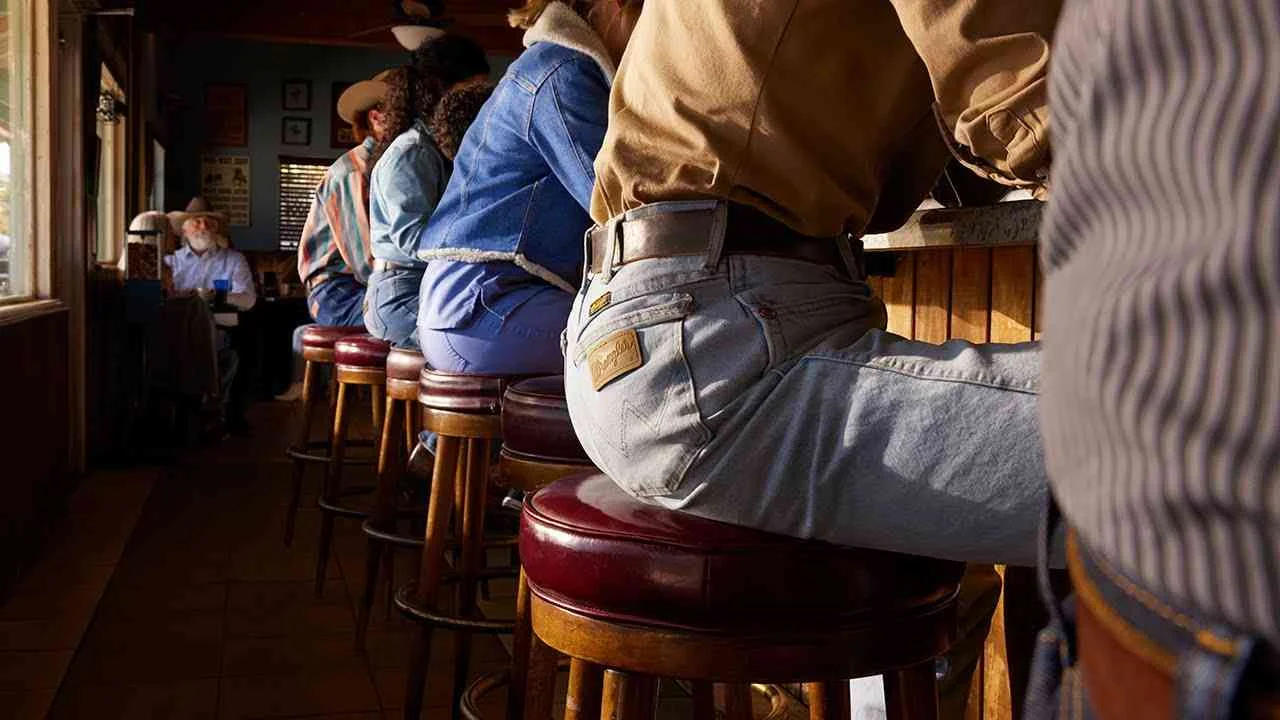
1. Wrangler – Positioned as a durable, authentic American denim brand, Wrangler focuses on ruggedness and functionality, appealing to working-class consumers and outdoor enthusiasts with a strong heritage in western wear and cowboy culture.
2. Lee – Emphasizes a blend of classic American style and innovation, Lee markets itself as providing comfortable, versatile denim with a heritage feel, targeting consumers who appreciate quality craftsmanship and timeless designs.
3. Calvin Klein Jeans – Differentiates through a fashion-forward, minimalist aesthetic combined with high-end branding, appealing to a younger, trend-conscious demographic seeking premium denim that represents luxury and modern style.
4. Guess – Combines fashion and lifestyle with a seductive, mod-inspired image, positioning itself as a stylish and aspirational denim brand focused on trend-driven designs for a youthful, confident consumer base.
5. Gap – Known for approachable, casual American basics, Gap offers dependable, affordable denim with an emphasis on comfort and inclusivity, targeting mass-market consumers seeking everyday wear with broad appeal.
Q: What is Launderette about?
A: Launderette is a professional film campaign created for Levi's by the agency Bartle Bogle Hegarty and launched in the United States in 1985. The campaign centers on a stylish young man confidently undressing in a public laundromat, capturing the attention of onlookers and establishing a mood of youthful rebellion and effortless cool. By situating Levi's jeans in a relatable, everyday setting, the campaign highlights the brand's connection to authentic lifestyle moments and positions denim as a symbol of individuality and cultural relevance within the fashion industry.
Q: What creative device does Launderette use?
A: Launderette employs FORMAT#10 ASSOCIATED USER IMAGERY, as classified by Clapboard's 12-format taxonomy. This creative technique focuses on presenting a user profile that the target audience can relate to or aspire to, rather than relying on direct product demonstration or explicit storytelling. The campaign's central figure—a self-assured, trend-setting youth—embodies the aspirational qualities Levi's seeks to project, inviting viewers to identify with the brand's image of confidence, style, and youthful magnetism.
Q: What is the campaign proposition for Launderette?
A: The campaign proposition for Launderette is to position Levi's jeans as an emblem of authentic, youthful self-expression, rooted in timeless denim. By showcasing the product in a familiar laundrette setting, the campaign appeals to consumers who value individuality, style, and cultural relevance. Strategically, it taps into the mid-1980s youth identity, emphasizing independence and rebellion through fashion choices. This approach grounds Levi's in real-life moments, reinforcing its accessibility while elevating its status as an iconic brand within the fashion and apparel market.
Q: How does Launderette rank in Clapboard's archive?
A: Launderette holds a Clapboard Campaign Score of 67/100. This score reflects the campaign's creative ambition, execution quality, and cultural relevance as assessed by Clapboard's global ad archive.
Q: Who are the competitors in Levi's category?
A: In the denim and apparel market, Levi's faces competition from several key brands. Wrangler is recognized for its durable, authentic American denim that appeals to those seeking ruggedness and functionality, particularly among working-class and outdoor consumers. Lee positions itself with classic American style and innovation, targeting those who appreciate quality craftsmanship and timeless design. Calvin Klein Jeans offers a fashion-forward, minimalist approach with high-end branding for a trend-conscious, luxury-seeking demographic. Guess combines fashion and lifestyle with a seductive, mod-inspired image aimed at youthful, confident consumers, while Gap provides approachable, affordable denim focused on comfort and inclusivity for the mass market.


 ARCHIVE


.webp)