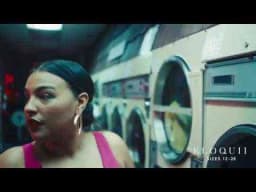
Diesel launched 'The New Hybrid' digital campaign in March 2015 in the United States, introducing Jogg Jeans as a denim-sweatpant fusion built for movement.

Diesel Jogg Jeans and the Denim Comfort Crossover of 2015
Diesel launched 'The New Hybrid' as a digital campaign in March 2015 in the United States, introducing Jogg Jeans as a single product designed to merge the visual language of denim with the stretch and comfort of a sweatpant, anchored by the strategic proposition 'Do More Things' and a direct call to action: 'Wear Jogg Jeans.'
The campaign carries a Clapboard Score of 64/100, reflecting a competent but narrowly scoped execution. Diesel positioned Jogg Jeans as a response to a consumer culture increasingly organised around movement, casualisation, and the blurring of category boundaries between fashion and activewear. Rather than building a narrative arc or deploying celebrity endorsement, the campaign leaned entirely on product demonstration, allowing the physical properties of Jogg Jeans — flexibility, fit, and freedom of movement — to carry the creative argument. This approach placed the product itself at the centre of the brand communication, a deliberate choice for a fashion label navigating a market moment when authenticity of function was becoming as important as aesthetic positioning.
In the United States, where the athleisure category was reshaping consumer expectations of everyday apparel, Diesel's decision to introduce a hybrid denim product through digital-first media reflected both category intelligence and commercial pragmatism. The campaign's single media asset, documented in Clapboard's archive, was designed for digital distribution, consistent with the brand's spring/summer 2015 communications direction. Production was handled by Partizan, with creative direction by Graham Rounthwaite. The campaign sits within Diesel's broader Jogg Jeans and Actyvista product lineage, which explored hybrid construction across multiple seasons.
Diesel identified a structural shift in how American consumers related to denim. By 2015, the premium-denim category was under measurable pressure, with the global premium-denim market valued at approximately $23.9 billion in 2014 and contracting by roughly one percentage point annually since 2012, according to Dataintelo. Against that backdrop, Diesel's decision to launch a hybrid product — denim in appearance, sweatpant in feel — was not simply a product innovation story but a strategic repositioning of what the brand's core category could mean.
The broader global apparel and footwear industry grew approximately five percent by value in 2015, according to Dataintelo, driven in part by casualisation trends that were accelerating most visibly in the United States market. Consumers were migrating spend toward garments that could perform across contexts — work, leisure, and movement — without sacrificing the aesthetic signals that premium denim historically provided. Diesel's 'The New Hybrid' campaign addressed this migration directly, framing Jogg Jeans not as a compromise between categories but as a superior synthesis of both.
Diesel's competitive landscape in the United States at this time included Levi Strauss, which held an estimated presence across mass and premium denim retail, and Lee, both of which were competing on heritage and fit rather than hybrid construction. Neither brand had, at the time of the campaign's March 2015 launch, made a comparable move into the denim-sweatpant crossover space with comparable directness of product communication. Diesel's 'Do More Things' proposition staked out territory that conventional denim marketing had not occupied, giving the brand a defensible creative and commercial position in a contracting premium segment.
Partizan produced 'The New Hybrid' for Diesel, bringing production discipline to what is fundamentally a movement-led creative brief. The campaign's creative director, Graham Rounthwaite, shaped an execution built entirely around the physical demonstration of Jogg Jeans in action — an approach that demanded precision in how the product was captured, since the garment's value proposition lives in how it moves rather than how it hangs.
The decision to anchor the entire campaign in product demonstration rather than narrative or celebrity-driven storytelling was creatively deliberate. In a fashion category accustomed to aspirational imagery and lifestyle framing, a demonstration-led execution carries a different kind of risk: it asks the product to be its own argument. For Jogg Jeans, whose hybrid construction — denim exterior, sweatpant comfort and stretch — is not immediately legible from a static image, moving-image content was the logical and arguably necessary medium. Editor Mark Marlborough shaped the final cut, and the pacing and visual rhythm of the film were essential to communicating what the product could do in real conditions of wear.
The campaign's digital format, launched in the United States in March 2015, suited this demonstration logic. Digital distribution allowed the film to reach consumers in environments where they could engage with product movement at full frame and length, without the compression that broadcast formats impose. The single media asset archived in Clapboard's records represents a tightly focused creative statement: one product, one proposition, one format. That compression of scope was itself a creative choice, reinforcing the campaign's clarity of message in a media environment crowded with competing fashion signals.
No verified performance data for 'The New Hybrid' campaign is publicly available. Diesel has not disclosed reach, engagement, conversion, or sales figures attributable to this campaign in any source accessible to Clapboard's editorial team at time of publication.
Structural analysis of the campaign's design, however, points to several indicators of intentional effectiveness. The choice of digital as the sole medium in the United States market in March 2015 aligned with the campaign's demonstration-led creative approach: digital allowed full-motion product visualization in a way that static print or out-of-home placements could not have achieved for a garment whose primary value is tactile and kinetic. The 'Do More Things' proposition was specific enough to differentiate Jogg Jeans from conventional premium denim without cannibalising Diesel's broader brand positioning.
The campaign's Clapboard Score of 64/100 reflects this structural competence alongside a recognition that the execution's narrowness — a single asset, no documented earned media amplification, no named agency creative partnership — limits its measurable creative ambition. Denim retailers recorded positive cross-border retail activity growth of approximately 2.6 percent at country level in 2015, according to Graziadaily, suggesting a market environment that rewarded differentiated product communication. Whether 'The New Hybrid' captured a proportionate share of that commercial momentum remains unverifiable from public sources. What is documentable is that Diesel entered the athleisure-adjacent denim conversation earlier and more directly than its main United States competitors did with comparable digital-first product demonstration.
Diesel's 'The New Hybrid' is a digital campaign launched in the United States in March 2015 to introduce Jogg Jeans. The product combines denim appearance with sweatpant comfort and stretch. The campaign used direct product demonstration under the proposition 'Do More Things', with a call to action of 'Wear Jogg Jeans.'
Partizan served as the production company for Diesel's 'The New Hybrid' campaign. Creative direction was handled by Graham Rounthwaite and editing by Mark Marlborough. The lead creative agency for the campaign is not identified in publicly available sources, per Clapboard's editorial records.
Diesel Jogg Jeans are a hybrid garment combining the visual appearance of denim with the comfort, stretch, and feel of a sweatpant. Diesel launched them in the United States in 2015 as a response to growing athleisure demand and contraction in the premium denim segment, according to market data cited by Dataintelo.
Diesel built 'The New Hybrid' around direct product demonstration rather than narrative or celebrity endorsement. The strategic proposition was 'Do More Things.' This approach used moving-image digital content to show Jogg Jeans in motion, communicating the garment's hybrid construction in a format where physical flexibility could be visually verified.
'The New Hybrid' by Diesel holds a Clapboard Score of 64 out of 100. The score reflects structurally competent creative execution and a clear product proposition, while acknowledging the campaign's narrow scope: a single media asset, no publicly documented agency credit, and no verified performance metrics available from public sources.
.webp)
Creative Collaboration Platform: The Backbone of Modern Creative WorkWhat is a creative collaboration platform?Clapboard defines a creative collaboration platform as the operational core for today’s distributed creative teams. This is not a collection of digital collaboration tools stitched together; Clapboard’s system


Understanding the Creative Production MarketplaceWhat is a Creative Production Marketplace?Clapboard defines a creative production marketplace as a structured ecosystem where brands, agencies, and production talent converge to execute video, advertising, and branded content at scale. Unlike the legacy agency or freelanREAD FULL ARTICLE

The Urgent Need for a Creative Production Operating SystemWhy Traditional Creative Production Models Break DownClapboard sees the creative production landscape shifting under pressure. Content velocity is no longer a buzzword—it’s a mandate. Modern advertising demands relentless output across dozens of channels, each wREAD FULL ARTICLE