 ARCHIVE
How PETA Used Jason Biggs to Skewer SeaWorld in 2014
PETA released a two-part film campaign in May 2014 in the United States that used actor Jason Biggs in a satirical fake commercial designed to expose the conditions faced by killer whales held in captivity at SeaWorld, pairing it with an animated short connected to Morrissey's music addressing factory farming.
The campaign consists of two distinct media assets, as documented by Clapboard. The first centres on Jason Biggs performing an exaggerated, deadpan endorsement of SeaWorld before pivoting to blunt, profanity-laden condemnation of the park. The second film, titled "Someday," draws on a Morrissey musical connection to address factory farming through animation. Together, the two films represent a deliberate tonal range within a single public-interest push — one abrasive and comedic, the other contemplative and emotionally pitched. No creative agency is credited in the available archive for this campaign.
The campaign targets SeaWorld directly at a moment when scrutiny of the marine entertainment industry in the United States had intensified following the 2013 documentary "Blackfish," which brought public and media attention to the living conditions of killer whales in captivity. PETA, as the advertiser, positioned the Jason Biggs film as a satirical mirror held up to SeaWorld's own marketing language, using the conventions of a corporate endorsement video to dismantle the brand's family-friendly image. The campaign carries a Clapboard Score of 70 out of 100, reflecting its creative ambition and cultural timeliness alongside its reliance on shock value as a primary mechanism.
ARCHIVEPETA identified a narrow window of heightened public sensitivity around marine animal captivity in the United States and moved to occupy it with maximum noise. The 2013 documentary "Blackfish," produced by Magnolia Pictures and distributed on CNN, had already reframed the national conversation around SeaWorld and killer whales before PETA's May 2014 campaign launched. PETA's decision to deploy Jason Biggs as a satirical spokesman directly engaged that existing discourse, using entertainment-world credibility to amplify an animal rights message to audiences who might not engage with conventional advocacy content.
The strategic logic of the campaign rests on contrast. Jason Biggs performs sincere enthusiasm for SeaWorld before the satire collapses inward, with Biggs stating on Fox News in May 2014, "When I have kids I can't wait to take them to SeaWorld", delivering the line with the cadence of genuine endorsement. The pivot to explicit condemnation is designed to function as a cognitive disruption — the viewer registers the gap between the promotional register and the activist message. This technique sits within a longer PETA tradition of celebrity-led shock advertising that the organisation pursued from at least 2011 onward, enlisting figures including Joanna Krupa and Pamela Anderson in provocative public-interest content, according to PETA's own published record.
In the United States, the animal advocacy sector showed measurable investment in persuasion-focused media during this period. Mercy For Animals reported a 2014 budget of approximately $2.9 million, up from approximately $2.3 million the prior year, according to Animal Charity Evaluators, with approximately $350,000 allocated specifically to online vegetarian advertising. The Humane Society of the United States represented a significantly larger institutional presence in the same domestic landscape. Against these comparators, PETA's film-led approach prioritised earned media reach and viral distribution over paid placement, aiming to generate coverage that would extend the campaign's footprint far beyond any purchased inventory.
Jason Biggs anchors the campaign's primary film through performance rather than production spectacle. The creative approach mimics the visual and tonal grammar of a genuine corporate testimonial, placing Biggs in the register of an enthusiastic brand ambassador before allowing that register to fracture. As reported by PETA's own media release in May 2014, Biggs delivers lines including "Nothing gets me in the mood more than watching a giant, over-masturbated whale swim around in a tiny bathtub" — language calibrated to be unbroadcastable on conventional media, ensuring the film would live and spread online. The profanity is not incidental; it functions as a distribution mechanism, making the content inherently shareable within social networks where transgression drives engagement.
The second film in the campaign, "Someday," operates on an entirely different register. It employs animation to address factory farming and is connected to Morrissey, who announced United States tour dates on March 5, 2014, according to PETA's reporting. The available archive does not establish whether Morrissey appears directly in the film, provides voice work, or is referenced as a thematic and musical presence. The pairing of the two films within one campaign release is itself a creative decision — the raucous Biggs film and the more lyrical "Someday" piece address different emotional entry points into animal rights advocacy, suggesting PETA intended to reach distinct audience segments within the same campaign moment.
Production credits for the Jason Biggs SeaWorld campaign and the "Someday" animated film are not publicly documented. No creative agency, director, or production company is identified in the available archive. What is evident from the craft is a deliberate economy of means: the Biggs film relies almost entirely on performance and scripted irony, while the animated piece relies on the emotional weight of its musical and visual choices. Both films were published in May 2014 and together constitute the full two-asset campaign as documented by Clapboard.
PETA reported substantial positive Twitter reaction to the Jason Biggs SeaWorld film in May 2014, with users characterising the content as "hilarious," "brilliant," and "so brave" using the hashtag #SeaWorldSucks, according to PETA's own published account. The dominant social media themes recorded were approval of the anti-SeaWorld message and engagement with the humour and shock value generated by Biggs's profanity, as reported by PETA and noted across commentary published on Grist.org during the same period.
No independently verified performance data — including view counts, reach figures, or conversion metrics — for this campaign is available from industry-standard measurement sources. The social response PETA documented reflects organic audience engagement rather than paid amplification, which is consistent with the campaign's design as an earned-media vehicle. The Fox News appearance by Jason Biggs on May 15, 2014, in which he delivered campaign lines including the phrase "SeaWorld, why don't you eat my dick", extended the campaign beyond digital-native audiences into broadcast and entertainment news coverage, functioning as a secondary distribution channel the film alone could not have reached.
Structurally, the campaign's effectiveness rests on its timing relative to "Blackfish" and its ability to attach a recognisable entertainment figure to an already-activated public conversation about killer whales in the United States. The Clapboard Score of 70 out of 100 reflects a campaign that executes its satirical premise with commitment and lands in a culturally receptive moment, while also depending heavily on provocation as its primary creative lever — a strategy with demonstrable short-term reach and less certain long-term advocacy impact.
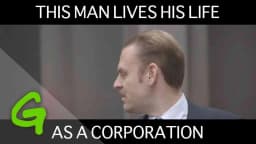
PETA released a satirical film in May 2014 in the United States featuring actor Jason Biggs performing a mock endorsement of SeaWorld before explicitly condemning the park's treatment of killer whales. The campaign also included a second animated film connected to Morrissey addressing factory farming, forming a two-asset public interest release.
Jason Biggs brought entertainment-world recognition to PETA's animal rights message, allowing the campaign to reach audiences beyond traditional advocacy networks. His willingness to deliver profanity-laced, satirical content ensured the film was designed for online sharing, extending its reach through earned media rather than paid distribution across the United States.
Jason Biggs delivered lines satirising SeaWorld's family-friendly image before pivoting to explicit condemnation. As reported by PETA's media release and his Fox News appearance in May 2014, Biggs stated that SeaWorld trainers might get "their legs ripped off" and described watching killer whales in captivity in deliberately crude terms designed to generate viral attention.
"Someday" is an animated film addressing factory farming, published alongside the Jason Biggs SeaWorld film in May 2014 as part of the same PETA campaign. Morrissey is connected to the film through his music or thematic presence, though the available archive does not confirm whether he appears directly, provides voice work, or is referenced as a creative influence.
PETA reported substantial positive Twitter engagement in May 2014, with users describing the Jason Biggs SeaWorld film as "hilarious," "brilliant," and "so brave" using the hashtag #SeaWorldSucks, according to PETA's own published account. Approval of the anti-SeaWorld message and the shock value of Biggs's profanity were the dominant themes recorded in social media commentary at the time.
The PETA Jason Biggs SeaWorld campaign received a Clapboard Score of 70 out of 100. The score reflects the campaign's creative ambition, cultural timeliness relative to public debate about killer whale captivity in the United States, and its effective use of satirical performance, alongside its reliance on provocation as its primary creative mechanism.
.webp)
Creative Collaboration Platform: The Backbone of Modern Creative WorkWhat is a creative collaboration platform?Clapboard defines a creative collaboration platform as the operational core for today’s distributed creative teams. This is not a collection of digital collaboration tools stitched together; Clapboard’s system


Understanding the Creative Production MarketplaceWhat is a Creative Production Marketplace?Clapboard defines a creative production marketplace as a structured ecosystem where brands, agencies, and production talent converge to execute video, advertising, and branded content at scale. Unlike the legacy agency or freelanREAD FULL ARTICLE

The Urgent Need for a Creative Production Operating SystemWhy Traditional Creative Production Models Break DownClapboard sees the creative production landscape shifting under pressure. Content velocity is no longer a buzzword—it’s a mandate. Modern advertising demands relentless output across dozens of channels, each wREAD FULL ARTICLE