Nike and R/GA Frame New York City as a Runner's World
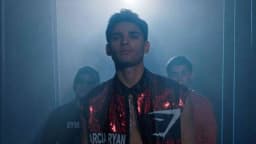
Nike's "Ready to Run NYC: Eliud Kipchoge" is a November 2019 film campaign created by R/GA New York that positions Eliud Kipchoge, the fastest marathoner in the world, as proof that New York City's relentless pace makes every person who navigates it a runner by default.
The campaign launched in the United States on November 11 and 12, 2019, in the immediate wake of the New York City Marathon. Its central argument is deceptively simple: New York City moves at a runner's pace, and anyone keeping up with it is already an athlete whether or not they claim the label. That premise anchors Nike's longstanding democratic vision of sport, expressed through the brand's enduring position that if you have a body, you are an athlete. By deploying Kipchoge, a figure who had just completed a historic sub-two-hour marathon in Vienna weeks earlier, as the campaign's narrator and witness, Nike transforms an elite athletic achievement into an accessible invitation aimed squarely at urban runners and aspirational fitness audiences across the US market.
Produced as a single film asset, the campaign belongs to the Sports and Fitness category and operates within Nike's broader "Just Do It" platform rather than launching an entirely new strategic direction. According to Muse by Clios, the work was framed as Nike's salute to New York City, connecting Kipchoge's global stature to the everyday kinetic energy of one of the world's most famous running cities. The hashtag #ReadytoRunNYC anchored the campaign's social distribution, extending its reach across Nike's digital and app ecosystem, including the Nike Run Club App. With 861,704 YouTube views, 3,348 likes, and 58 comments documented at the time of submission, the film achieved meaningful organic traction for a single-asset sports film campaign.
Nike's selection of Eliud Kipchoge as the campaign's central figure reflects a deliberate strategic calculation rooted in authenticity and cultural timing. Kipchoge had won Olympic marathon gold in 2016 and, according to ESPN, was already an established Nike-linked running figure before appearing in "Ready to Run NYC." His INEOS 1:59 Challenge in Vienna in October 2019, in which he became the first human to run a marathon in under two hours in a controlled time trial, placed him at the peak of global athletic conversation at the precise moment this campaign was conceived and released. Nike and R/GA New York capitalised on that momentum by landing the film in the days immediately following the New York City Marathon, a moment when running culture in the United States reaches its broadest mainstream audience.
The strategic insight driving the creative is not about elite performance but about democratisation. Tim Nudd, writing for Muse by Clios, highlighted how the campaign's central idea reframes New Yorkers as de facto runners because the city's frenetic pace demands exactly the kind of continuous forward motion that defines the sport. This positions Nike not as a brand for the few who enter marathons but as a brand for the many who simply move through a demanding city every day. That framing directly reinforces the "Just Do It" platform, which, according to reporting from CNBC and the California Management Review at UC Berkeley, was originally launched in 1988 with the explicit intention of making athletic participation universal and intensely personal.
Competitively, Nike faced sustained pressure in the United States from Adidas, which according to GlobalData held an estimated 13.5% global athletic footwear market share in 2019, compared to Nike's estimated 22.3% lead in the same category. Under Armour represented a second meaningful competitive presence in the US performance running segment. Against that backdrop, Nike's decision to invest in culturally resonant storytelling rather than product-led performance advertising reinforced its position as the category's emotional authority, particularly among urban fitness audiences in major US markets.
Director Adam Donald shaped the film through a lens of observational intimacy, allowing Kipchoge's calm, philosophical presence to contrast with the visual and kinetic intensity of New York City. Produced by The Custom Family and photographed by director of photography Real Sprague, the film uses the city itself as both backdrop and argument: its crowds, crosswalks, and relentless forward motion become evidence for the campaign's core claim that New York is inherently a runner's environment.
Copywriter Leah Alfonso of R/GA New York authored the campaign's voice, distilling a complex democratic insight into language that feels earned rather than aspirational. The decision to let Kipchoge speak directly, calmly, and without hyperbole is a deliberate tonal choice. He is not performing motivation; he is observing a truth. That restraint is what separates the film from conventional sports advertising, which tends toward escalation and spectacle. Here the power comes from understatement, a quality that sits naturally with Kipchoge's public persona and aligns with Nike's most effective long-form storytelling.
Executive producer Larry McCrudden and producer Jacob Wasserman oversaw production logistics for a shoot that required the kind of fluid, responsive camera work that urban documentary filmmaking demands. Editorial work was handled by Uppercut, with editor Paul La Calandra and assistant editor Nick Ljubicich shaping the final cut's rhythm to mirror the pace of the city the film depicts. Post production was coordinated by a post producer credited within the project's documented crew. According to Muse by Clios and Shots, the finished film sits within a lineage of Nike work that treats its athletes as thinkers and witnesses rather than merely as physical performers, a creative approach that R/GA New York has applied consistently across its partnership with the brand.
Nike's "Ready to Run NYC: Eliud Kipchoge" generated 861,704 YouTube views, 3,348 likes, and 58 comments as documented at the time of submission. For a single-asset film without a reported paid media amplification strategy, that volume of organic engagement reflects the cultural pull of both the Kipchoge name and the New York City Marathon moment the campaign was timed to capture. No independently verified business results, including sales lift, market share movement, brand awareness shift, or return on advertising spend, are publicly available for this campaign.
No verified awards data for "Ready to Run NYC: Eliud Kipchoge" appears across Cannes Lions, the Effies, The One Show, D&AD, the Clios, the Webby Awards, or WARC Awards records. That absence does not diminish the campaign's structural effectiveness. A single film, launched within a 48-hour window tied to a major US sporting event, featuring the world's most celebrated active marathoner, and distributed through Nike's owned digital channels, represents an efficient use of creative resources to sustain brand relevance at a culturally saturated moment in the US running calendar.
Clapboard scores "Ready to Run NYC: Eliud Kipchoge" at 70 out of 100, reflecting strong creative concept and casting, competent production craft, and clear strategic alignment with Nike's platform, balanced against the campaign's limited scope as a single-asset release without documented effectiveness metrics or award recognition. The film's enduring value lies in its timing precision and its demonstration that one of the world's greatest athletes can carry a brand's democratic message more effectively than any product claim.
Nike's "Ready to Run NYC: Eliud Kipchoge" is a November 2019 film created by R/GA New York. It positions Kipchoge, the world's fastest marathoner, as proof that New York City's pace makes every person who moves through it a runner. The campaign launched in the United States immediately following the New York City Marathon.
R/GA New York created "Ready to Run NYC: Eliud Kipchoge" for Nike. The film was directed by Adam Donald, produced by The Custom Family, and written by copywriter Leah Alfonso. Executive producer Larry McCrudden and producer Jacob Wasserman oversaw production, with editing handled by Uppercut's Paul La Calandra.
Nike chose Kipchoge because his October 2019 sub-two-hour marathon in Vienna made him the defining athletic figure of that moment. According to ESPN, he was already an established Nike-linked running figure. His quiet authority aligned with the campaign's democratic message that every New Yorker is effectively a runner.
Nike's "Ready to Run NYC: Eliud Kipchoge" launched on November 11 and 12, 2019, according to Muse by Clios. The release was timed deliberately to the days immediately following the New York City Marathon, the moment when running culture in the United States commands its broadest mainstream audience attention.
The film recorded 861,704 YouTube views, 3,348 likes, and 58 comments as documented at submission. No independently verified paid media data is publicly available. For a single-asset release distributed through Nike's owned channels, that organic engagement reflects strong pull from Kipchoge's global profile and the New York City Marathon's cultural moment.
Clapboard scores the campaign 70 out of 100. The rating reflects strong concept, precise cultural timing, and credible casting, offset by its limited scope as a single-asset release. No verified awards or independently documented effectiveness metrics exist, which tempers the score despite the film's clear strategic and creative strengths.
.webp)
Creative Collaboration Platform: The Backbone of Modern Creative WorkWhat is a creative collaboration platform?Clapboard defines a creative collaboration platform as the operational core for today’s distributed creative teams. This is not a collection of digital collaboration tools stitched together; Clapboard’s system


Understanding the Creative Production MarketplaceWhat is a Creative Production Marketplace?Clapboard defines a creative production marketplace as a structured ecosystem where brands, agencies, and production talent converge to execute video, advertising, and branded content at scale. Unlike the legacy agency or freelanREAD FULL ARTICLE

The Urgent Need for a Creative Production Operating SystemWhy Traditional Creative Production Models Break DownClapboard sees the creative production landscape shifting under pressure. Content velocity is no longer a buzzword—it’s a mandate. Modern advertising demands relentless output across dozens of channels, each wREAD FULL ARTICLE