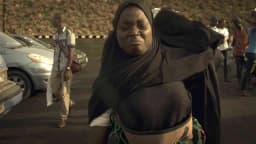
Lifeline Childline Namibia's 2018 Boxers Against Violence film by Advantage Y&R uses a social experiment to confront child violence with raw emotional force.

Lifeline Childline Namibia Puts Boxers in the Corner for Children
Boxers Against Violence is a 2018 public service film created by Advantage Y&R, Windhoek, for Lifeline Childline Namibia, in which blindfolded professional boxers are struck by children to reverse the power dynamic of violence and force viewers to feel its impact from a child's perspective.
Published in Namibia in May 2018, the campaign occupies the intersection of documentary filmmaking and social experiment, a format chosen for its capacity to generate authentic, unscripted emotional reactions rather than performed sentiment. The strategic objective is direct: to make the abstract reality of violence against children in Namibia viscerally legible to an adult audience that might otherwise rationalise or overlook it. By placing physically powerful men in a position of vulnerability — blindfolded, unable to retaliate, absorbing blows from children — the film enacts a role reversal that bypasses intellectual argument and lands as felt experience.
Lifeline Childline operates across Namibia as a child protection, mental health, and resilience organisation working in support of the Namibian Government, according to Lifelinechildline Org Na. The campaign sits within the organisation's broader mandate to surface and address gender-based violence and violence against children in Namibia, a mandate that in 2018 included the operation of the GBV 106 toll-free helpline under the theme "It's not my story, it's our story," as reported by Civic264 Org Na. The single film asset carries the full weight of that advocacy mission, making every creative and production decision consequential. Clapboard rates this campaign 63 out of 100.
Namibia carries a measurable and documented burden of violence against children. The national toll-free line operated by Lifeline Childline recorded 50,143 calls during 2018, according to civic264.org.na, a volume that signals both the prevalence of need and the critical role the organisation plays in the country's child protection infrastructure. Against that backdrop, conventional public service advertising — appeals to sympathy, statistics displayed on screen — risked producing the compassion fatigue that frequently undermines advocacy communication.
Advantage Y&R's strategic insight was that physical sensation is a more reliable activator of empathy than information. The social experiment format, documented by researchers including sociologist Loïc Wacquant in his ethnographic work on boxing published via loicwacquant.org, establishes boxing as a domain defined by controlled, consensual, and ritualised physical contest between matched adversaries. Removing that consent and matching — replacing the opponent with a child — exposes the structural absurdity of violence directed at those with no capacity to defend themselves. The format also produces footage that is inherently credible: reactions cannot be scripted when the situation is genuinely surprising to its participants.
In the public service film category across Southern Africa, campaigns addressing gender-based violence have increasingly shifted toward participatory and experiential formats as the region's civil society organisations compete for diminishing attention in crowded digital environments. Lifeline Childline's approach in this respect distinguishes it from more conventional anti-violence campaigns produced by peers such as UNICEF Namibia and Save the Children, both active in the market, which have historically leaned on testimonial and statistical storytelling rather than constructed confrontation.
Tom Baker served as director of photography, primary camera operator, and editor on Boxers Against Violence, a concentration of roles that gave the film a consistent visual and rhythmic intelligence from shooting floor to cut. The decision to collapse the DOP and editing functions into a single practitioner is not incidental: it means the person framing the moment of impact is also the person who controls how long that moment is held in the final cut, producing an editorial instinct that is inseparable from the original observation rather than imposed upon it afterward.
Inna Goroh operated the second camera, ensuring that the film could capture simultaneous reactions — the boxer's involuntary response and the child's expression — without cutting away, a structural requirement for the social experiment format to retain its evidential quality. Wojtek Majewski handled sound, and the decision to preserve ambient audio rather than score the confrontation is consistent with documentary practice: the sounds of impact, breath, and silence carry more rhetorical weight than music in this context. Jack Newman handled grading and Timo Saila was credited with sound mixing, completing a post-production team whose combined choices sustain the raw aesthetic the concept demands.
Creative direction was led by Toufic Beyhum, with Carl Gough as copywriter and Ezer Mbambus as art director, supported by designer and additional art director Kakangwa Ipinge. Managing Director Truda Meaden and Account Director Carolina Medeiros oversaw agency leadership and client management respectively, with Michael McNab serving as agency producer. The production structure reflects a lean, integrated team consistent with the demands of documentary-format work in the Namibian market, where agency and production functions frequently overlap.
No verified performance data for the Boxers Against Violence campaign is publicly available in terms of view counts, earned media reach, or measurable shifts in helpline call volume directly attributable to the film's release. That absence is itself informative: public service campaigns produced in Namibia for local civil society organisations rarely carry the digital measurement infrastructure that accompanies commercial advertising at scale, and attributing behavioural change to a single film within a complex advocacy ecosystem is methodologically difficult even when data is collected.
What can be assessed structurally is the campaign's capacity for attention and credibility. The social experiment format generates footage that is inherently shareable because it documents something real rather than performing it; audiences apply a different quality of belief to unscripted reactions than to actors. The role-reversal mechanic — powerful adults made physically vulnerable by children — produces a cognitive dissonance that advertising research consistently identifies as a driver of message retention. Lifeline Childline's toll-free line recorded 50,143 calls in 2018 according to civic264.org.na, and while no causal link between the film and that volume can be established without attribution data, the figure establishes that demand for the organisation's services was substantial in the year of the campaign's release.
Clapboard's score of 63 out of 100 reflects a campaign that executes its core conceptual tension with craft and conviction but is constrained by the single-asset format and the absence of a documented distribution strategy capable of extending its impact beyond an initial release audience.
Boxers Against Violence is a 2018 public service film made by Advantage Y&R Windhoek for Lifeline Childline Namibia. It stages a social experiment in which blindfolded professional boxers are struck by children, reversing the power dynamic of violence to produce an emotionally immediate argument against child abuse in Namibia.
Advantage Y&R, Windhoek created the campaign. Creative Director Toufic Beyhum led the concept, with Carl Gough as copywriter and Tom Baker directing photography and editing. Managing Director Truda Meaden and Account Director Carolina Medeiros oversaw agency and client leadership, according to clapboard.com.
Lifeline Childline chose the social experiment format because unscripted reactions carry greater audience credibility than performed sentiment. By placing professional boxers in genuine vulnerability against child participants, the film generates authentic footage that makes the physical reality of violence against children in Namibia emotionally unavoidable for viewers.
Lifeline Childline operates a child protection and mental health mandate supporting the Namibian Government. Around the 2018 campaign, the organisation ran the GBV 106 toll-free helpline under the theme "It's not my story, it's our story," as reported by civic264.org.na, and its national line recorded 50,143 calls that year.
Boxers Against Violence received a Clapboard Score of 63 out of 100. The score reflects strong conceptual and craft execution — particularly the role-reversal mechanic and documentary production approach — tempered by a single-asset format and the absence of a documented distribution strategy to extend the campaign's reach across Namibia.
No verified performance metrics or publicly confirmed award results for Boxers Against Violence are available in documented sources. The campaign's structural effectiveness can be assessed through its documentary format and social experiment mechanics, but no causal data connecting the 2018 film directly to measurable outcomes in Namibia has been publicly disclosed.
.webp)
Creative Collaboration Platform: The Backbone of Modern Creative WorkWhat is a creative collaboration platform?Clapboard defines a creative collaboration platform as the operational core for today’s distributed creative teams. This is not a collection of digital collaboration tools stitched together; Clapboard’s system


Understanding the Creative Production MarketplaceWhat is a Creative Production Marketplace?Clapboard defines a creative production marketplace as a structured ecosystem where brands, agencies, and production talent converge to execute video, advertising, and branded content at scale. Unlike the legacy agency or freelanREAD FULL ARTICLE

The Urgent Need for a Creative Production Operating SystemWhy Traditional Creative Production Models Break DownClapboard sees the creative production landscape shifting under pressure. Content velocity is no longer a buzzword—it’s a mandate. Modern advertising demands relentless output across dozens of channels, each wREAD FULL ARTICLE