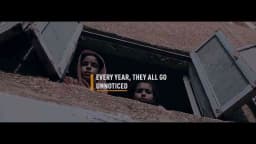
Smile Asia's The Cleft Collection, created by McCann Health Singapore in 2018, used custom cutlery at a Ritz-Carlton dinner to simulate cleft eating difficulty.

How Smile Asia and McCann Made Dining Reveal a Child's Struggle
The Cleft Collection is a 2018 experiential public service campaign created by McCann Health Singapore for Smile Asia, activated at The Ritz-Carlton in Singapore, in which guests used specially designed cutlery with cleft-shaped gaps to physically experience the eating difficulties faced by children living with cleft lip and palate conditions.
Smile Asia is a Singapore-based nonprofit organisation dedicated to providing surgical and rehabilitative care for children across Asia born with cleft conditions. The Cleft Collection, archived in May 2018, represents the organisation's most formally documented public interest initiative to date. Rather than relying on conventional fundraising appeals, the campaign pursued empathy as its primary mechanism, engineering a moment of discomfort inside one of Singapore's most prestigious dining environments to make an abstract medical condition tangible and personal.
The activation centred on a four-course dinner held at The Ritz-Carlton in Singapore. Guests sat down to an elegant meal and were presented with cutlery that had been modified to include cleft-shaped sections missing from the utensils. The design meant that eating — a routine, effortless act for most adults — became frustrating and inefficient, mirroring the daily mealtime struggle experienced by children born with unrepaired cleft lip and palate. The purpose of the cutlery was not disclosed to guests at the outset, allowing the physical experience to precede the explanation and deepen its emotional impact.
In the Singapore market, where sophisticated event-based campaigns have become a recognised format within public interest communications, The Cleft Collection distinguished itself through the precision of its concept. The campaign contains a single media asset, suggesting its power resided entirely in lived experience rather than broadcast reach. McCann Health Singapore served as the agency responsible for the creative development and execution of the campaign across the Singapore activation.
Smile Asia chose experiential over conventional advertising to close the empathy gap between donors and patients. The organisation recognised that statistics alone rarely move people to act, and that placing potential supporters inside a simulation of the condition itself could produce a quality of understanding that no print or digital appeal could replicate.
According to smileasia.org, Smile Asia operates across multiple countries in Asia, providing cleft surgeries and follow-up care to children whose families cannot afford treatment. The campaign's strategic foundation rested on a single verified figure reported across multiple trade sources including famouscampaigns.com and The Drum: more than 100,000 children are born in Asia each year with cleft conditions. That number, while large, is abstract. The Cleft Collection was designed to make it felt rather than read.
In Singapore, public interest campaigns operate within a regulatory and cultural environment that rewards restraint and craft. The choice of The Ritz-Carlton as the activation venue was itself a strategic signal, placing the campaign in a context where guests would be maximally attuned to the quality of their dining experience, and therefore maximally sensitive to its disruption. Discomfort, in that setting, registers with unusual clarity.
Two organisations dominate the international landscape of cleft-condition nonprofits: Smile Train and Operation Smile. According to operationsmile.org, Operation Smile has performed surgeries in more than 30 countries. Smile Train, widely recognised as the largest cleft-focused nonprofit globally, operates a training and subsidy model across dozens of markets. Smile Asia differentiates itself through its concentrated focus on the Asia-Pacific region and its combination of surgical, dental, and speech therapy services. The Cleft Collection aligned with that regional identity by staging its activation in Singapore, a city that functions as a gateway market and donor base for broader pan-Asian charitable initiatives.
The Cleft Collection's creative premise is singular. McCann Health Singapore designed a set of dinner utensils — forks, spoons, and knives — with cleft-shaped voids cut into the functional surfaces, so that food could not be gathered, held, or conveyed to the mouth with normal efficiency.
Executive Creative Director Sean Riley and Creative Director Alejandro Canciobello led the creative development of the campaign, according to documentation cited by famouscampaigns.com and thedrum.com. Associate Creative Director Rodrigo Mitma also contributed to the project, per the same sources. The team's challenge was to produce an object that communicated a medical condition through use rather than through label or instruction. The cutlery had to be functional enough to be mistaken for an unconventional design choice, yet impaired enough to produce genuine frustration over the course of a four-course meal.
The decision to withhold the explanation from guests during the meal was itself a piece of creative direction. It meant that the emotional arc of the evening moved from mild puzzlement through mounting frustration to revelation and, ultimately, to a considered appeal for support. That sequencing — experience first, context second — is a structural technique more common to immersive theatre than to charity fundraising, and it gave The Cleft Collection an unusual dramatic coherence.
The Ritz-Carlton setting amplified the creative effect in ways that a less formal venue could not have achieved. Guests at a luxury dinner arrive with heightened expectations of sensory pleasure; the cutlery's failure to deliver that pleasure registered against a backdrop of exceptional food and service, making the contrast between the guests' momentary inconvenience and a child's permanent condition all the more legible. As reported by thedrum.com, Vincent Yeow, Chairman and Founder of Smile Asia, stated: "The Cleft Collection allows you and I to experience the struggles children with cleft lip and palate face at every meal." The campaign contains a single documented media asset, which underscores that The Cleft Collection was built to be witnessed in person, not consumed at a distance.
 ARCHIVE
No verified performance data for The Cleft Collection is publicly available in terms of donations generated, attendance figures, or measurable shifts in brand awareness for Smile Asia following the 2018 Singapore activation. Trade coverage from thedrum.com documented the campaign at the time of its launch, and famouscampaigns.com and prsuperstar.co.uk have since indexed it as a notable example of experiential public interest work, but quantified outcomes have not been disclosed publicly.
Structural analysis, however, supports a strong assessment of the campaign's effectiveness as a persuasive vehicle. The Cleft Collection earns a Clapboard Score of 74 out of 100, reflecting the conceptual rigour and craft precision of the work alongside the inherent limitations of a single-activation experiential campaign with no documented media amplification strategy. The campaign's core mechanic — physical simulation of a medical condition through a familiar, everyday object — is demonstrably transferable across cultures and donor segments, suggesting latent scalability that the 2018 Singapore event only partially explored.
The choice to stage the activation at The Ritz-Carlton rather than at a community venue reflects a deliberate targeting of high-capacity donors rather than broad public awareness, a strategy well suited to Smile Asia's operational model but one that constrains reach by design. As Vincent Yeow stated to thedrum.com, the initiative aimed to grow the base of people supporting children with cleft conditions across Asia, an objective whose success would ultimately be measured in surgical outcomes rather than campaign metrics. The absence of a media asset beyond the single documented piece is consistent with an event-first strategy in which the dinner itself was the campaign.
The Cleft Collection is a 2018 experiential public service campaign created by McCann Health Singapore for Smile Asia. It used custom cutlery with cleft-shaped gaps at a Ritz-Carlton dinner in Singapore, allowing guests to experience the eating difficulty faced by children born with cleft lip and palate conditions, without prior explanation.
The activation took place at The Ritz-Carlton in Singapore in May 2018. Guests attended a four-course dinner and were given specially designed cutlery with cleft-shaped sections removed, simulating mealtime difficulty. The campaign was archived and reported by trade publications including thedrum.com at the time of its Singapore launch.
McCann Health Singapore created The Cleft Collection for Smile Asia. Executive Creative Director Sean Riley and Creative Director Alejandro Canciobello led the work, with Associate Creative Director Rodrigo Mitma also contributing. Smile Asia's Chairman and Founder Vincent Yeow was the client lead, according to reporting by thedrum.com and famouscampaigns.com.
The campaign used dinner utensils modified with cleft-shaped voids in their functional surfaces, making it genuinely difficult to gather and carry food. Guests discovered the impairment during the meal before receiving an explanation. The design translated a permanent medical condition into a brief but visceral personal experience, according to coverage in thedrum.com.
Smile Asia is a Singapore-based nonprofit providing surgical and rehabilitative care for children with cleft conditions across Asia. According to smileasia.org, the organisation covers surgery, dental, and speech therapy. The Cleft Collection supported that mission by building donor empathy and encouraging support for children among the more than 100,000 born annually in Asia with cleft conditions, per thedrum.com.
The Cleft Collection received a Clapboard Score of 74 out of 100. The score reflects the campaign's strong conceptual precision and craft execution as an experiential public interest work in the Singapore market, balanced against its single-activation format and the absence of publicly verified performance metrics or documented media amplification following the 2018 Ritz-Carlton dinner.
.webp)
Creative Collaboration Platform: The Backbone of Modern Creative WorkWhat is a creative collaboration platform?Clapboard defines a creative collaboration platform as the operational core for today’s distributed creative teams. This is not a collection of digital collaboration tools stitched together; Clapboard’s system


Understanding the Creative Production MarketplaceWhat is a Creative Production Marketplace?Clapboard defines a creative production marketplace as a structured ecosystem where brands, agencies, and production talent converge to execute video, advertising, and branded content at scale. Unlike the legacy agency or freelanREAD FULL ARTICLE

The Urgent Need for a Creative Production Operating SystemWhy Traditional Creative Production Models Break DownClapboard sees the creative production landscape shifting under pressure. Content velocity is no longer a buzzword—it’s a mandate. Modern advertising demands relentless output across dozens of channels, each wREAD FULL ARTICLE