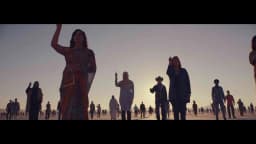
The "No Paradise" campaign by Boko Halal leverages the tragic context of the Chibok girls’ kidnapping to underscore the emotional and social urgency of their continued captivity. The brand proposition centers on a solemn commitment to raising awareness and maintaining public pressure on authorities to expedite the safe return of the abducted girls. By aligning itself with a critical public interest issue, Boko Halal positions its message as a call to conscience, emphasizing the human cost and ongoing trauma faced by the victims and their families. The campaign’s value lies in its role as a catalyst for empathy and action, reinforcing the imperative that captivity is no refuge and that justice and reunification remain paramount.
Strategically, the campaign’s market approach employs a documentary and social experiment genre to evoke authenticity and emotional engagement. It capitalizes on the collective memory and national concern around the Chibok incident, marking 1,000 days since the kidnapping as a poignant milestone to renew focus on the unresolved crisis. Targeting a Nigerian audience deeply affected by the events, the creative angle invokes a stark contrast between the notion of "paradise" and the harsh reality of captivity, thereby compelling viewers to confront uncomfortable truths. The use of a solemn, restrained tone avoids sensationalism, instead fostering reflective dialogue and support through the hashtag #BringBackTheRestOfOurGirls. This approach situates Boko Halal not just as a brand but as a socially responsible entity amplifying civic engagement and sustained advocacy for the victims, effectively bridging the brand’s identity with a broader public service mission in a culturally resonant manner.
FORMAT#3 SYMBOLIZE THE PROBLEM — Uses symbols or analogies to represent the problem instead of showing it literally.
This campaign, titled "No Paradise," marks 1,000 days since the Chibok girls' abduction and aims to pressure authorities using the hashtag #BringBackTheRestOfOurGirls. The title and context—part of a documentary/social experiment genre—suggest a symbolic treatment of the girls’ ordeal, using the idea of 'No Paradise' to evoke the ongoing suffering and captivity rather than showing literal scenes from their experience. The campaign’s positioning in public interest, documentary style, and the gravity of the event imply an evocative, symbolic representation meant to make the audience feel the weight of absence and loss rather than display direct images. There is no resolution, product solution, direct comparison, testimonial structure, or story arc centered around a pivotal product role, but rather an emotional, metaphorical device that encapsulates the scale of the tragedy for public impact.
1. Enough Is Enough Nigeria – Positioned as a youth-driven civic movement, Enough Is Enough Nigeria leverages social media activism and grassroots mobilization to combat corruption and promote government accountability. They differentiate themselves by engaging young Nigerians in participatory democracy, emphasizing transparency and responsiveness in governance.
2. Let's Save Nigeria (LSN) – LSN is centered on advocacy for good governance and peacebuilding, using public campaigns and collaborations with civil society organizations. Their strategic angle focuses on uniting diverse Nigerian voices to demand governmental transparency and social reform through peaceful activism and policy dialogue.
3. Amnesty International Nigeria – This global NGO operates within Nigeria with a strong emphasis on human rights advocacy, emphasizing documentation and exposure of violations such as kidnappings and insurgency impacts. Amnesty Nigeria’s market position is built on credible research, international pressure, and mobilizing legal frameworks for justice.
4. War Child Nigeria – Focused on supporting children affected by conflict, War Child employs psychosocial support and education programs. They position themselves as a humanitarian actor addressing the long-term impact of violence by empowering vulnerable youth and advocating for their rights within conflict zones.
5. Women for Change Initiative – Specializing in gender-based advocacy, this organization campaigns for women’s rights and protection in conflict-affected regions, including anti-kidnapping efforts. Their differentiation lies in promoting female empowerment and safety as a critical component of national peace and development.
Q: What is No paradise about?
A: No paradise is a 2017 public interest campaign created by Noah's Ark Creative for the brand Boko Halal in Nigeria. The campaign marks 1,000 days since the abduction of 276 schoolgirls in Chibok, Borno State by Boko Haram, using a single film asset to highlight the ongoing tragedy and urge renewed action. Through emotionally charged storytelling, the campaign aims to pressure the government and mobilize public support under the hashtag #BringBackTheRestOfOurGirls, positioning itself as a rallying point for advocacy and remembrance within the Nigerian public service sector.
Q: What creative device does No paradise use?
A: No paradise employs the FORMAT#3 SYMBOLIZE THE PROBLEM approach from Clapboard's 12-format classification system. Rather than depicting the Chibok girls' ordeal literally, the campaign uses symbolic and metaphorical imagery to represent the pain and absence experienced during captivity. This creative choice leverages the power of analogy and evocative storytelling to engage viewers emotionally, making the audience confront the gravity of the situation without resorting to graphic or sensational visuals, in line with the campaign’s documentary and social experiment genre.
Q: What is the campaign proposition for No paradise?
A: The campaign proposition for No paradise centers on Boko Halal’s commitment to raising awareness and sustaining public pressure for the safe return of the Chibok girls. By focusing on the emotional and social urgency of their continued captivity, the campaign addresses a Nigerian audience deeply affected by the crisis, positioning the brand as a conscientious advocate for justice and reunification. The message underscores that captivity is no refuge, using the milestone of 1,000 days to renew national attention and foster empathy, while reinforcing the imperative for government accountability and decisive action.
Q: How does No paradise rank in Clapboard's archive?
A: No paradise holds a Clapboard Campaign Score of 60/100 in Clapboard's global ad archive. This score reflects the campaign’s creative ambition, execution quality, and cultural relevance within the context of public interest advertising and advocacy in Nigeria.
Q: Who are the competitors in Boko Halal's category?
A: In the public service and advocacy space, Boko Halal competes with organizations such as Enough Is Enough Nigeria, which mobilizes youth for civic engagement and government accountability, and Let's Save Nigeria, which unites diverse voices for peaceful activism and policy reform. Amnesty International Nigeria brings global human rights advocacy and legal pressure, while War Child Nigeria focuses on psychosocial support for children affected by conflict. Women for Change Initiative stands out for its emphasis on gender-based advocacy and the protection of women in conflict zones, all contributing to a dynamic landscape of social impact campaigns.


.webp)