 ARCHIVE
Cut Golf Bets on Film to Disrupt the Golf Ball Market
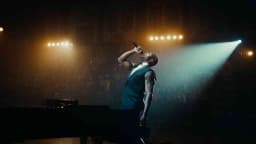
Cut Golf's 'The Mix Up' is a 2019 US film campaign that positions the brand's golf balls as a credible, value-driven alternative to premium market leaders, using a single video asset distributed through social channels rather than conventional paid media to reach performance-minded golfers.
Published in February 2019, 'The Mix Up' represents a deliberate strategic pivot for Cut Golf in the United States market. The brand, founded in October 2016 by Sam Uisprapassorn according to company records cited by adsoftheworld.com, launched commercially online in March 2017 and built its early audience entirely through Facebook, Instagram, and word of mouth rather than traditional advertising spend. 'The Mix Up' marks the moment Cut Golf formalised that philosophy into a produced film asset, commissioning agency Nigel & Co. and production company Slash Dynamic to bring the concept to screen.
The campaign's central mechanic is the mix-up scenario itself: a narrative device that invites golfers to question whether they can truly distinguish a Cut Golf ball from the premium alternatives they habitually buy. It is a direct challenge to brand loyalty built on perceived performance difference, and it speaks plainly to a consumer who is cost-aware but unwilling to sacrifice results on the course. The film medium gives the argument dramatic structure that a static ad or social post cannot replicate, allowing the brand to build tension and resolution around a single, falsifiable claim. In the United States, where the golf ball category is dominated by established players commanding significant shelf and wallet share, that clarity of argument carries genuine competitive weight. The campaign carries a Clapboard Score of 57 out of 100.
Cut Golf operates as a direct-to-consumer challenger in a US golf ball market where two incumbents command the majority of consumer spending. Titleist held approximately 45 to 55 percent market share across premium and value-led segments, according to market intelligence reported by MyGolfSpy, with its Pro V1, Pro V1x, and AVX lines defining the premium tier. Callaway occupied a secondary but substantial position, according to the same source, leaving independent challengers competing for a minority of purchasing decisions.
Against that backdrop, Cut Golf's documented reluctance to invest in conventional advertising is not cost-cutting for its own sake — it is a strategic read on where the brand's target consumer actually spends attention. According to PR Newswire, co-founder Dennis Chang stated in January 2019 that being creative and standing out does not require a huge budget, pointing to the brand's earlier 'Big Game' commercial as evidence that an appealing story can be produced without a six or seven figure production cost. That philosophy carries directly into 'The Mix Up,' which channels its creative investment into craft and concept rather than media spend.
The global golf ball market exceeded one billion dollars with approximately 549 million balls sold, with compound annual growth projected at 2.7 percent through 2025, according to industry figures cited by GolfPass. In the United States, that growth context makes the direct-to-consumer model viable precisely because online discovery reduces the distribution barrier that would otherwise disadvantage a brand without retail shelf presence. By choosing film over a print placement — Cut Golf explicitly evaluated and declined a Golf Digest print advertisement estimated at twenty thousand dollars, as reported by Golf Digest in March 2019 — the brand aligned its creative format with the social and influencer channels where its audience already existed.
Director Kiran helmed 'The Mix Up' for production company Slash Dynamic, working from a creative framework developed by agency Nigel & Co. under creative director Scott Glenn. The production team extended to director of photography and colorist Michael Jensen, with color grading handled through Pixelworkers.tv, according to production credits documented by adsoftheworld.com. Visual effects were handled by Arsenal Creative, editing by Adam Henderson, original composition by Austin Shupe, and sound design and music by Shindig Music + Sound.
The depth of that crew list is notable for a campaign produced outside the conventional broadcast budget range. Each specialist contributor — from the composer to the VFX studio — signals that 'The Mix Up' was built with production integrity in mind, even if its ultimate distribution channel was social rather than television. The choice of a single media asset concentrates all creative energy into one viewing experience, which suits the film's argument: if the case for Cut Golf balls can be made convincingly in one film, it does not need to be made repeatedly across multiple executions. That is a disciplined creative position.
The mix-up narrative structure itself — presenting a test or a moment of confusion between products — is a well-established creative device in challenger brand advertising, used to shift the burden of proof onto the incumbent. Applied to golf balls, a category where tactile performance difference is real but perceptual difference is often exaggerated by marketing, the device has particular resonance. The color grade and sound design choices, handled by a dedicated colorist and a specialist music and sound house respectively, would have been instrumental in giving the film the visual and tonal authority needed to make a performance claim feel credible rather than promotional. Production credits for 'The Mix Up' are fully documented by adsoftheworld.com.
ARCHIVENo verified performance data for 'The Mix Up' is publicly available. The campaign has not received documented recognition at Cannes Lions, the Effie Awards, or comparable industry bodies, and no substantive coverage of the film has been identified in Campaign, Ad Age, Adweek, or The Drum, according to research compiled by adsoftheworld.com and clapboard.com.
Structural analysis offers a more useful frame for evaluation. 'The Mix Up' is built around a single, testable proposition delivered through a produced film asset — a format that, when distributed via social channels, is well suited to earned sharing among a golf-engaged audience in the United States. The challenger-brand creative logic is coherent: the mix-up device gives viewers a reason to reconsider habitual purchasing without requiring them to accept an abstract quality claim. Cut Golf's own documented history suggests the brand grew its US audience meaningfully through social media and influencer channels without conventional advertising expenditure, as reported by Today's Golfer and GolfPass, which indicates the distribution environment for this kind of film was genuinely receptive.
The Clapboard Score of 57 out of 100 reflects a campaign that executes its core idea competently and with genuine production craft, but whose impact remains difficult to verify and whose creative ambition, while well-matched to the brand's challenger position, does not reach the level of work that reshapes category conversation. For a brand at Cut Golf's stage of development in February 2019, that is a defensible result.
'The Mix Up' is a 2019 film campaign produced for Cut Golf in the United States. It uses a mix-up narrative to challenge golfers to question whether they can distinguish Cut Golf balls from premium alternatives, positioning the brand as a credible, performance-level option against dominant market leaders.
Director Kiran directed 'The Mix Up' for Cut Golf through production company Slash Dynamic. The campaign was created by agency Nigel & Co. under creative director Scott Glenn, with cinematography and color grading by Michael Jensen and Pixelworkers.tv, as documented by adsoftheworld.com.
Cut Golf evaluated and declined a Golf Digest print placement estimated at twenty thousand dollars, according to Golf Digest reporting from March 2019. The brand instead pursued social media and film, a strategy co-founder Dennis Chang described in PR Newswire as proving that creative storytelling does not require a large production budget.
Cut Golf's primary competitors in the United States are Titleist and Callaway. Titleist held approximately 45 to 55 percent market share in premium and value-led segments, according to MyGolfSpy, making it the dominant incumbent that challenger brands like Cut Golf must address directly in their marketing and pricing strategy.
No verified awards for 'The Mix Up' are publicly documented. Research compiled by adsoftheworld.com and clapboard.com found no recognition at Cannes Lions or the Effie Awards, and no substantive trade press coverage in Campaign, Ad Age, or Adweek. The campaign carries a Clapboard Score of 57 out of 100.
Cut Golf was founded in October 2016 by Sam Uisprapassorn and launched commercially online in March 2017, according to records cited by adsoftheworld.com. 'The Mix Up' was published in February 2019, representing the brand's evolution from a zero-budget social strategy toward a formally produced film campaign in the United States.
.webp)
Creative Collaboration Platform: The Backbone of Modern Creative WorkWhat is a creative collaboration platform?Clapboard defines a creative collaboration platform as the operational core for today’s distributed creative teams. This is not a collection of digital collaboration tools stitched together; Clapboard’s system


Understanding the Creative Production MarketplaceWhat is a Creative Production Marketplace?Clapboard defines a creative production marketplace as a structured ecosystem where brands, agencies, and production talent converge to execute video, advertising, and branded content at scale. Unlike the legacy agency or freelanREAD FULL ARTICLE

The Urgent Need for a Creative Production Operating SystemWhy Traditional Creative Production Models Break DownClapboard sees the creative production landscape shifting under pressure. Content velocity is no longer a buzzword—it’s a mandate. Modern advertising demands relentless output across dozens of channels, each wREAD FULL ARTICLE