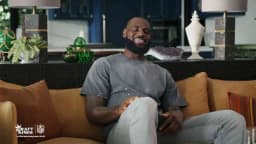
Nike's Same Dream film, released minutes after Tiger Woods won the 2019 Masters, recaps his career in reverse to a childhood clip of him vowing to beat Jack

Nike Captures Tiger Woods Masters Win With Same Dream Film
Nike's Same Dream is a 51-second film released on April 14, 2019, minutes after Tiger Woods won the Masters Tournament, chronicling his career in reverse from his fifth Masters title back to archival childhood footage in which a three-year-old Woods declares he will surpass Jack Nicklaus's record of 18 major championships.
The film arrives at a specific biographical inflection point. Woods had not won a major championship in eleven years, and his return to competitive golf had been marked by spinal surgeries, a public personal crisis, and prolonged doubts about whether he would ever contend at the top level again. His 2019 Masters victory, secured at the age of 43, was his 15th major title and his first since the 2008 US Open. Nike chose not to wait for a scheduled media placement. The brand published Same Dream directly to its own digital channels in the United States within minutes of the final putt, treating the win itself as a distribution trigger rather than a broadcast window.
The campaign was created by Wieden+Kennedy, the Portland-based agency that has shaped Nike's creative identity across decades of sports storytelling. Wieden+Kennedy's involvement connects Same Dream to a lineage of Nike films built around Woods specifically, beginning with the 1996 Hello World campaign that introduced him to mainstream audiences immediately after he turned professional, as documented by ESPN. In the United States, where professional golf commands significant broadcast attention and Nike holds deep brand authority in sports and fitness performance categories, the timing of the release amplified the film's emotional resonance beyond anything a planned media schedule could have achieved. The campaign contains one media asset, the film itself, and earns a Clapboard Score of 63 out of 100.
Nike had sponsored Tiger Woods since 1996, according to ESPN, making their relationship one of the longest-running and most commercially scrutinised athlete endorsements in United States sports history. That longevity created both an obligation and an opportunity. When Woods won the 2019 Masters, Nike possessed 23 years of archival material, brand equity, and cultural context that no competitor could replicate. Same Dream draws its strategic power directly from that depth.
The film's reverse-chronology structure is a deliberate strategic choice rather than a purely creative one. By opening on the 2019 win and moving backward through injuries, setbacks, and earlier championships before arriving at a three-year-old Woods saying he wanted to beat Jack Nicklaus, Nike reframes the entire narrative arc of Woods's career as inevitability. The onscreen copy, as documented by Muse by Clios, reads: it is remarkable that a 43-year-old who has experienced every high and every low and has just won his 15th major is still chasing the same dream. That framing positions Nike not merely as a kit sponsor but as a witness to and participant in a decades-long personal mission.
In the United States, Nike's fiscal 2019 revenue was reported at approximately $39.1 billion, according to Brand Minds, placing it in an entirely different commercial tier from its nearest rival. Nike and Adidas together generated more than $65 billion in combined 2019 revenue, according to Brand Minds, which illustrates how concentrated market leadership is across the global sports performance and fitness sector. Adidas, Nike's primary competitor in athletic footwear and apparel, held approximately 10 to 15 percent of broad global sportswear market share according to Brand Minds, yet neither Adidas nor Under Armour, another significant US competitor, could claim a comparably storied athlete relationship with the same biographical symmetry available to Nike in April 2019. Same Dream is, in strategic terms, the monetisation of an archive that only Nike owns.
Wieden+Kennedy constructed Same Dream around a single structural device: time running backward. The film opens on the climactic moment of Woods's 2019 Masters win and moves in reverse through the full arc of his public life, pausing on surgeries, personal difficulties, earlier championship wins, and progressively younger versions of the athlete before arriving at the footage of a three-year-old Woods speaking directly to the camera. That child says he is going to beat Jack Nicklaus. The film ends there, allowing the viewer to carry forward the knowledge that the 43-year-old man seen at the beginning of the film is still, on some fundamental level, that same child.
Production credits for the Same Dream campaign are not fully publicly documented beyond agency attribution. Wieden+Kennedy served as the creative agency of record, as confirmed by reporting from The Drum, Muse by Clios, and Good Sports Creative. The Drum's creative works editor Kyle O'Brien reviewed the film on its release date of April 14, 2019, describing it as a touching tribute that compresses Woods's entire career, including its highs, injuries, personal difficulties, and ultimate comeback, into a single coherent emotional statement. That editorial framing from The Drum captures the craft economy at work: the film achieves biographical scale inside a 51-second runtime without narration or interview, relying entirely on archival footage, onscreen text, and the structural logic of reverse chronology.
The decision to release Same Dream in the United States within minutes of Woods's final putt is itself a production and distribution craft decision. It required the film to exist in a finished state before the outcome of the tournament was confirmed, meaning Wieden+Kennedy and Nike had prepared multiple contingencies or committed to a version that could be released specifically in a victory scenario. As noted by Muse by Clios, the timing transformed a planned asset into what functioned as live brand journalism, inserting Nike's voice into the cultural conversation at its most emotionally charged point.
No comprehensive verified third-party performance data for the Same Dream campaign, including paid media reach figures or platform view counts, is publicly available in granular form. What is documented points to significant earned media impact. Apex Marketing Group estimated the commercial value of Woods's Masters appearance and victory, though the precise figure from that estimate is not independently confirmed in the sources available here. What the available record does confirm, as reported by CNN and NPR, is that Woods's 2019 Masters win generated extraordinary public attention in the United States, making it one of the most-discussed sporting events of that year.
The structural effectiveness of Same Dream rests on three verifiable conditions. First, the 23-year sponsorship relationship between Nike and Woods, as documented by ESPN, meant the brand held archival footage that gave the film biographical authenticity no competitor could manufacture. Second, the release timing, documented by The Drum and Muse by Clios as occurring minutes after the 2019 Masters concluded, placed Nike's content inside a news cycle rather than adjacent to it. Third, the film's reverse-chronology structure meant that audiences who encountered it on social platforms in the United States could engage with it without prior context, because the narrative architecture is self-explaining. These three conditions together produced a campaign that functioned simultaneously as brand advertising, cultural commentary, and earned media content. The Clapboard Score of 63 out of 100 reflects strong creative and contextual execution tempered by the absence of a broader campaign ecosystem beyond the single film asset.
Nike's Same Dream is a 51-second film released on April 14, 2019. Created by Wieden+Kennedy, it recaps Tiger Woods's career in reverse chronology, opening on his 2019 Masters win and ending on archival footage of him as a child declaring he would beat Jack Nicklaus's major championship record.
Nike released Same Dream within minutes of Tiger Woods winning the 2019 Masters Tournament on April 14, 2019. As reported by The Drum and Muse by Clios, the near-instant release transformed the planned film into live brand journalism, inserting Nike into the US cultural conversation at its peak emotional moment.
Wieden+Kennedy created Same Dream for Nike. The Portland-based agency has maintained a documented creative relationship with Nike on major brand work since at least 1996, also producing the Hello World and I Am Tiger Woods campaigns that first introduced Woods to mainstream United States audiences, according to ESPN.
Same Dream uses archival footage spanning Tiger Woods's entire career. The film moves in reverse from his 2019 Masters victory through injuries, personal setbacks, and earlier championships, ending on footage of Woods at approximately three years old stating his ambition to surpass Jack Nicklaus's record of 18 major championships, as documented by Muse by Clios.
Nike's Same Dream campaign receives a Clapboard Score of 63 out of 100. The score reflects strong creative craft and strategically precise release timing in the United States market, while noting that the campaign is built around a single media asset, limiting the breadth of its overall campaign ecosystem and reach.
Nike had sponsored Tiger Woods for 23 years before Same Dream was released. According to ESPN, Nike signed Woods immediately after he turned professional in 1996. That relationship gave Wieden+Kennedy access to a unique archive of footage spanning Woods's full career, which forms the creative foundation of the 2019 film.
.webp)
Creative Collaboration Platform: The Backbone of Modern Creative WorkWhat is a creative collaboration platform?Clapboard defines a creative collaboration platform as the operational core for today’s distributed creative teams. This is not a collection of digital collaboration tools stitched together; Clapboard’s system


Understanding the Creative Production MarketplaceWhat is a Creative Production Marketplace?Clapboard defines a creative production marketplace as a structured ecosystem where brands, agencies, and production talent converge to execute video, advertising, and branded content at scale. Unlike the legacy agency or freelanREAD FULL ARTICLE

The Urgent Need for a Creative Production Operating SystemWhy Traditional Creative Production Models Break DownClapboard sees the creative production landscape shifting under pressure. Content velocity is no longer a buzzword—it’s a mandate. Modern advertising demands relentless output across dozens of channels, each wREAD FULL ARTICLE