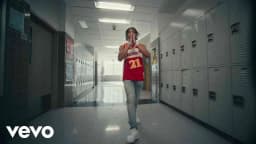
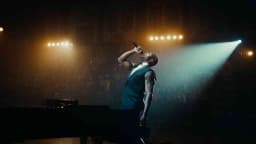
MLB's Let The Kids Play 2.0 launched in March 2019 featuring Mike Trout, Shohei Ohtani and nine other stars challenging baseball's culture of restraint across

MLB Let The Kids Play 2.0 Rewrites Baseball's Unwritten Rules
MLB's Let The Kids Play 2.0 is a 2019 US film campaign that enlists eleven of baseball's most recognisable active players to challenge the sport's culture of restraint, delivering a direct and multilingual message that players should be free to express themselves on the field.
Major League Baseball unveiled the campaign on March 27, 2019, as reported by courant.com, timing the release to coincide with the opening of the regular season and following a Spring Training production period that gave the spot the energy of pre-season anticipation. The campaign functions as a direct sequel to the original Let The Kids Play platform, which MLB launched during the 2018 postseason to begin reframing America's National Pastime around individuality rather than decorum. Where the 2018 instalment introduced the argument, the 2019 version amplified it.
The cast assembled for Let The Kids Play 2.0 signals the breadth of MLB's ambition. Mike Trout, Carlos Correa, Giancarlo Stanton, Christian Yelich, Alex Bregman, Francisco Lindor, Ronald Acuña Jr., Shohei Ohtani, and several additional players appear across the single film asset, each contributing a message in English, Spanish, or their native language, with subtitles carrying meaning to every viewer regardless of linguistic background, as documented by adsoftheworld.com. That multilingual structure is not a cosmetic choice. It is a strategic declaration that baseball in the United States is not a monolingual sport and that its stars reflect a genuinely multinational roster.
MLB Senior Vice President of Marketing Barbara McHugh described the Let The Kids Play platform as an overarching umbrella theme designed to promote the league's diverse players and their distinct personalities, as reported by adweek.com. Let The Kids Play 2.0 operates inside that umbrella with sharper edges, asking not just for permission but for volume. The campaign's social framing on March 27, 2019, carried the phrase say it louder for the people in the back, per MLB's own social media post cited by courant.com, signalling that the league understood this was a cultural argument as much as an advertising one. Clapboard Score: 70/100.
Baseball carries a documented tension between tradition and spectacle. For decades, the sport's unwritten rules governed how players should behave after home runs, strikeouts, and walk-off moments, with visible celebration often treated as disrespect. MLB's strategic insight, evident across both the 2018 and 2019 Let The Kids Play iterations, is that those same unwritten rules were functioning as a barrier between the sport and younger, more culturally connected audiences in the United States.
The competitive context is direct. Sports such as basketball and American football had, by 2019, built significant cultural equity around player personality, individual expression, and social media shareability. In that environment, baseball's tradition of restraint read as stiffness to audiences who had grown up watching athletes celebrate openly. MLB faced pressure not only from rival leagues but from the broader attention economy, where expressionless competition struggles to generate the kind of organic content that builds fanbases across platforms. The original Let The Kids Play campaign, anchored in 2018 by Ken Griffey Jr.'s declaration of no more talk as referenced by courant.com, signalled that the league was prepared to move away from enforcing decorum toward actively endorsing personality.
MLB's Play Ball initiative, launched in 2015 to encourage children to engage with baseball and softball in informal settings as documented by courant.com, provided the youth-engagement infrastructure that Let The Kids Play 2.0 could build on culturally. By framing active stars as role models for expressive play, the 2019 campaign connected the league's grassroots participation goals with its broadcast and digital identity. The multilingual execution — covering English, Spanish, and additional native languages — addressed the demographic reality of both the player pool and the domestic fanbase in the United States, where Spanish-speaking communities represent a substantial and growing share of sports audiences.
Let The Kids Play 2.0 is constructed as a single film asset with a chorus structure, placing individual players in direct address to camera before their statements accumulate into a collective argument. The creative decision to use each player's native or preferred language rather than standardising dialogue into English is the most distinctive craft element in the campaign.
Mike Trout delivers the campaign's anchor line — just let the kids play — in voice-over, as reported by ispot.tv in their March 28, 2019 documentation of the spot. That choice carries weight. Trout is widely regarded as the sport's most complete player, and his voice lending itself to an argument about freedom of expression rather than performance statistics marks a deliberate repositioning of what star power means in baseball's advertising language. The inclusion of Shohei Ohtani, who at that point was navigating his first full season as a two-way player in the United States after arriving from Japan's Nippon Professional Baseball league, gave the multilingual structure immediate credibility. His presence argued by example that baseball's talent pool and its communication style were both genuinely global.
Production took place during Spring Training 2019, a scheduling decision that, as noted by adsoftheworld.com, lent the footage a looseness consistent with the campaign's core message about play rather than performance anxiety. The film's tone sits closer to a player-led manifesto than a traditional broadcast advertisement, which aligns with MLB's wider shift toward content that players themselves would want to share on their own social channels.
Production credits for Let The Kids Play 2.0 are not publicly documented. The agency behind the campaign has not been disclosed in available sources, including clapboard.com, adweek.com, or mlb.com. The creative architecture nonetheless reflects a considered brief: cast widely, speak authentically, and let the argument come from the athletes rather than the institution.
No verified performance data for Let The Kids Play 2.0 is publicly available in terms of view counts, engagement rates, or tracked brand-lift metrics. The agency behind the campaign has not been named, and no post-campaign effectiveness figures have been attributed to a named source across adweek.com, ispot.tv, forbes.com, or clapboard.com. What can be assessed is the campaign's structural effectiveness relative to the strategic problem it was designed to address.
The decision to build a sequel within twelve months of the original Let The Kids Play platform indicates that MLB's internal assessment of the 2018 campaign was positive enough to justify continuation and escalation. Sequel campaigns in sports marketing carry an implicit signal: the first instalment generated sufficient cultural traction or brand value to warrant a second investment. The 2019 version expanded the player roster, increased the linguistic range, and sharpened the social framing, all of which suggest a league that felt confident in the platform's direction.
The broader Let The Kids Play platform was described by MLB Senior Vice President of Marketing Barbara McHugh as an overarching umbrella theme, per adweek.com, which positions the 2019 campaign not as a standalone execution but as part of a sustained strategic commitment. That framing reduces the pressure on any single film to deliver measurable short-term results and instead positions impact as cumulative. MLB's Play Ball programme had by 2024 reached an estimated seven million children through free events and related programmes, as reported by courant.com, and while that figure cannot be attributed solely to the Let The Kids Play campaigns, the two initiatives share a consistent strategic objective: making baseball feel accessible, expressive, and worth playing.
MLB's Let The Kids Play 2.0 is a 2019 US film campaign released on March 27, 2019, featuring eleven active players including Mike Trout and Shohei Ohtani. It challenges baseball's unwritten rules of restraint, encouraging players to express their personalities openly on the field. Production took place during Spring Training 2019.
Let The Kids Play 2.0 featured Mike Trout, Carlos Correa, Giancarlo Stanton, Christian Yelich, Alex Bregman, Francisco Lindor, Ronald Acuña Jr., and Shohei Ohtani, among others. As documented by adsoftheworld.com, the spot included eleven players delivering messages in English, Spanish, and additional native languages with subtitles.
The 2018 Let The Kids Play campaign introduced the argument for player expression during the postseason, anchored by Ken Griffey Jr., as referenced by courant.com. The 2019 sequel expanded the roster, introduced multilingual dialogue, and sharpened the social framing, amplifying rather than restating the original platform's message.
MLB Senior Vice President of Marketing Barbara McHugh described Let The Kids Play as an overarching umbrella theme, per adweek.com, designed to promote the league's diverse players and their distinct personalities. The platform responds to competitive pressure from sports with stronger cultures of individual expression, particularly in the United States market.
Mike Trout provided the campaign's anchor voice-over line, just let the kids play, as reported by ispot.tv on March 28, 2019. Trout's involvement gave the message credibility, as he is widely regarded as the sport's most complete active player and a central figure in baseball's identity in the United States.
The agency behind Let The Kids Play 2.0 has not been publicly disclosed. No production credits are available across adweek.com, mlb.com, or clapboard.com. The campaign's multilingual structure, Spring Training production schedule, and player-led creative approach reflect a clear and deliberate brief, even without confirmed agency attribution.
.webp)
Creative Collaboration Platform: The Backbone of Modern Creative WorkWhat is a creative collaboration platform?Clapboard defines a creative collaboration platform as the operational core for today’s distributed creative teams. This is not a collection of digital collaboration tools stitched together; Clapboard’s system


Understanding the Creative Production MarketplaceWhat is a Creative Production Marketplace?Clapboard defines a creative production marketplace as a structured ecosystem where brands, agencies, and production talent converge to execute video, advertising, and branded content at scale. Unlike the legacy agency or freelanREAD FULL ARTICLE

The Urgent Need for a Creative Production Operating SystemWhy Traditional Creative Production Models Break DownClapboard sees the creative production landscape shifting under pressure. Content velocity is no longer a buzzword—it’s a mandate. Modern advertising demands relentless output across dozens of channels, each wREAD FULL ARTICLE