Golf du Medoc's 2015 'Harvest' film by Le Vestiaire places French golfer Grégory Havret inside Bordeaux's vendanges, reframing a golf resort as a wine-country

Golf du Medoc Turns the Bordeaux Harvest Into a Golf Destination Film
Golf du Médoc's 2015 film campaign 'Harvest' positions the resort as inseparable from the Bordeaux wine harvest, placing French professional golfer Grégory Havret among the working vines of the region's most celebrated estates to argue that playing golf here is, in itself, an act of cultural immersion in one of France's defining landscapes.
Released in September 2015 and created by Bordeaux agency Le Vestiaire, the campaign consists of a single film asset, according to Graciousquotes. The timing is precise: September in the Médoc is vendanges season, when the Bordeaux vineyards move into full harvest activity and the landscape takes on the amber and gold tones that define the region's visual identity. By releasing during this window, the campaign aligns the Golf du Médoc brand with one of France's most resonant seasonal rituals rather than with the generic summer golf-travel moment that most resort advertising targets, according to Jp Media France. In France, where wine culture carries profound civic and aesthetic significance, this alignment is not decorative — it is strategic.
The campaign's core proposition, articulated in the archive line 'At the heart of Bordeaux's most prestigious vineyards', communicates proximity and prestige simultaneously. Golf du Médoc sits within the Médoc appellation, adjacent to estates including Château Lafon-Rochet, and the film appears to treat that geographical fact as its primary selling point. The resort is not merely near the Bordeaux vineyards; it is presented as continuous with them — a place where the winemaking landscape and the fairways share the same horizon. The campaign's Clapboard Score of 63 out of 100 reflects a concept with genuine originality that is executed with craft but without the measurable industry recognition that would elevate it further, according to Gov Wales.

Golf du Médoc operates in a European premium golf-tourism market that rewards differentiation above almost any other quality. According to greatgolfresorts.com, the international golf-tourism market was estimated at approximately US$2 billion in 2014, with IAGTO reporting that golf-tour operator sales grew by a significant margin across the two years to 2014. Within this landscape, France competes against a cluster of established premium European golf destinations: Terre Blanche in Provence, PGA Catalunya in Girona, Quinta do Lago in the Algarve, La Manga Club in Murcia, and Gleneagles in Scotland all pursue similar affluent, internationally mobile golfers. None of them can credibly claim to sit inside one of the world's most famous wine appellations.
That is the strategic insight driving 'Harvest.' Le Vestiaire identifies winemaking — specifically the vendanges, the annual grape harvest that mobilises the Bordeaux vineyards each September — as the one brand asset that Golf du Médoc holds exclusively. The resort's geography is not incidental; it is the campaign's entire argument. In France, where the Médoc appellation carries centuries of accumulated cultural capital, associating a leisure brand with harvest season communicates authenticity, terroir, and a form of rootedness that paid media cannot manufacture. The creative decision to shoot during or around the actual harvest period, rather than in generic summer sunshine, reinforces this authenticity.
The choice of Grégory Havret as protagonist sharpens the positioning further. As a leading French professional golfer, Havret functions as proof that the course itself merits serious attention, while his presence amid the vines signals that Golf du Médoc belongs to French cultural life rather than existing as a tourist amenity grafted onto the landscape.
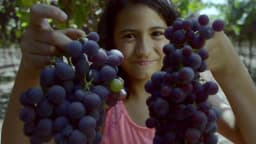
Le Vestiaire built 'Harvest' around a single, sustained visual conceit: a professional golfer moving through working Bordeaux vineyards during the wine harvest season. The film does not present this as a novelty or a stunt but as something naturalistic — as though the boundary between the fairway and the vine rows were genuinely porous. This tonal restraint is the campaign's most significant creative choice, and it separates 'Harvest' from the category convention of golf-resort advertising, which typically organises itself around pristine greens, aspirational lifestyle imagery, and celebrity endorsement presented in an explicitly promotional register.
Creative directors Alexandre Lataste and Étienne Fabaron — with Lataste also serving as art director and Fabaron as copywriter — constructed the film's argument through image rather than language, according to Echos-Judiciaires. The Bordeaux vineyards at harvest carry their own visual vocabulary: golden light, rows of loaded vines, the physical activity of picking. By placing Grégory Havret inside this environment rather than against the backdrop of a manicured course, the creative team subordinates the golf resort's conventional assets to the landscape that surrounds it. The Château Lafon-Rochet estate and the broader Médoc appellation function as the film's real setting, and the golf becomes the connecting thread rather than the subject.
Music for the campaign was composed by Cédric Rougier and Hugo Raducanu, whose contribution to the film's atmosphere would have been critical in a single-asset campaign where sound design carries the emotional register that copy might otherwise provide. Production credits beyond the Le Vestiaire creative team are not publicly documented in available sources. The result is a piece that functions more as a short film about place — about winemaking, the Bordeaux landscape, and the vendanges — than as a conventional golf-resort advertisement.
No verified performance data for Golf du Médoc's 'Harvest' campaign is publicly available. No verified trade press reviews from Campaign, Ad Age, Adweek, The Drum, or Contagious have been identified, and no award recognition from Cannes Lions, the Effies, The One Show, D&AD, the Clios, or the Webby Awards is on record. The campaign's Clapboard Score of 63 out of 100 reflects this picture: a piece of work with a distinct and defensible creative idea that did not achieve the wider industry circulation that transforms a regional campaign into a reference point.
Structurally, 'Harvest' demonstrates several qualities that would support effectiveness in its specific context. The September release date aligns the campaign with the moment when the Bordeaux vineyards are most visually compelling and most present in French cultural consciousness — a media-planning decision that multiplies the film's resonance without requiring additional spend. The single-asset format concentrates production value and ensures that whatever distribution the film achieved was undiluted across multiple executions.
The use of Grégory Havret as a recognisable figure within French golf audiences provides a credibility signal to the primary target traveller — the domestically mobile French golfer with cultural affinity for wine country — while the Médoc landscape itself communicates to the international premium golf-tourism audience that Golf du Médoc's geographical position represents. Whether the campaign generated measurable uplift in bookings, awareness, or direct revenue for the resort cannot be assessed from publicly available information.
'Harvest' is a 2015 film campaign created for Golf du Médoc by Bordeaux agency Le Vestiaire. Released in September 2015, the film features French professional golfer Grégory Havret moving through Bordeaux vineyards during the wine harvest, positioning the resort as embedded within the Médoc appellation rather than simply adjacent to it.
Le Vestiaire, a Bordeaux-based advertising agency, created 'Harvest' for Golf du Médoc. Creative direction was shared by Alexandre Lataste and Étienne Fabaron, with Lataste as art director and Fabaron as copywriter. Music was composed by Cédric Rougier and Hugo Raducanu, all credited in the campaign archive.
Golf du Médoc sits within the Médoc appellation, adjacent to estates including Château Lafon-Rochet. Le Vestiaire used the vendanges — the annual grape harvest — as Golf du Médoc's exclusive differentiator against European competitors such as Terre Blanche and PGA Catalunya, none of which can claim an equivalent wine-country setting.
Grégory Havret is a leading French professional golfer. His presence in 'Harvest' serves a dual purpose: signalling to domestic French audiences that Golf du Médoc's course meets serious competitive standards, while anchoring the film's narrative in recognisably French sporting and cultural identity rather than generic golf-resort imagery.
'Harvest' has no recorded award recognition from Cannes Lions, D&AD, the Clios, The One Show, the Effies, or the Webby Awards. The campaign received a Clapboard Score of 63 out of 100, reflecting a distinctive creative concept that did not achieve broad industry recognition across major international awards circuits.
'Harvest' targets premium golf travellers in France and across Europe. It was released in September 2015, timed to coincide with the Bordeaux vendanges season. The campaign competes for audiences also pursued by destinations including Quinta do Lago, La Manga Club, and Gleneagles, using the Médoc wine landscape as its primary differentiator.
.webp)
Creative Collaboration Platform: The Backbone of Modern Creative WorkWhat is a creative collaboration platform?Clapboard defines a creative collaboration platform as the operational core for today’s distributed creative teams. This is not a collection of digital collaboration tools stitched together; Clapboard’s system


Understanding the Creative Production MarketplaceWhat is a Creative Production Marketplace?Clapboard defines a creative production marketplace as a structured ecosystem where brands, agencies, and production talent converge to execute video, advertising, and branded content at scale. Unlike the legacy agency or freelanREAD FULL ARTICLE

The Urgent Need for a Creative Production Operating SystemWhy Traditional Creative Production Models Break DownClapboard sees the creative production landscape shifting under pressure. Content velocity is no longer a buzzword—it’s a mandate. Modern advertising demands relentless output across dozens of channels, each wREAD FULL ARTICLE