Contiki Sends Dogs on Tour with Dogtiki April Fools Film
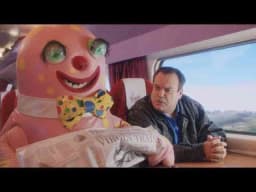
Contiki launched Dogtiki: Trips for Dogs in the United Kingdom on April 1, 2019, as a single-film April Fools' Day campaign presenting a fictional coach-tour service designed exclusively for dogs, using the visual and narrative language of conventional organised group travel advertising to draw attention to the brand's animal-welfare initiative, Contiki Cares.
The campaign arrived as a short promotional video and accompanying social content. Its premise was straightforward: replace the human travellers who typically populate Contiki's marketing with dogs, then faithfully reconstruct every familiar beat of the group-travel experience — hotel check-in, luggage handling, guided cultural excursions, and the kind of social bonding between strangers that sits at the core of Contiki's brand identity. The film treated its fictional canine itinerary with complete sincerity, mirroring the warmth and optimism of legitimate tour advertising rather than reaching for broad comedy.
Contiki positions itself as a social-travel brand for 18-to-35-year-olds, according to contiki.com, and the Dogtiki concept spoke directly to that audience's appetite for self-aware, shareable content. In the United Kingdom, where the campaign originated, the confluence of a national affection for dogs and a cultural familiarity with April Fools' Day media stunts created a receptive environment for the format. The film was submitted as a single media asset within the Transport industry category, reflecting its compact, focused production scope. The campaign carried no disclosed agency credit, with Contiki's in-house marketing function, operating through The Travel Corporation's TTC Brands Marketing Lab as described by paxnews.com, understood to have driven the creative. Clapboard Score: 63/100.
Contiki used the Dogtiki film to serve two simultaneous objectives. The primary communications goal was cultural participation — generating social attention on April Fools' Day 2019 by publishing a piece of content designed to travel organically across the platforms its 18-to-35 target audience inhabits, as documented by adsoftheworld.com. The secondary objective was substantive: directing that attention toward Contiki Cares, the brand's animal-welfare programme, and using a lighthearted premise to make a values-based message feel accessible rather than preachy.
The strategic logic is rooted in a well-established tension within youth group travel. Contiki competes in a segment alongside brands including Topdeck, G Adventures, EF Ultimate Break, Intrepid Travel, and Flash Pack, according to research compiled at edevans.org. In a category where itinerary breadth and price competitiveness dominate conventional marketing, differentiation through personality and shared values carries increasing weight with younger consumers. The Dogtiki film made no price or product claim; instead it reinforced the idea that Contiki is a brand with warmth and a point of view beyond the logistics of getting people between destinations.
In the United Kingdom, April Fools' Day advertising has become a recognised creative format in its own right, with media outlets routinely covering brand pranks as news. The timing gave Contiki a legitimate editorial hook that extended the film's reach beyond paid distribution. By anchoring the joke to a real programme — Contiki Cares — the campaign avoided the emptiness of a prank executed purely for awareness, giving audiences something to follow once the initial amusement had passed. The narrative structure of the film, borrowing directly from the conventions of organised-tour advertising, reinforced Contiki's core product identity even while subverting it.
The Dogtiki film executes its concept through committed narrative mimicry. Rather than signalling its joke early and releasing tension, the production maintains the visual register of a genuine Contiki promotional video throughout, deploying the same warmth of cinematography, the same pacing of social montage, and the same emotional arc — strangers becoming friends through shared experience — that defines the brand's standard travel content.
The creative decision to populate every conventional travel-advertising scene with dogs rather than humans is the film's central mechanism, and its effectiveness depends entirely on how faithfully those scenes are constructed. Luggage is handled. Check-ins are completed. Cultural landmarks are visited. Dogs socialise in the way Contiki's human travellers are shown socialising in its mainstream campaigns. The joke is structural rather than comedic in any conventional sense; the humour derives from the gap between the earnestness of the execution and the absurdity of the premise, as documented by adsoftheworld.com.
The film's connection to Contiki Cares functions as the narrative payoff. The reveal that the prank carries a real philanthropic dimension gives the content a second beat, preventing it from reading as a pure attention exercise. This two-act structure — parody followed by purpose — is a sound approach for April Fools' Day advertising, where audiences are primed to look for the catch. Production credits for the Dogtiki: Trips for Dogs campaign are not publicly documented. The campaign ran as a single film asset, suggesting a focused production rather than an integrated multi-format rollout. CNET covered the campaign at the time of its release, according to cnet.com, indicating the April Fools' hook successfully generated third-party editorial pickup beyond Contiki's owned channels.
No verified performance data for the Dogtiki: Trips for Dogs campaign is publicly available. No trade-press reviews appeared in Campaign, Ad Age, Adweek, The Drum, or Contagious, according to research conducted for this analysis. The absence of industry-press coverage does not indicate the campaign underperformed, but it does suggest its impact was measured in social and earned-media terms rather than through the kind of industry recognition that generates documented records.
Coverage by CNET, as reported by cnet.com, confirms that the film achieved at least some degree of mainstream editorial pickup, which is the primary earned-media goal of any April Fools' Day stunt. The United Kingdom launch context is relevant here: British media routinely treat April 1 brand activity as light news, and coverage in a technology and culture publication with CNET's reach represents a meaningful distribution outcome for a short-form branded film.
Structurally, the campaign demonstrates coherent alignment between format, timing, and brand objective. The film format suits the narrative parody approach; April Fools' Day provides the cultural permission to deploy it; and the link to Contiki Cares ensures the content serves a purpose beyond the single-day attention cycle. For a brand competing for relevance among 18-to-35-year-olds in the United Kingdom alongside established group-travel operators, the ability to generate organic social conversation and third-party coverage through a single low-complexity asset represents genuine strategic efficiency. The Clapboard Score of 63/100 reflects a campaign that executes its concept with clarity and commitment but remains limited in ambition and documented impact.
Contiki launched Dogtiki: Trips for Dogs in the United Kingdom on April 1, 2019. The campaign was a short promotional film presenting a fictional coach-tour service for dogs, parodying conventional group-travel advertising to draw attention to Contiki's animal-welfare programme, Contiki Cares, according to adsoftheworld.com and contiki.com.
Contiki chose April 1, 2019 to maximise earned-media pickup in the United Kingdom, where brand April Fools' stunts routinely attract editorial coverage. The date gave the film a built-in cultural hook, helping it travel organically on social platforms among Contiki's core audience of 18-to-35-year-olds, as documented by alistdaily.com.
Contiki Cares is the brand's animal-welfare programme. The Dogtiki film used its April Fools' premise as an entry point to direct audience attention toward that initiative, giving the prank a substantive second beat. The connection ensured the campaign served a values-based purpose beyond single-day social attention, according to contiki.com.
No external agency credit is publicly disclosed for the Dogtiki campaign. Contiki's marketing operates through The Travel Corporation's TTC Brands Marketing Lab, described as an in-house function by paxnews.com, which is understood to have driven the creative for this United Kingdom April Fools' film.
Contiki competes in youth group travel alongside Topdeck, G Adventures, and Flash Pack, among others, according to edevans.org. Where competitors emphasise itinerary and price, Dogtiki reinforced brand personality and values — a differentiation strategy suited to 18-to-35-year-old audiences in the United Kingdom who respond to content with a clear point of view.
.webp)
Creative Collaboration Platform: The Backbone of Modern Creative WorkWhat is a creative collaboration platform?Clapboard defines a creative collaboration platform as the operational core for today’s distributed creative teams. This is not a collection of digital collaboration tools stitched together; Clapboard’s system


Understanding the Creative Production MarketplaceWhat is a Creative Production Marketplace?Clapboard defines a creative production marketplace as a structured ecosystem where brands, agencies, and production talent converge to execute video, advertising, and branded content at scale. Unlike the legacy agency or freelanREAD FULL ARTICLE

The Urgent Need for a Creative Production Operating SystemWhy Traditional Creative Production Models Break DownClapboard sees the creative production landscape shifting under pressure. Content velocity is no longer a buzzword—it’s a mandate. Modern advertising demands relentless output across dozens of channels, each wREAD FULL ARTICLE