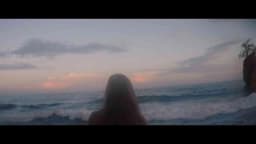
Disneyland Paris launched 'The Little Duck' with BETC in France on Christmas Day 2018, winning Effie France Gold 2019 with emotional brand storytelling over

Disneyland Paris and BETC Make Magic Real with The Little Duck
Disneyland Paris launched 'The Little Duck,' a brand film created by BETC, on Christmas evening 2018 via French television broadcast, positioning the campaign as a 2019 property rooted in emotional connection rather than price-led promotion or ride-specific advertising.
The campaign centres on an anthropomorphic duckling whose hero is Donald Duck — a creative conceit drawn from the insight that children worldwide grow up with Disney characters and experience a genuine sense of wonder when they encounter those characters in person at the park. BETC Executive Creative Director Antoinette Beatson articulated the foundation of that thinking, stating that all children grow up with Disney characters and, when they arrive at the park, they go wild seeing their heroes in real life. That emotional reality, Beatson explained, became the seed from which the duckling narrative grew. The film carries the platform line 'Where Magic Gets Real,' signalling that its ambition is experience differentiation rather than transactional persuasion.
In France, the campaign landed in a market where Disneyland Paris holds a defining position within the leisure and travel sector. The park, situated in the Île-de-France region, remains the most-visited theme park in Europe and a cornerstone of French cultural tourism. Produced with media agency Zenith managing its broadcast placement, 'The Little Duck' contains a single film asset, a formal choice that concentrates creative investment and audience attention on one cohesive piece of storytelling. The campaign earned a Clapboard Score of 86 out of 100, reflecting its strength in emotional craft, strategic clarity, and cultural resonance within the French travel and leisure category.
BETC built 'The Little Duck' on a consumer insight rather than a competitive price argument. Children's relationships with Disney characters begin long before a first park visit — in books, films, and toys — and the park itself is the moment those relationships become physical and real. BETC's strategic proposition was that Disneyland Paris does not merely sell attractions; it delivers the conversion of imagination into lived experience, a benefit no competitor can replicate with the same intellectual property.
In France, the theme park and leisure market operates as a concentrated competitive landscape. According to TEA and AECOM's 2019 Theme Index and Museum Index report, Europe's twenty most-attended theme parks recorded approximately 49.763 million visits across that year, a figure TEA and AECOM characterised as broadly stable rather than a high-growth environment. Within that stable, oligopolistic market — where, according to available industry analysis, roughly eight major operators account for more than half of total European attendance — differentiation on emotional and experiential grounds becomes a primary strategic lever. Parks such as Parc Astérix in France and PortAventura in neighbouring Spain compete for family leisure budgets, but neither commands Disney's depth of pre-existing character relationships with children.
BETC's approach in 2019 continued a deliberate arc of brand-level storytelling begun with the 2017 campaign 'Paris Is Waiting for You,' also created for Disneyland Paris. As reported by Ads of the World, that earlier campaign linked recognisable Parisian and Île-de-France landmarks — including Galeries Lafayette and Château de Fontainebleau — with the Disney universe, positioning the park as part of the wider French and Parisian tourism ecosystem. 'The Little Duck' deepened that strategy, moving from geographic belonging to emotional inheritance, reinforcing why Disneyland Paris occupies a specific, irreplaceable role in French family culture.
BETC anchored the creative execution of 'The Little Duck' in a single, sustained piece of anthropomorphic character storytelling. The film follows a small duckling navigating the world with Donald Duck as an implicit point of aspiration and belonging — a narrative device that mirrors the emotional journey of a child who has grown up loving a Disney character and finally encounters that character in person at a Disneyland Paris park.
Antoinette Beatson, Executive Creative Director at BETC, shaped the creative direction and has spoken directly about the thinking: the idea was to transpose the real emotional dynamic between children and their Disney heroes onto a little duck whose hero is Donald, as cited by Effie France in the campaign's award documentation. That transposition allows the film to work simultaneously as a children's story and as an emotionally precise message to the parents and adults who choose to take their families to the park. The narrative bypasses rides, queues, and pricing entirely, operating at the level of meaning and memory.
Writing for The Drum on 8 January 2019, senior reporter Imogen Watson described the BETC film as 'touching' and 'heartwarming,' highlighting the emotional storytelling and the anthropomorphic duckling character meeting Donald Duck. The Drum's review characterised the work as a sophisticated use of Disney's storytelling heritage to communicate the wonder of the park, a judgement that points to the film's deliberate refusal of conventional theme-park advertising tropes. The single-asset format — one film, broadcast on Christmas evening in France — concentrates all production craft and audience investment into a unified emotional moment rather than dispersing attention across a campaign suite. That formal discipline is itself a creative statement about the confidence BETC and Disneyland Paris placed in the story.
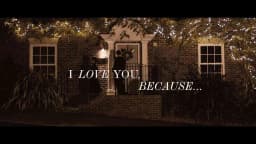
Disneyland Paris and BETC's 'The Little Duck' won a Gold Effie at the Effie France awards in 2019 in the Culture et Loisirs category, as documented by Effie France. The campaign also received the Prix de l'impact de la création at the same awards ceremony, a distinction that recognises the measurable business effect of creative work — a significant validation for a brand film that deliberately avoided promotional mechanics.
According to TEA and AECOM's 2019 Theme Index, Disneyland Park recorded approximately 9.745 million visits in 2019, representing a one-percent decline year over year. TEA and AECOM characterised the broader European theme park market that year as stable rather than expansionary, providing important context for evaluating the campaign's commercial environment. Against that stable market backdrop, a Gold Effie result — which requires documented evidence of business effectiveness, not creative merit alone — indicates that 'The Little Duck' contributed meaningfully to Disneyland Paris's brand health and commercial performance metrics in France.
The campaign's structural effectiveness rests on several compounding factors. A Christmas Day broadcast in France placed the film in front of a maximum family audience at the precise cultural moment when the gap between a child's Disney imagination and a real park visit is most acutely felt. The single-film format ensured undivided creative investment. The 'Where Magic Gets Real' platform gave the emotional narrative a strategic frame that could sustain future brand-building activity. As reported by The Drum and recognised by Effie France, the work demonstrated that sophisticated emotional storytelling within the French travel and leisure category can generate both cultural resonance and verified commercial impact.
'The Little Duck' is a 2019 brand film for Disneyland Paris created by BETC and broadcast on French television on Christmas evening 2018. The campaign follows an anthropomorphic duckling whose hero is Donald Duck, communicating the park's 'Where Magic Gets Real' platform through emotional storytelling rather than promotional messaging.
BETC created 'The Little Duck' for Disneyland Paris, with Zenith serving as media agency. Antoinette Beatson was Executive Creative Director at BETC. The campaign was published in France in January 2019, following a Christmas Day 2018 television broadcast premiere timed to reach French family audiences at peak seasonal viewing.
'The Little Duck' won a Gold Effie at the Effie France 2019 awards in the Culture et Loisirs category, as documented by Effie France. It also received the Prix de l'impact de la création, which recognises measurable business effectiveness — a distinction that confirms the campaign delivered commercial results alongside critical creative recognition.
BETC built the campaign on the insight that children grow up with Disney characters before ever visiting a park, making the first real encounter deeply emotional. The strategy positioned Disneyland Paris as the place where childhood imagination becomes lived experience, differentiating on emotional grounds rather than through price or attraction-specific promotion.
'The Little Duck' first broadcast on Christmas evening, December 25, 2018, on French television, as reported by The Drum and documented by Effie France. The timing placed the film in front of maximum family audiences during peak holiday viewing in France, directly aligning the emotional narrative with the season's strongest family-oriented cultural moment.
Disneyland Paris's 'The Little Duck' campaign holds a Clapboard Score of 86 out of 100. This score reflects the campaign's strength across emotional craft, strategic clarity, and cultural resonance within the French travel and leisure category, supported by its verified Effie France Gold recognition for business effectiveness in 2019.
.webp)
Creative Collaboration Platform: The Backbone of Modern Creative WorkWhat is a creative collaboration platform?Clapboard defines a creative collaboration platform as the operational core for today’s distributed creative teams. This is not a collection of digital collaboration tools stitched together; Clapboard’s system


Understanding the Creative Production MarketplaceWhat is a Creative Production Marketplace?Clapboard defines a creative production marketplace as a structured ecosystem where brands, agencies, and production talent converge to execute video, advertising, and branded content at scale. Unlike the legacy agency or freelanREAD FULL ARTICLE

The Urgent Need for a Creative Production Operating SystemWhy Traditional Creative Production Models Break DownClapboard sees the creative production landscape shifting under pressure. Content velocity is no longer a buzzword—it’s a mandate. Modern advertising demands relentless output across dozens of channels, each wREAD FULL ARTICLE