Concerned Citizens to Take Down Gun Violence partnered with Saatchi & Saatchi in 2016 to create a mass shooting survival PSA modeled on public-safety choking

How Saatchi & Saatchi Turned a Mass Shooting Survival Guide Into a PSA
"In case of school shooting" is a 2016 public-service campaign created by Saatchi & Saatchi Wellness, New York, for Concerned Citizens to Take Down Gun Violence, delivering practical self-preservation and first aid guidance for mass shooting scenarios through film, posters, and social channels distributed across the United States.
The campaign launched in July 2016 in the United States, a moment when the national conversation around gun violence had reached a sustained pitch of urgency. Rather than entering the polarised political debate over legislation, the creative team pursued a different register entirely. Deliberately modeled on the familiar visual language of public-safety choking posters found in restaurants and schools, the work presented survival and first aid advice in a form that felt instructional rather than activist. It was, as the client brief acknowledged, the video the team did not want to have to create.
The campaign extended across multiple formats — a hero film, print posters, a dedicated website, Instagram, Twitter, and other social channels — ensuring that the core message reached audiences wherever they gathered in public life. Distribution spanned movie theaters, schools, restaurants, nightclubs, and other public spaces across the US market. By anchoring itself to the aesthetic codes of established public-safety communications, the campaign bypassed ideological resistance and addressed a singular question: given that mass shootings occur in the United States with documented regularity, what can an individual do to survive one? That reframe — from policy argument to practical guidance — defined the campaign's identity and set it apart from nearly every other gun violence awareness effort of its era.
 ARCHIVE
Concerned Citizens to Take Down Gun Violence chose to sidestep the gun control debate entirely. The strategic rationale rested on a single uncomfortable truth: legislative change moves slowly, and people are dying now. According to the campaign's own documented brief, the United States experiences more than one mass shooting per day on average, a statistic that framed the creative strategy as a matter of immediate public safety rather than long-term policy advocacy.
The insight borrowed from an unexpected source: the public-safety choking poster, a piece of instructional design so ubiquitous in American dining spaces that it has become functionally invisible. Saatchi & Saatchi Wellness identified that the same visual familiarity could be weaponised — if a choking hazard warranted a standardised survival guide on every restaurant wall, so too did the documented risk of mass shooting in the same spaces. This reframing allowed the campaign to occupy neutral ground in a deeply partisan landscape, making it relevant to audiences across the political spectrum.
In the United States, the gun violence prevention space is populated by organisations including Brady United and Sandy Hook Promise, both of which have pursued awareness and advocacy campaigns of their own, according to reporting by NBC News. What distinguished the Concerned Citizens effort was its deliberate avoidance of legislative messaging, instead prioritising the self-preservation instinct that transcends political affiliation. Where competitors in the public-interest category leaned into emotional testimony or calls to legislative action, this campaign offered something more immediate: a functional tool. The choice to distribute through high-footfall locations — schools, theaters, nightclubs — also reflected a precise understanding of where the threat statistically concentrates in American public life.
Saatchi & Saatchi Wellness, New York, led all creative execution under Chief Creative Officer Kathy Delaney. Creative Directors Carolyn Gano and Scott Carlton shaped the campaign's visual and tonal approach, engineering a deliberate tension between the calm, instructional aesthetic of public-safety signage and the visceral reality of a mass shooting survival scenario.
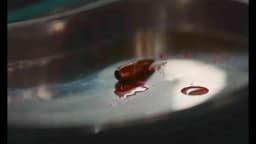
The hero asset is a film — a shooting survival video that walks viewers through practical self-preservation and first aid steps in the event of a mass shooting. The production borrowed the visual grammar of safety instructional content: measured pacing, clear diagrams, and a tone of procedural authority. That formal restraint is itself the creative act. By refusing to sensationalise, the filmmakers forced the audience to sit with the material on its own clinical terms, which proved more disturbing than any dramatisation could have been.
The poster executions extended the same logic into print. Modeled explicitly on the Heimlich maneuver posters found in American restaurants, the designs translated first aid and self-preservation steps for a mass shooting context into the same grid-based instructional format audiences already trust and ignore. Placed in the very locations — restaurants, schools, nightclubs, movie theaters — where mass shootings have occurred across the United States, the posters functioned as both public safety information and contextual provocation. The campaign also maintained a dedicated website and active presence on Instagram and Twitter, allowing the instructional content to travel beyond physical distribution points and reach a broader national audience. The creative coherence across film, print, and digital formats reflects a disciplined application of a single governing idea: if the threat is real, the safety briefing must be real too.
No verified performance data for "In case of school shooting" is publicly available in terms of standard advertising metrics such as reach figures, conversion rates, or media spend. The campaign's Clapboard Score of 63 out of 100 reflects its conceptual strength and cultural relevance weighed against the structural limitations of measuring impact for a public-interest initiative with no commercial baseline.
What the available record does confirm is the campaign's distribution footprint across the United States and its presence across multiple channels simultaneously — film, poster, web, and social — which represents a meaningful deployment for a non-commercial public-safety initiative. According to reporting by NBC News and Complex, the campaign generated editorial coverage at the time of its 2016 launch, placing the survival guidance in front of audiences who might never have encountered it through paid media alone.
Structurally, the campaign's effectiveness case rests on design rather than data. By adopting the visual authority of established public-safety communications, the work earned a form of ambient credibility that purely emotional gun violence campaigns rarely achieve. Its deliberate political neutrality widened the potential audience across a divided US public, and its multi-format distribution ensured that the instructional content reached people in the physical spaces the campaign was explicitly designed to address. In the absence of reported metrics, that structural alignment between creative approach, distribution strategy, and stated objective represents the strongest available evidence of a campaign built to work.
"In case of school shooting" was a 2016 public-service campaign created by Saatchi & Saatchi Wellness for Concerned Citizens to Take Down Gun Violence. It delivered practical self-preservation and first aid advice for mass shooting scenarios through film, posters, and social media, distributed across schools, restaurants, and public spaces in the United States.
Saatchi & Saatchi Wellness, New York, created the campaign. Chief Creative Officer Kathy Delaney led the team, with Creative Directors Carolyn Gano and Scott Carlton shaping the execution. The work was produced for client Concerned Citizens to Take Down Gun Violence and published in the United States in July 2016.
The campaign's strategy deliberately sidestepped legislative debate to reach a wider audience. With mass shootings occurring across the United States with documented frequency, the creative team prioritised immediate, practical survival guidance over policy argument, making the content relevant to Americans regardless of their position on gun control legislation.
The campaign appeared in movie theaters, schools, restaurants, nightclubs, and other public spaces across the United States. It also extended to a dedicated website and social channels including Instagram and Twitter, broadening reach beyond physical locations to national digital audiences.
The campaign modeled its visual design on the familiar public-safety choking posters found in American restaurants and public spaces. That instructional aesthetic — applied to mass shooting survival and first aid — created a deliberate tension between calm procedural form and deeply uncomfortable content, distinguishing it from emotional gun violence awareness campaigns.
The campaign holds a Clapboard Score of 63 out of 100. This reflects strong conceptual clarity and cultural relevance in the US public safety space, balanced against the structural difficulty of verifying real-world impact for a non-commercial public-interest initiative without publicly reported performance metrics.
.webp)
Creative Collaboration Platform: The Backbone of Modern Creative WorkWhat is a creative collaboration platform?Clapboard defines a creative collaboration platform as the operational core for today’s distributed creative teams. This is not a collection of digital collaboration tools stitched together; Clapboard’s system


Understanding the Creative Production MarketplaceWhat is a Creative Production Marketplace?Clapboard defines a creative production marketplace as a structured ecosystem where brands, agencies, and production talent converge to execute video, advertising, and branded content at scale. Unlike the legacy agency or freelanREAD FULL ARTICLE

The Urgent Need for a Creative Production Operating SystemWhy Traditional Creative Production Models Break DownClapboard sees the creative production landscape shifting under pressure. Content velocity is no longer a buzzword—it’s a mandate. Modern advertising demands relentless output across dozens of channels, each wREAD FULL ARTICLE