Ad Council and NHTSA launched 'Never Happens' on May 1, 2024, a pro bono campaign by Chemistry targeting pediatric vehicular heatstroke prevention across the

How the Ad Council and NHTSA Are Fighting Hot Car Deaths With Honesty
The Ad Council and the National Highway Traffic Safety Administration launched 'Never Happens' on May 1, 2024, a public service announcement campaign created pro bono by Chemistry that uses honest, intimate vignettes of imperfect parenting to shift how American families think about pediatric vehicular heatstroke and the risks of leaving children alone in hot vehicles.
The campaign debuted on National Heatstroke Prevention Day, a date chosen to maximise public attention at the precise moment heatstroke awareness is most urgent across the United States. Pediatric Vehicular Heatstroke is the leading cause of non-crash, vehicle-related fatality for children aged fourteen and younger, according to NHTSA. The 'Never Happens' campaign confronts a deeply human psychological barrier: the parental conviction that a catastrophic mistake of this kind could not happen to them. By naming that conviction directly, the campaign argues that hot car deaths are not the province of negligent parents but a preventable tragedy that can reach any family.
The campaign's behavioral call-to-action, 'Stop. Look. Lock.', was carried across television, radio, print, outdoor, and digital placements in both English and Spanish, according to the Ad Council. Distribution was national, with particular emphasis on Sun Belt states where extreme temperatures compound risk across the longest stretch of the calendar year. The 'Never Happens' campaign functions as a creative refresh of the longstanding Ad Council and NHTSA heatstroke-prevention platform, retaining the core 'Stop. Look. Lock.' safety behavior while introducing a more psychologically direct creative strategy built around the word 'never' and the false certainty it can carry for parents and caregivers.
Chemistry built the 'Never Happens' campaign on a single, uncomfortable insight: parents routinely make promises about what they will never do, and those promises are broken every day. The strategic shift from prior iterations of the Ad Council and NHTSA heatstroke-prevention platform was deliberate. Earlier executions warned of danger in broadly cautionary terms. The 2024 campaign instead challenged parents' 'never' assumptions directly, confronting the belief that a fatal mistake is always something that happens to someone else, according to the Ad Council.
That reframe carries measurable strategic weight in the United States, where public health communicators have long grappled with optimism bias as a barrier to behavior change. The campaign's primary target audience was parents and caregivers of children aged zero to five, the age group most vulnerable to pediatric vehicular heatstroke, per the Ad Council. By grounding the PSAs in the texture of ordinary, imperfect family life rather than worst-case imagery, Chemistry created an entry point for audiences who might otherwise disengage from traditional warning-based public service announcements.
The competitive landscape for attention in the public safety PSA space is crowded. Campaigns from organisations including Safe Kids Worldwide and KidsAndCars.org have addressed hot car deaths with factual and emotional appeals for years. The 'Never Happens' campaign differentiates itself by centering the psychology of the parent rather than the severity of the outcome, a pivot that aligns with contemporary behavioral science approaches to public health communication. According to NHTSA, a vehicle's interior can reach dangerous temperatures even when outside air is as cool as sixty degrees Fahrenheit, a fact the campaign surfaced to counter the widespread assumption that heatstroke risk is limited to summer heat waves in the hottest American regions.
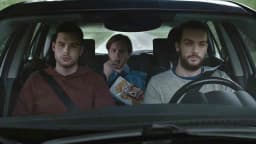
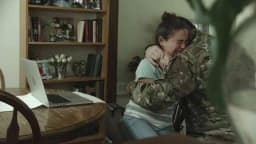
Director Lisa Rubisch brought an observational, naturalistic eye to the 'Never Happens' campaign, working with production company Park Pictures to create a series of vignettes that feel less like traditional public service announcements and more like candid portraits of family life, according to the Ad Council. The spots accumulate small, recognisable moments of parental imperfection — the broken promises, the forgotten tasks, the daily shortcuts — before pivoting to the one 'never' that cannot be walked back.
Will Benham, Executive Creative Director at Chemistry, shaped the campaign's core creative logic. His guiding principle, as reported by the Ad Council, was that parents constantly say they will never do a long list of things, but 'never' happens all the time. That observation became both the strategic foundation and the tonal register of the work: self-aware, non-judgmental, and uncomfortably familiar. Chemistry, operating out of Atlanta on a pro bono basis, extended the campaign across English- and Spanish-language television spots, radio, outdoor, print, and digital formats, ensuring the message reached the full breadth of the American parent population, per the Ad Council.
The creative approach deliberately avoided graphic imagery or shock tactics, a considered craft decision that reflects the Ad Council's broader philosophy of meeting audiences with empathy rather than fear. Programmatic digital out-of-home placements extended the campaign's reach in real time, according to Cynopsis, allowing the media strategy to adapt to geographic and meteorological conditions across the United States. The result is a campaign whose creative restraint is itself a strategic argument: the danger is not distant or dramatic. It is quiet, everyday, and always preventable.
No independently verified post-campaign performance data for 'Never Happens' is publicly available at the time of writing. The Ad Council has not released figures for reach, recall, or behavior change attributable specifically to the 2024 campaign. What is documentable is the structural conditions for effectiveness. The campaign launched on National Heatstroke Prevention Day, maximising earned media amplification at a moment of peak editorial relevance, as reported by Cynopsis and MediaPost. Distribution spanned television, radio, outdoor, print, and digital in both English and Spanish, according to the Ad Council, creating the breadth of exposure that public health behaviorists associate with message retention at the population level.
The campaign's creative architecture also supports measurable recall. Research in public health communication consistently finds that campaigns anchored in personal relevance and psychological recognition, rather than abstract statistics, generate stronger self-reported intention to change behavior. By surfacing the specific NHTSA-documented fact that hot car deaths can occur at exterior temperatures as low as sixty degrees Fahrenheit, per NHTSA, the campaign targeted a concrete knowledge gap rather than general awareness, which is a more actionable objective. According to NHTSA, approximately one in four pediatric vehicular heatstroke deaths occurs when a child gains unsupervised access to an unattended vehicle, a fact the 'Stop. Look. Lock.' call-to-action directly addresses.
The 'Never Happens' campaign receives a Clapboard Score of 73 out of 100, reflecting strong creative strategy and cultural relevance, with room for greater measurable accountability in public reporting of outcomes.
'Never Happens' is a 2024 public service campaign warning parents about pediatric vehicular heatstroke. Launched on May 1, 2024, by the Ad Council and NHTSA with pro bono agency Chemistry, it uses relatable parenting moments to challenge the belief that hot car deaths could never happen to you, promoting the 'Stop. Look. Lock.' safety behavior.
Chemistry, an Atlanta-based agency, created 'Never Happens' on a pro bono basis. Executive Creative Director Will Benham led the creative strategy, director Lisa Rubisch helmed production through Park Pictures, and the Ad Council and NHTSA served as the campaign's clients and public health partners for the United States rollout.
'Stop. Look. Lock.' is the behavioral call-to-action at the center of the 'Never Happens' campaign. It instructs parents and caregivers to stop before walking away from their vehicle, look into the back seat, and lock the car, according to NHTSA. The behavior is designed to prevent pediatric vehicular heatstroke, the leading non-crash vehicle-related cause of child fatality.
The Ad Council chose May 1, 2024, National Heatstroke Prevention Day, to maximise public and media attention at the start of the period when heatstroke risk rises across the United States. The date anchors the campaign in a recognized public health moment, amplifying the reach of 'Never Happens' through aligned editorial and earned media coverage, as reported by Cynopsis.
Hot car deaths can occur when outside temperatures are as low as sixty degrees Fahrenheit, according to NHTSA. Vehicle interiors heat rapidly regardless of ambient conditions, making pediatric vehicular heatstroke a year-round risk. The 'Never Happens' campaign specifically surfaced this fact to counter the widespread assumption that danger is limited to extreme summer heat.
The 'Never Happens' campaign ran in both English and Spanish across television, radio, print, outdoor, and digital formats, according to the Ad Council. Distribution was national, with emphasis on Sun Belt states. Programmatic digital out-of-home placements allowed real-time geographic adaptation, as reported by Cynopsis, ensuring broad reach among parents and caregivers across the United States.
.webp)
Creative Collaboration Platform: The Backbone of Modern Creative WorkWhat is a creative collaboration platform?Clapboard defines a creative collaboration platform as the operational core for today’s distributed creative teams. This is not a collection of digital collaboration tools stitched together; Clapboard’s system


Understanding the Creative Production MarketplaceWhat is a Creative Production Marketplace?Clapboard defines a creative production marketplace as a structured ecosystem where brands, agencies, and production talent converge to execute video, advertising, and branded content at scale. Unlike the legacy agency or freelanREAD FULL ARTICLE

The Urgent Need for a Creative Production Operating SystemWhy Traditional Creative Production Models Break DownClapboard sees the creative production landscape shifting under pressure. Content velocity is no longer a buzzword—it’s a mandate. Modern advertising demands relentless output across dozens of channels, each wREAD FULL ARTICLE