Chirp Turns Office Archetypes Into a Back Pain Pitch
Chirp's 'Not Karen, Office Troll' is a 2021 United States film campaign created by Salt Lake City agency Little Big Engine to market the Chirp Wheel+, a patented back-pain-relief and stretching device, using comedic workplace archetypes to connect with digitally native consumers.
The campaign launched on September 7, 2021, comprising two long-form hero films — titled 'Not Karen' and 'Office Troll' — each built around recognisable office personas that the target audience encounters, or perhaps embodies, in daily working life. Both films were subsequently edited into multiple shorter variations designed to test which cuts could outperform the originals in measurable engagement and return on ad spend, according to Clapboard. The initial distribution platform was Facebook, with the strongest-performing versions earmarked for expansion to Instagram and connected-television platforms including Hulu, as reported by Clapboard.
In the United States, the consumer back-pain and posture-relief accessory segment occupied a distinct space — sitting outside regulated clinical devices and wearable health tracking — meaning Chirp competed primarily on product experience, brand personality, and the persuasive power of its creative, rather than on clinical endorsement. The 'Not Karen, Office Troll' campaign was Chirp's first significant foray into long-form video advertising, representing a strategic escalation from the direct-response digital formats the brand had relied on during its earlier growth phase. By anchoring the narrative in cultural shorthand — the internet-era 'Karen' archetype and the low-stakes mischief of the office troll — Little Big Engine gave the Chirp Wheel+ a personality that clinical competitors rarely attempt. The Clapboard Score for this campaign is 56 out of 100, reflecting a creative concept with genuine cultural currency that is partially offset by limited documented reach beyond its initial testing environment.
Chirp built the 'Not Karen, Office Troll' campaign on a specific consumer insight: that back pain is a lived, daily frustration for working adults, and that addressing it with clinical seriousness risks alienating the very audience most likely to purchase a consumer wellness accessory. Little Big Engine reframed the problem through a lens of office culture, where shared social experiences — the passive-aggressive colleague, the serial complainer, the quiet saboteur — provide immediate emotional recognition without requiring medical authority.
The strategy reflected a broader truth about the United States consumer wellness market. The back-pain relief category in the US is contested terrain, with established brands such as Theragun, which markets percussive therapy devices to a similar professional demographic, and established foam-roller manufacturers occupying significant shelf and digital real estate. Against these competitors, Chirp's creative decision to invest in comedic long-form film rather than product-demonstration content signalled a deliberate bid for brand affinity over transactional conversion — at least at the top of the funnel.
Chirp's own lineage informed this positioning. Founder Tate Stock originally developed the product as the Plexus Wheel for the yoga market, according to reporting by MediaPost. Stock subsequently discovered that customers were using the wheel primarily for back relief rather than yoga practice, prompting a full rebranding to Chirp and a corresponding shift in messaging, as documented by MediaPost. The Chirp Wheel+ had previously raised more than two million dollars on Indiegogo, according to MediaPost, demonstrating that the product already carried crowdfunding credibility with early adopters. The 'Not Karen, Office Troll' campaign extended that grassroots momentum into mainstream video advertising, targeting the millennial and Gen Z professional workforce whose media habits skew toward social and streaming platforms rather than traditional broadcast.
Little Big Engine handled both creative development and production on the 'Not Karen, Office Troll' campaign, functioning simultaneously as the creative agency and production company, according to Clapboard.
Patrick Maravilla served as Executive Creative Director and writer on the campaign, according to Clapboard. Brandt Lewis served as Executive Creative Director and Art Director and also directed both films, according to Clapboard. Duff Rich served as Executive Producer, and Munn Powell served as Director of Photography, per Clapboard. The consolidation of creative and production under one Salt Lake City roof — engineslc.com confirms Little Big Engine's Utah base — gave the team unusual latitude to make rapid editorial decisions during post-production, which proved operationally important given the multi-variation testing strategy that defined the campaign's distribution logic.
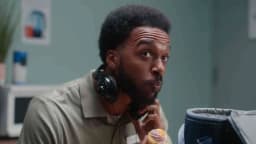
Maravilla articulated the campaign's testing philosophy directly. According to Clapboard, Maravilla stated that the various versions of the spots would focus on different value propositions to determine whether shorter cuts could outperform the hero long-form spot and generate stronger results. This approach reflects a production discipline increasingly common in performance-driven digital campaigns: shoot once, edit many, and let platform data determine the creative hierarchy. The two archetypal characters — the 'Karen' and the 'Office Troll' — were chosen not as targets of mockery but as relatable mirrors, allowing viewers who identify with either figure, or who recognise them from their own workplaces, to project personal experience onto the product's promise of daily relief. The film medium gave Maravilla and Lewis the narrative space to build character before introducing the Chirp Wheel+ as a resolution, a structure that distinguishes the campaign from the product-first format common in direct-response health advertising in the United States.
Verified performance data for the 'Not Karen, Office Troll' campaign is limited to the metrics documented by Clapboard. The campaign recorded an average call-to-action rate of ten percent, an average watch time of twenty-nine seconds, and an average return on ad spend of 2.5, according to Clapboard. These figures reflect the multi-variation testing phase conducted on Facebook rather than the full cross-platform rollout that had been planned for Instagram and connected television including Hulu.
A return on ad spend of 2.5 in a consumer healthcare and personal accessories context is a functional result for a testing phase, indicating that the campaign was generating measurable commercial return even before the strongest-performing edits were deployed at scale, as reported by Clapboard. The average watch time of twenty-nine seconds is notable for long-form content, suggesting that the comedic character-driven opening was retaining audience attention beyond the critical early seconds that typically determine skip behaviour on social platforms.
No verified award records for the 'Not Karen, Office Troll' campaign appear across Cannes Lions, Effies, The One Show, D&AD, Clios, Webby Awards, or WARC. The campaign's archive record on Clapboard shows 1,825 views and five likes at the time of documentation, consistent with an industry-facing submission rather than a broad public-facing showcase. Structurally, the campaign's core strength lies in its replicable creative architecture: character-driven humour, platform-native testing discipline, and a flexible edit suite that allows the media strategy to follow the data. That architecture represents durable value for Chirp's ongoing creative development in the United States market, regardless of any single campaign's measured return.
Chirp's 'Not Karen, Office Troll' is a 2021 United States film campaign created by Little Big Engine to market the Chirp Wheel+. It uses comedic workplace archetypes — the 'Karen' and the 'Office Troll' — to position Chirp's back-pain relief device as a relatable everyday solution for working adults.
Little Big Engine, a Salt Lake City agency, created and produced the campaign. Patrick Maravilla served as Executive Creative Director and writer, Brandt Lewis as Executive Creative Director, Art Director, and director, Duff Rich as Executive Producer, and Munn Powell as Director of Photography, according to Clapboard.
The Chirp Wheel+ is a patented back-pain-relief and stretching device. The 'Not Karen, Office Troll' campaign was Chirp's first long-form video advertising effort for the product. Chirp had previously raised more than two million dollars for an earlier version of the device on Indiegogo, according to MediaPost.
The campaign initially tested on Facebook, where two hero films were edited into multiple variations to measure performance. The strongest-performing cuts were planned for expansion to Instagram and connected-television platforms including Hulu, according to Clapboard. The multi-platform rollout was contingent on Facebook testing results.
According to Clapboard, the campaign recorded an average call-to-action rate of ten percent, an average watch time of twenty-nine seconds, and an average return on ad spend of 2.5 during its Facebook testing phase. No major industry awards have been verified across Cannes Lions, Effies, or D&AD for this campaign.
The Clapboard Score for 'Not Karen, Office Troll' is 56 out of 100. This reflects a campaign with genuine cultural insight and a disciplined multi-variation testing structure, offset by limited documented reach beyond its initial Facebook testing phase and the absence of verified major industry award recognition.
.webp)
Creative Collaboration Platform: The Backbone of Modern Creative WorkWhat is a creative collaboration platform?Clapboard defines a creative collaboration platform as the operational core for today’s distributed creative teams. This is not a collection of digital collaboration tools stitched together; Clapboard’s system


Understanding the Creative Production MarketplaceWhat is a Creative Production Marketplace?Clapboard defines a creative production marketplace as a structured ecosystem where brands, agencies, and production talent converge to execute video, advertising, and branded content at scale. Unlike the legacy agency or freelanREAD FULL ARTICLE

The Urgent Need for a Creative Production Operating SystemWhy Traditional Creative Production Models Break DownClapboard sees the creative production landscape shifting under pressure. Content velocity is no longer a buzzword—it’s a mandate. Modern advertising demands relentless output across dozens of channels, each wREAD FULL ARTICLE